
Title: Da Lat Travel Guide: Vietnam's City of Eternal Spring — Everything You Need to Know

Meta description: The complete Da Lat travel guide — French colonial villas, flower markets, coffee farms, waterfalls, pine forests, and why this highland city is Vietnam's most surprising destination for European and Australian travellers.

Da Lat travel guide  ·  Da Lat things to do Europeans Australians  ·  best time visit Da Lat  ·  Da Lat French colonial Vietnam  ·  Da Lat coffee farm  ·  Central Highlands Vietnam

Complete Travel Guide    Da Lat · Central Highlands · 2025

Da Lat Travel Guide:
Vietnam's City of Eternal Spring

At 1,500 metres above sea level in the Lam Dong highlands, Da Lat is unlike any other city in Vietnam. French colonial villas on pine-forested hillsides, flower markets overflowing with roses and hydrangeas, world-class coffee farms, waterfalls, and a cool climate that feels like spring even in the depths of the Vietnamese summer. Here is everything you need to know.

1,500m
Altitude
18–24°C
Year-round
75%
Vietnam's flowers
300km
From Ho Chi Minh City
In this guide
01Why Da Lat? 05Coffee farms & local food
02Best time to visit 06Waterfalls & nature
03The French colonial city 07Getting there
04Top things to do 08Practical info & FAQ
Why go

Why Da Lat Surprises Almost Every Visitor Who Arrives

Most travellers arrive in Da Lat without entirely knowing what to expect — it appears on itineraries as a vague "highland city" between Ho Chi Minh City and the coast, and the tendency is to underestimate it. The surprise, almost universal, begins the moment you step off the plane or out of the car. The air is cool and smells of pine. The road is lined with flower stalls. The villas on the hillsides have steep rooflines and painted shutters that would not look out of place in the French Alps. This is not the Vietnam you were expecting.

Da Lat was established by the French colonial administration in 1897 as a hill station — a place where European administrators could escape the coastal heat and maintain something approaching a European way of life. The result, 130 years later, is a city that is unlike any other in Southeast Asia: a genuine blend of French colonial architecture, Vietnamese highland culture, extraordinary natural landscape, and one of the most significant food and coffee cultures in the country. For European and Australian travellers, Da Lat is the place in Vietnam that feels most surprisingly familiar — and most distinctively itself.

🌸
The flower capital of Vietnam
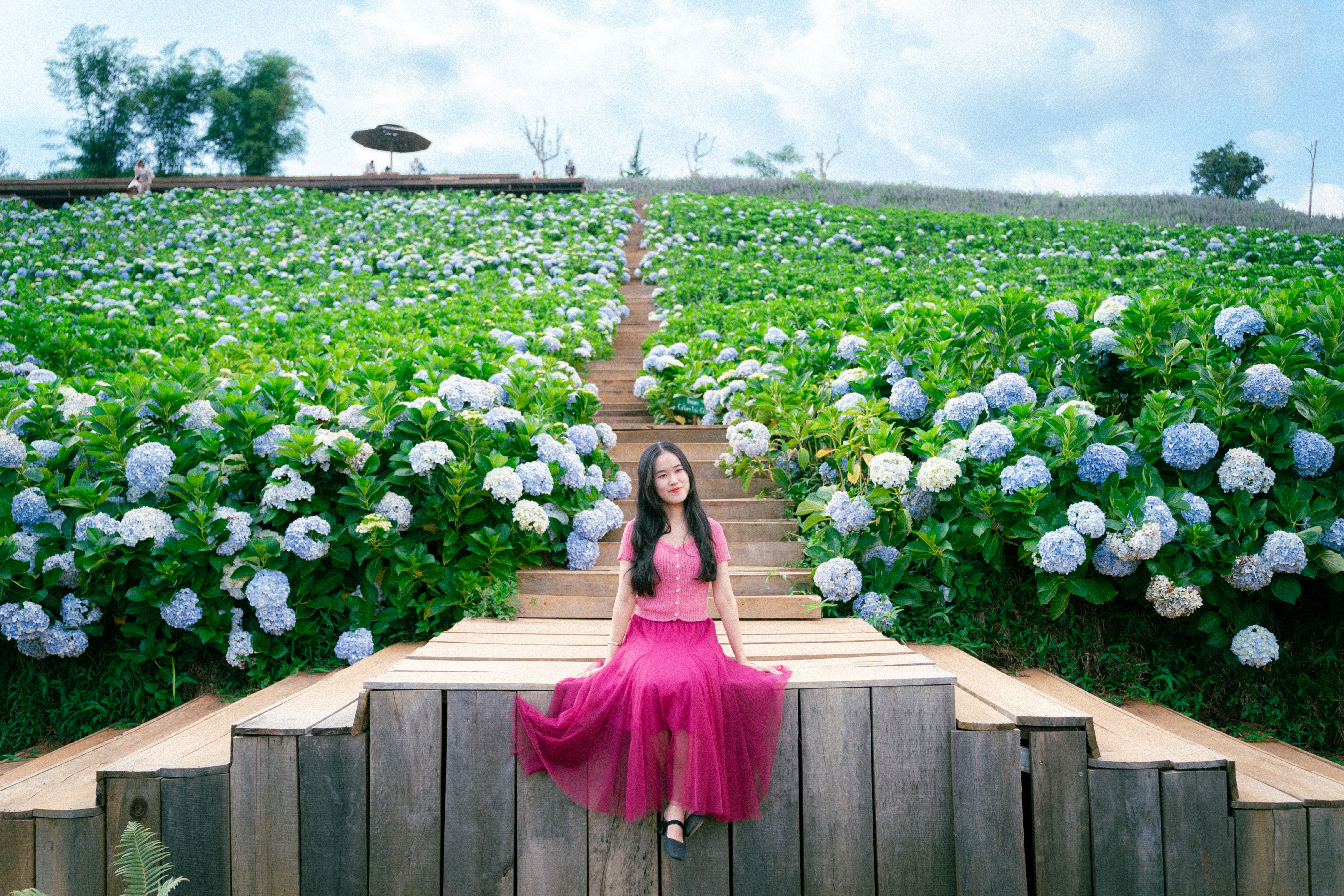
Da Lat produces approximately 75% of Vietnam's cut flowers — roses, hydrangeas, chrysanthemums, sunflowers, and orchids grown in greenhouses across the highlands and sold at the city's famous night market and flower gardens.
🏛️
French colonial architecture
Over 1,500 French colonial villas survive in Da Lat — many converted to boutique hotels and cafés, others still family homes. The Bảo Đại Summer Palace, the old railway station, and the Da Lat Cathedral are among the finest examples of colonial architecture in Vietnam.
World-class coffee
The Lam Dong highlands around Da Lat are one of Vietnam's premier Arabica coffee-growing regions. Farm visits, single-origin tastings, and the weasel coffee experience (civet coffee) are among the most sought-after activities.
🌿
Pine forests & waterfalls
The hills around Da Lat are covered in Pinus kesiya — a highland pine species that gives the city its distinctive scent and visual character. Multiple waterfalls, lakes, and hiking trails are accessible within 30 minutes of the city centre.
Sapa rice terraces rain green
When to go

Best Time to Visit Da Lat

Da Lat's altitude gives it a genuinely temperate climate — cool and pleasant year-round, in sharp contrast to the heat of Ho Chi Minh City and the coast. The average temperature stays between 18°C and 24°C throughout the year, making it essentially the only city in Vietnam where you might want a jacket in the evening. The main seasonal distinction is between a dry season (November–April) and a rainy season (May–October), with the latter bringing afternoon showers that are usually short and actually give the landscape its most vivid green.

Period What to expect Verdict
Dec–Mar Dry season peak — clear skies, cool nights (12–15°C possible in January), excellent visibility for hiking and waterfall visits. The flower festival in December draws large domestic crowds. Aligns with European and Australian holiday periods — book accommodation early for Christmas–New Year. Excellent
Apr–May Transition season — warm and clear days, rains beginning at end of May. The landscape starts greening after the dry season. Fewer domestic tourists than December–January. Good value and good weather. Good
Jun–Sep Rainy season — afternoon showers most days, but mornings are usually clear and the landscape is intensely green. The waterfalls are at full flow. Fewer tourists, lower prices, and the pine forests after rain smell extraordinary. Aligns with European summer and Australian winter holidays. Good
Oct–Nov End of rainy season — October can bring heavy rains but November transitions quickly to the dry season. Wild sunflowers bloom across the hillsides in November. The light in late afternoon is exceptional as the season clears. Good for photography. Good
For Europeans & Australians

Da Lat is one of the few places in Vietnam that is genuinely comfortable for Europeans and Australians during both their respective summer and winter holiday periods. December–January (European winter, Australian summer): cool, clear, perfect. June–August (European summer, Australian winter): warm and slightly rainy but still comfortable and significantly cheaper. Da Lat never has the oppressive heat that makes coastal Vietnam exhausting in the hottest months.

The city's character

Da Lat's French Colonial Heritage — Why It Matters

The French presence in Da Lat lasted from 1897 until 1954 — long enough to build an entire city in the image of a French provincial town, complete with a railway line from Phan Rang, a cathedral modelled on the church at Montmartre, a university, a governor's palace, a summer residence for the last Vietnamese emperor, and over 1,500 residential villas. When the French left, the villas remained — and while many have deteriorated or been poorly maintained, enough survive in various states of their original glory to give Da Lat an architectural character found nowhere else in Vietnam.

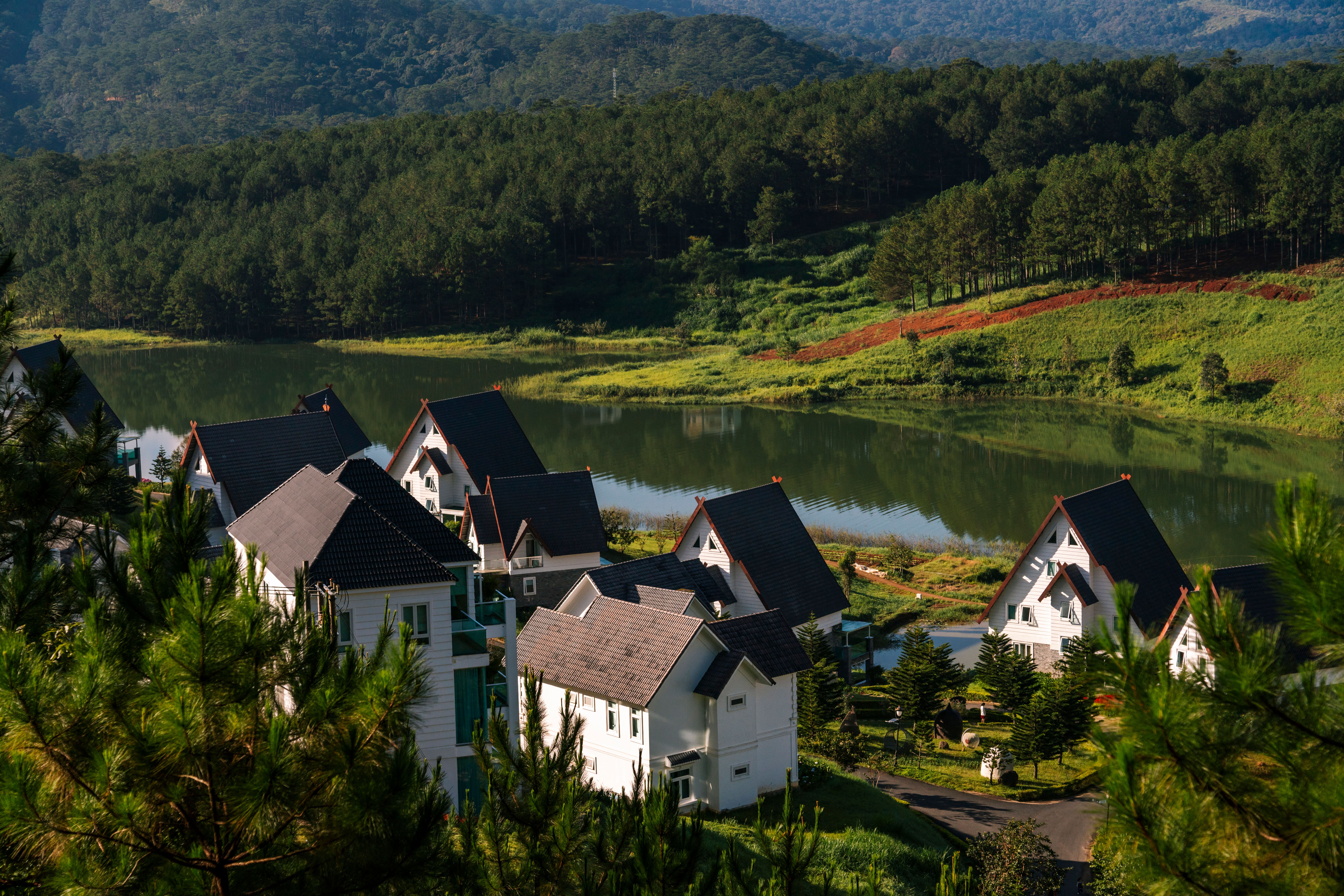
Walking the hillside streets above the central lake — particularly the areas around Tran Hung Dao Street and the roads south of Xuan Huong Lake — past shuttered villas with moss-covered stone walls, overgrown gardens of roses and hydrangeas, and rooflines that belong to the Auvergne rather than Southeast Asia, is one of the most unexpectedly moving experiences Vietnam offers. The overlay of French and Vietnamese aesthetics, the evidence of 130 years of history in a single street, the pine trees towering above buildings designed for a different climate — it is genuinely unlike anything else in the country.
Key colonial sites worth visiting
Bảo Đại Summer Palace (Dinh III)
The most accessible of the three palaces built for the last Vietnamese emperor Bảo Đại and his family. The interior is largely intact — personal photographs, hunting trophies, the emperor's study and bedroom — and remarkably evocative of the twilight years of the Nguyen Dynasty. The building's Art Deco exterior is one of Da Lat's most photographed. Allow 1 hour.
Da Lat Cathedral (Con Gà Church)
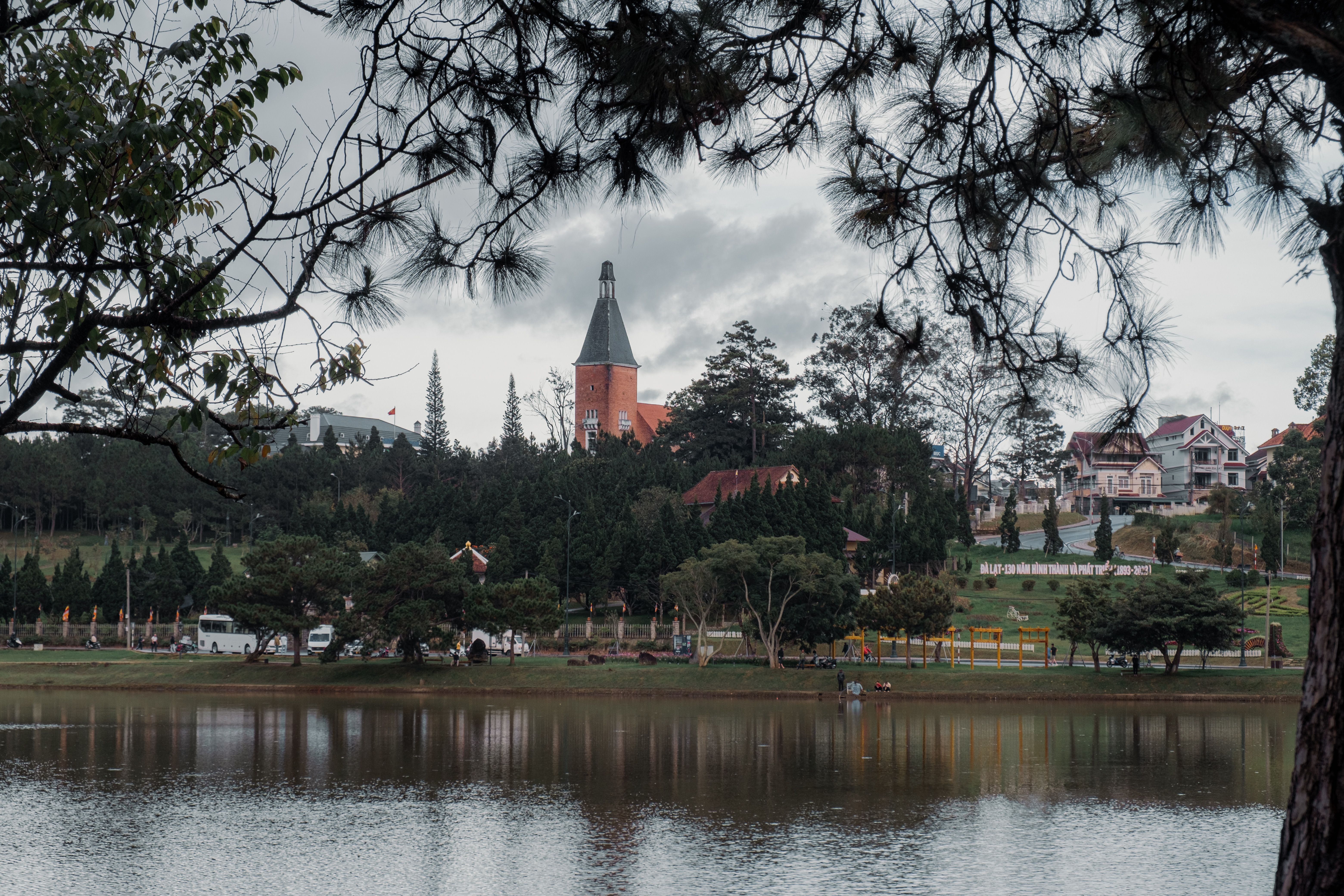
Built between 1931 and 1942, the Da Lat Cathedral's 47-metre spire is topped by a weathervane cockerel — earning it the Vietnamese nickname "Con Gà" (Rooster Church). The stained glass windows were made in Grenoble, France, and the overall effect — Gothic architecture in a pine forest at 1,500 metres — is deeply incongruous and rather magnificent. Mass is held daily and the church is open to respectful visitors outside service hours.
Da Lat Railway Station
Built in 1938 in a fusion of Art Deco and Cham architectural styles, Da Lat Railway Station is considered one of the most beautiful railway stations in Vietnam. The original rack-and-pinion railway to Phan Rang was damaged during the war and never repaired; a short tourist train now operates to the village of Trai Mat and back. The station itself — the stained glass, the tile floors, the waiting room frozen in 1938 — is worth a visit regardless of whether you take the train.
Xuan Huong Lake & the French Quarter villas
The central lake was created by damming the Cam Ly River in 1919 under French direction. The hillsides around the lake — particularly the streets south of the Da Lat Market — contain the highest concentration of surviving French villas. The best approach is on foot or by bicycle: hire a bike from the city centre and follow the roads uphill from the lake shore, turning whenever a roofline catches your eye.
Sapa rice terraces rain green
What to do

Top Things to Do in Da Lat

01
Da Lat Night Market & Flower Market
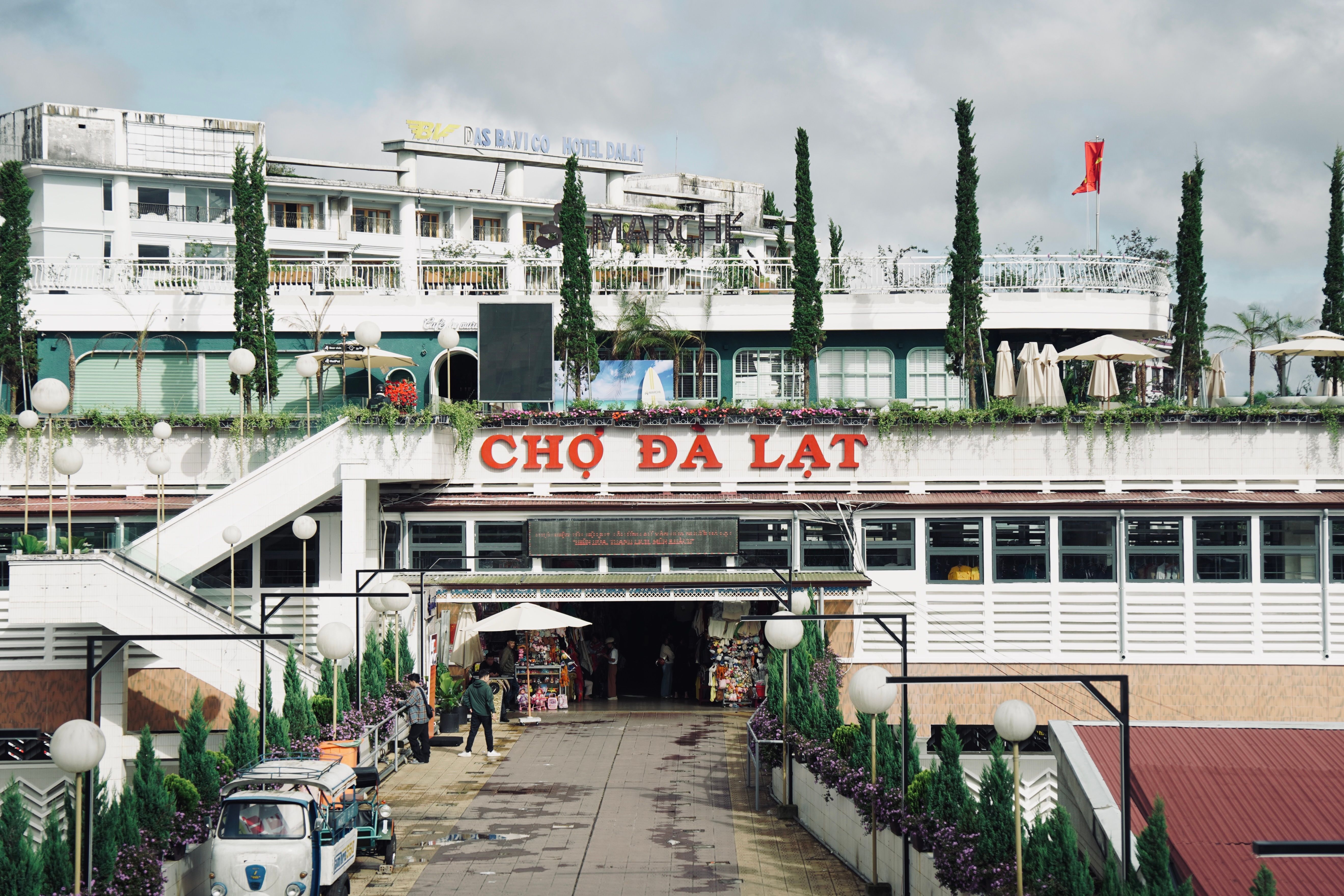
The area around Da Lat Central Market transforms at dusk into one of the most vibrant night markets in Vietnam — not primarily a tourist market but a working food market where the city comes to eat, socialise, and buy produce. The flower stalls that line the market perimeter sell the highland roses, sunflowers, and hydrangeas that Da Lat supplies to the entire country. A bunch of 20 roses costs less than AUD 2 / £1. The food stalls serve banh trang nuong (rice paper pizza), nem nuong (grilled pork skewers), and strawberry wine — all Da Lat specialities unavailable elsewhere. Allow 2 hours minimum.
02
Valley of Love (Thung Lũng Tình Yêu)
A pine-forested valley north of the city built around a lake created in the 1970s, surrounded by gardens, flower fields, and walking paths. The name is unashamedly romantic and the setting earns it — the combination of pine forest, mountain flowers, and cool misty mornings makes this one of the most visually distinctive parks in Vietnam. Popular with Vietnamese couples and families; less so with international visitors who don't know what to expect. The sunrise here is excellent if you can arrive before 07:00.
03
Langbiang Mountain — the highest point near Da Lat
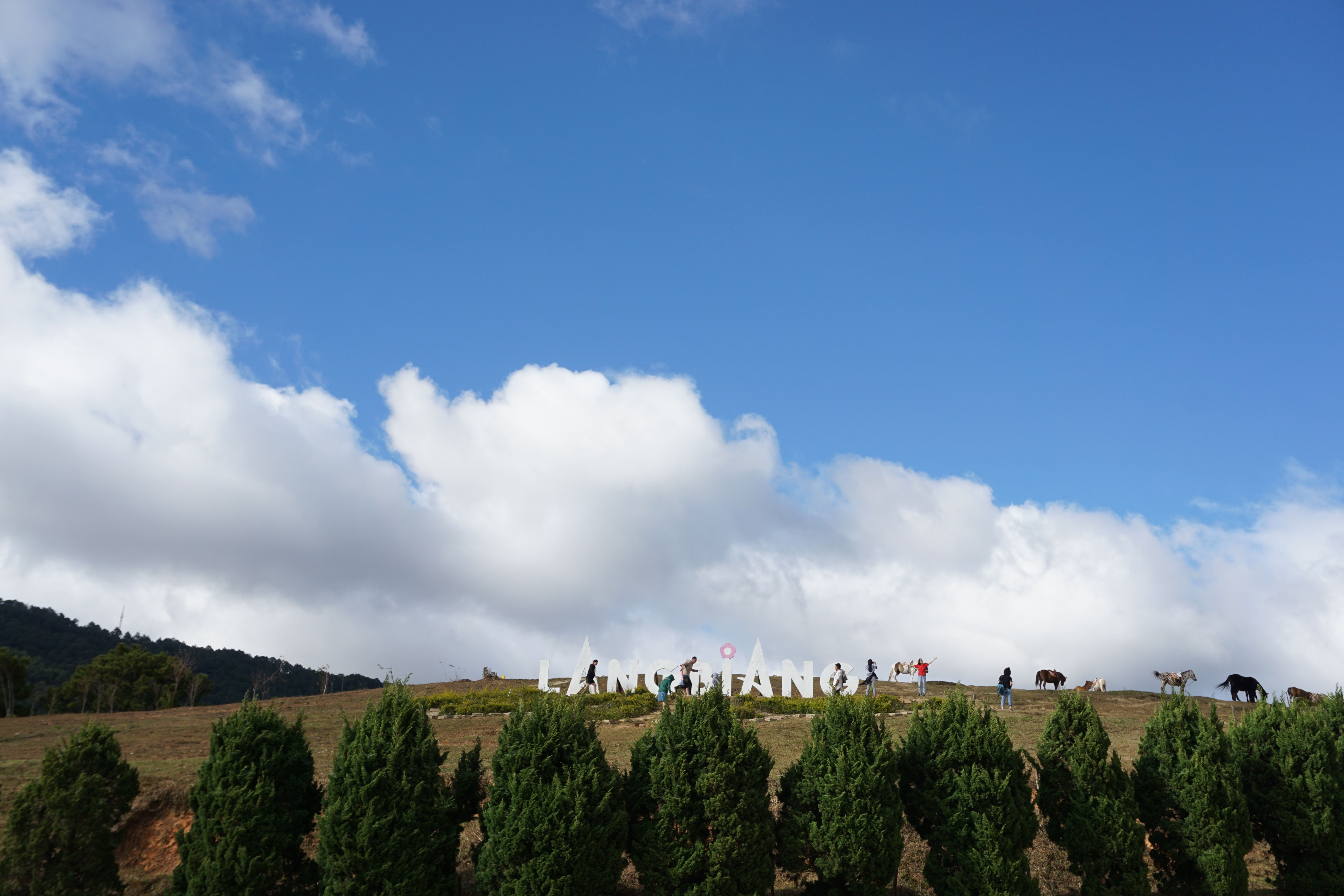
Langbiang (2,167m) is the twin-peaked mountain that dominates the skyline north of Da Lat — sacred in K'ho Lach minority legend as the site of a forbidden love story between the warrior Lang and the princess Biang, after whom the mountain and the city are named. A jeep track climbs most of the way to the summit; from the top, on clear days, you can see all the way to the coast. The K'ho Lach village at the base offers a genuine minority community visit with far less tourist infrastructure than similar sites in Sapa. Allow half a day.
04
Da Lat Flower Gardens (Vườn Hoa Đà Lạt)
The Da Lat Flower Garden on the northern shore of Xuan Huong Lake was established in 1966 and remains one of the most visited attractions in the city — with good reason. The display of roses, orchids, chrysanthemums, and seasonal blooms changes throughout the year, and the lake backdrop makes it one of the most photogenic spots in the city. The garden is at its best in the early morning before the tour groups arrive, and during the annual Da Lat Flower Festival held in December of even-numbered years.
05
Crazy House (Hằng Nga Guesthouse)
An ongoing architectural sculpture by Vietnamese architect Đặng Việt Nga — trained in Moscow and influenced by Gaudí — built over several decades and still technically under construction. The building is a maze of interconnected rooms, bridges, tunnels, and towers shaped as giant trees, mushrooms, and animals, with no straight lines anywhere. It is genuinely extraordinary as architecture and genuinely bizarre as an experience — the building is also a functioning guesthouse where you can stay overnight inside the spider room or the kangaroo room. Whether or not you stay, a visit is unlike anything else in Vietnam.
Sapa rice terraces rain green
Coffee & food

Da Lat's Coffee Culture & Local Food

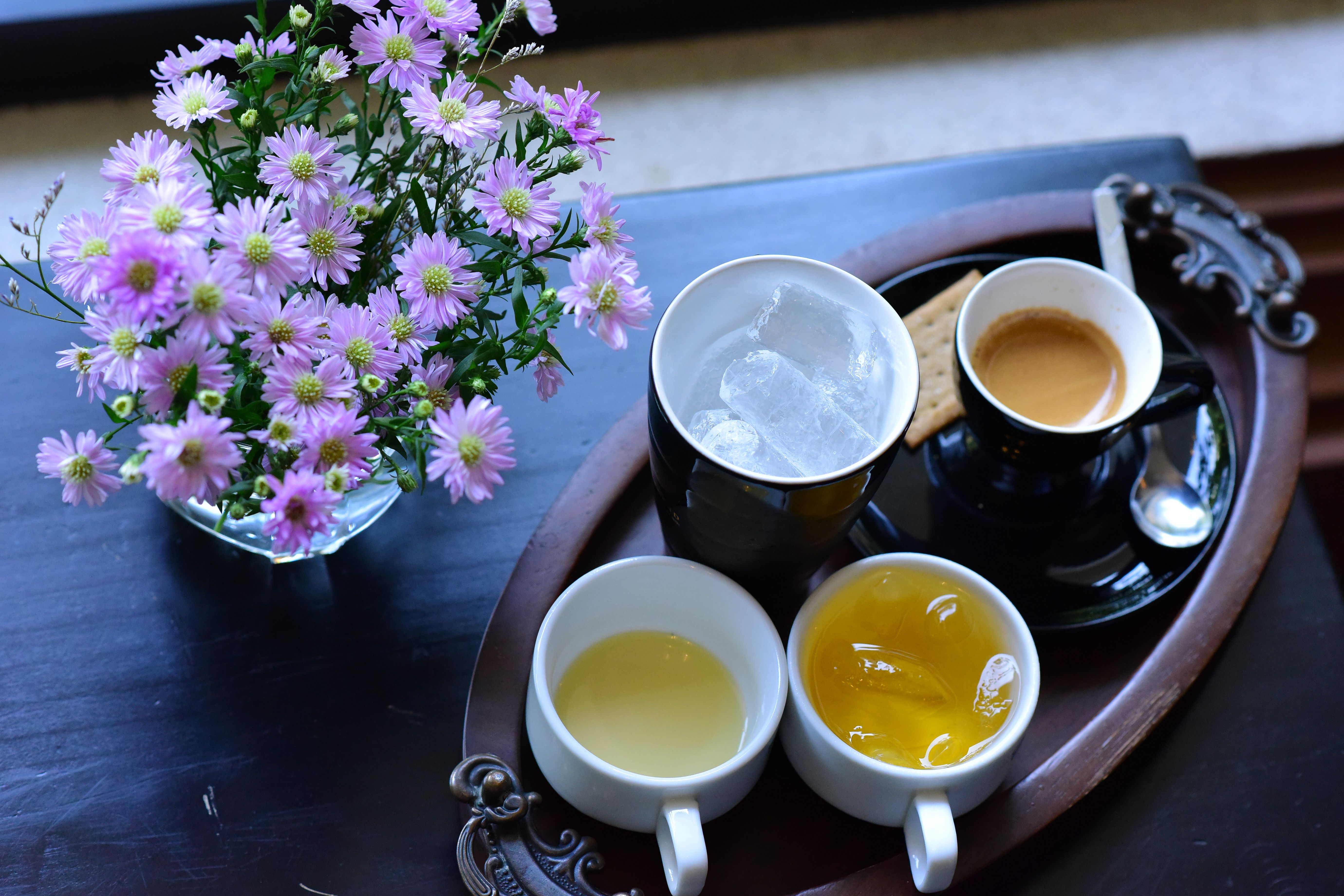
The Lam Dong highlands around Da Lat are among the few regions in Vietnam where Arabica coffee thrives — the altitude and temperature create conditions that produce a cleaner, less bitter cup than the robusta dominant in the lowlands. Da Lat's café culture reflects this: the city has a higher density of independent speciality coffee shops per capita than almost anywhere in Vietnam, ranging from simple family roasters to internationally recognised third-wave establishments. Coffee tourism — farm visits, processing tours, tasting flights — has become one of Da Lat's most distinctive offerings.
Sapa rice terraces rain green
Da Lat food & drink What it is & why it matters
Arabica coffee (farm visit) Coffee farm tours in the villages around Da Lat cover the full process from cherry to cup — picking, washing, drying, roasting, and brewing. The difference between a farm-fresh Da Lat Arabica and a standard Vietnamese robusta is profound. Most farms also offer weasel coffee (kopi luwak) at a premium — the process is controversial and the ethics worth researching before purchasing.
Bánh tráng nướng Rice paper grilled over charcoal and topped with egg, spring onion, dried shrimp, and chilli sauce — sometimes called "Vietnamese pizza." A Da Lat street food invention that has spread nationally but is still best at the night market stalls where it originated. Costs approximately 15,000–25,000 VND per piece.
Strawberry wine & jam Da Lat's cool climate supports strawberry farming on a significant scale — the market is full of fresh strawberries, and the locally produced strawberry wine ranges from surprisingly good to aggressively sweet. Buy from a reputable producer at the market rather than from roadside stalls which often sell much lower quality. Fresh strawberry smoothies at the market are excellent.
Artichoke tea Da Lat grows artichokes — introduced by the French — and the locally produced artichoke tea (trà atiso) is a Da Lat speciality sold everywhere in the city. Slightly bitter, earthy, and said to be beneficial for the liver. An acquired taste that most European visitors find more familiar than they expect.
Highland vegetables The Da Lat market and restaurant vegetable selection is unlike anywhere else in Vietnam — broccoli, cauliflower, asparagus, artichoke, carrot, and a dozen varieties of mushroom grow in the cool highland climate. The Vietnamese hot pot restaurants around the market use Da Lat produce exclusively and deliver a quality of vegetable that simply cannot be sourced in the lowland cities.
Nature

Waterfalls, Forests & Nature Around Da Lat

The highlands around Da Lat are threaded with rivers, pine forests, and a series of waterfalls ranging from the easily accessible to the genuinely wild. The area receives enough rainfall to keep the falls flowing year-round, with the most dramatic volumes in the May–October rainy season. Most of the main falls are within 30–40km of the city centre and accessible by motorbike, private car, or organised day tour.
Sapa rice terraces rain green
💧 Pongour Waterfall — the most spectacular
Located 50km south of Da Lat, Pongour is arguably the most impressive waterfall in the Central Highlands — a 40-metre wide cascade dropping 30 metres over seven tiers of basalt. Emperor Bảo Đại reportedly called it the "most majestic waterfall in Indochina." The surrounding forest is largely intact and the walk from the car park to the falls takes about 15 minutes through pine and bamboo. At its most powerful May–October. The full moon festival held here in January–February draws large Vietnamese crowds.
💧 Datanla Waterfall — easiest to reach from the city
5km south of Da Lat, Datanla is the most accessible waterfall and the one most heavily developed for tourism — there is a roller coaster descent to the falls and several zipline activities. The waterfall itself is beautiful; the tourist infrastructure around it is not for everyone. If you want a natural experience, Pongour is the better choice. If you have limited time or are travelling with children who want activities, Datanla delivers efficiently.
🌲 Bidoup Nui Ba National Park — for serious nature
The most significant protected forest in the Central Highlands — 70,000 hectares of ancient montane forest covering the peaks north of Da Lat, including the Bidoup summit at 2,287m. Home to numerous endemic bird species, rare orchids, and (rarely sighted) Asian elephant, gaur, and clouded leopard. Trekking permits and a guide are required; the park visitor centre in Da Lat can arrange guided hikes from a half-day nature walk to a 3-day camping circuit.
Getting there

Getting to Da Lat

From Best option Details
Ho Chi Minh City Fly or drive Flight: 45 min, from USD 25 on VietJet/Bamboo — Da Lat Airport (LIQ) is 30km from the city. Drive: 300km, approximately 6–7 hours via Highway 20 — a beautiful mountain road through coffee and rubber plantations, worth doing if time allows. Sleeper bus: 7–8 hours, very affordable but slow.
Hanoi Fly direct Direct flights Hanoi to Da Lat on Vietnam Airlines and VietJet — approximately 2 hours, from USD 40. Multiple daily departures. Da Lat is a natural addition to a north-to-south itinerary: fly Hanoi → Da Nang → Da Lat → Ho Chi Minh City.
Da Nang / Hoi An Fly or bus No direct flight Da Nang–Da Lat; connect via Ho Chi Minh City. Alternatively, a scenic overland route via Nha Trang (6 hours from Hoi An to Nha Trang by sleeper bus, then 4 hours Nha Trang to Da Lat) is one of the great highland road journeys in Vietnam.
The approach road from the coast

If arriving by road from the coast (Nha Trang or Mui Ne), the final 50km to Da Lat climbs 1,500 metres through a sequence of hairpin bends with increasingly dramatic views of the coastal plains below. This approach — the Ngoan Muc Pass — is one of the most celebrated mountain drives in southern Vietnam. Arrange a private car rather than a bus for this section; the stops at the pass viewpoints are essential and buses don't make them.

Practical info

Practical Information for Visitors

Topic Details
How long to stay 2 days: City highlights — night market, colonial villas, Crazy House, Valley of Love, Da Lat Railway Station. 3 days: Add Langbiang Mountain, a coffee farm visit, and Pongour Waterfall. 4+ days: Bidoup Nui Ba National Park, slower pace, deeper exploration of the villa district.
Getting around Grab works well within the city. For day trips to waterfalls and Langbiang, hire a private car or a xe om (motorbike driver) by the day — approximately 200,000–300,000 VND/day for a motorbike guide who knows the area. Bicycle hire is available from the city centre for exploring the villa district.
Packing A light jacket or cardigan is essential year-round — evenings in Da Lat are always cool by Vietnamese standards (12–18°C), and genuinely cold in January–February. A rain jacket for the May–October rainy season. Comfortable walking shoes for the villa district's hilly streets. Layers rather than single heavy items.
Where to stay Da Lat's most memorable accommodation is in the restored French colonial villas — several have been converted to boutique hotels with original tile floors, wooden shutters, and fireplaces. Staying in a villa rather than a modern hotel is the difference between visiting Da Lat and experiencing it. The area around Tran Hung Dao Street and the hillsides above Xuan Huong Lake have the highest concentration of villa accommodation.
FAQ
Is Da Lat worth visiting if I've already done Hoi An and Ha Long Bay?

Completely — and it is a genuinely different type of experience from both. Hoi An is about ancient trade history and the colonial meeting of cultures; Ha Long Bay is about a dramatic natural seascape. Da Lat is about a cool highland city that feels more like provincial France than tropical Vietnam, with extraordinary coffee, flowers, and food that the coast cannot offer. Travellers who do all three consistently describe the contrast as one of the most satisfying aspects of a Vietnam trip.

How does Da Lat fit into a north-to-south Vietnam itinerary?

Very naturally. A common route: Hanoi (2 days) → Sapa (2 nights) → Ha Long Bay (2 nights) → fly to Da Nang → Hoi An (2 nights) → fly to Da Lat (2–3 nights) → Ho Chi Minh City (2 days). This covers north, central, and south Vietnam with a highland interlude in Da Lat that acts as a palate cleanser between the coast and the city. Da Lat's cool climate after the heat of Da Nang and before the intensity of HCMC is a genuine restorative in an otherwise busy itinerary.

Is Da Lat suitable for families with children?

Excellent for families. The cool climate removes the heat stress that makes lowland Vietnam difficult for young children. The Valley of Love, the Datanla Waterfall activities (roller coaster, zipline), the strawberry farms where children can pick fruit, and the sheer novelty of pine forests and flower markets make Da Lat one of the most child-friendly destinations in the country. The Crazy House is universally popular with children and adults equally.

What makes Da Lat different from Sapa for European and Australian visitors?

Sapa is a mountain trekking destination with dramatic high-altitude scenery and strong ethnic minority culture — physically demanding and logistically complex (overnight train, mountain paths). Da Lat is a city — comfortable, walkable, with cafés, restaurants, and a full range of accommodation. The highland landscapes are different in character (pine plateau rather than steep terraced valleys) and the experiences are more urban and less physical. Sapa is for trekkers and those who want extreme landscapes; Da Lat is for those who want a beautiful, cool, culturally rich city with extraordinary food and nature within easy reach.

Planning a Vietnam Trip That Includes Da Lat?

Whether you're adding Da Lat to a north-to-south itinerary or building a Central Highlands trip from scratch — we design private, fully guided Vietnam journeys tailored to how you actually travel.

Plan My Vietnam Trip → View All Tours →

0 Comment