Title: Cat Ba Island Travel Guide: The Gateway to Lan Ha Bay — Everything You Need to Know
Description: The complete Cat Ba Island guide — national park trekking, Lan Ha Bay beaches, Cat Ba langur, when to visit, and how Vietnam's largest island became the quieter alternative to Ha Long Bay's crowded shores.
Cat Ba Island travel guide · Cat Ba things to do Europeans Australians · Lan Ha Bay vs Ha Long Bay · Cat Ba National Park trekking · best beaches Cat Ba Island · Cat Ba langur
Complete Travel Guide
Cat Ba Island
Cat Ba Island:
The Gateway to Lan Ha Bay
Vietnam's largest island sits directly beside Ha Long Bay, sharing the same limestone karst geology — but with a national park, real beaches you can actually swim from, one of the world's rarest primates, and access to Lan Ha Bay, the quieter cousin that increasingly outshines its famous neighbour. Here is everything you need to know.
|
354 km²
Largest island in bay
|
|
|
<60
Cat Ba langurs left
|
UNESCO
Biosphere Reserve
|
2 hrs
From Hanoi
|
In this guide
| 01Why Cat Ba? |
05The beaches |
| 02Lan Ha Bay vs Ha Long Bay |
06Cat Ba National Park |
| 03Best time to visit |
07Getting there |
| 04Top things to do |
08Practical info & FAQ |
Why go
Why Cat Ba Deserves to Be More Than a Cruise Stop
Most international visitors encounter Cat Ba only as a name on a Ha Long Bay or Lan Ha Bay cruise itinerary — a place the boat passes, perhaps stops briefly, but rarely a destination in its own right. This significantly undersells what is, in fact, Vietnam's largest island (354km²) and one of its most ecologically and geologically remarkable. Cat Ba shares the same 500-million-year-old limestone karst geology as Ha Long Bay, but adds something the bay itself cannot offer: solid ground. A national park with genuine jungle trekking. Beaches you can swim from rather than just view from a boat deck. A town with bars, restaurants, and a working harbour.
Cat Ba is also the gateway to Lan Ha Bay — the bay immediately south and east of the island that increasingly draws comparisons to Ha Long Bay at its most pristine, but with a fraction of the boat traffic. For travellers who want the karst seascape experience without the crowding that has affected parts of Ha Long Bay, basing in or sailing from Cat Ba is the smartest move in the entire region.
|
🐒
The world's rarest primate
Cat Ba is the only place on Earth where the Cat Ba langur (Trachypithecus poliocephalus) survives in the wild — fewer than 60 individuals remain, all on this single island, making it one of the most endangered primates on the planet.
|
🥾
A real national park
Cat Ba National Park covers 26,241 hectares of limestone forest, mangrove, and coastal habitat — genuine jungle trekking through terrain unlike anything accessible from a Ha Long Bay cruise boat.
|
|
🏖️
Actual swimmable beaches
Cat Co 1, 2, and 3 offer genuine white-sand beaches with calm, clear water — something Ha Long Bay itself, with its rocky shores and boat traffic, simply does not have.
|
🛶
Gateway to Lan Ha Bay
Cat Ba town and harbour are the launch point for Lan Ha Bay — over 300 limestone islets with notably clearer water and far fewer cruise boats than the main Ha Long Bay zone.
|

The comparison
Lan Ha Bay vs Ha Long Bay — Why Cat Ba's Bay Is Quietly Taking Over
Geologically, Lan Ha Bay and Ha Long Bay are part of the same continuous karst system — over 1,600 islands and islets spread across the Gulf of Tonkin, of which Ha Long Bay (the UNESCO-designated core zone) and Lan Ha Bay (immediately to the south, administered by Hai Phong rather than Quang Ninh province) are simply different sections. The geology is identical. The visitor experience is increasingly not.
Because Lan Ha Bay sails from Cat Ba rather than the heavily used Tuan Chau and Bai Chay harbours that serve Ha Long Bay, it has developed with a different character — fewer day-tripper boats, a higher proportion of smaller boutique vessels, clearer water (less boat traffic means less disturbance), and a growing reputation among repeat visitors and serious photographers as the better version of the same experience.
|
Ha Long Bay |
Lan Ha Bay |
| UNESCO status |
World Heritage Site (1994, 2000) |
Part of UNESCO Biosphere Reserve (via Cat Ba) |
| Boat traffic |
High — hundreds of vessels daily |
Significantly lower |
| Water clarity |
Variable — busier zones often murkier |
Generally clearer — better for swimming and kayaking |
| Cruise departure |
Tuan Chau / Bai Chay (Ha Long City) |
Cat Ba town / Ben Beo Harbour |
| Best for |
First-time visitors wanting the iconic UNESCO name |
Photographers, swimmers, kayakers, repeat visitors |
The honest recommendation
Many of the best overnight cruise itineraries now combine both: sailing through the Ha Long Bay zone on Day 1 for the iconic caves and famous viewpoints, then continuing into Lan Ha Bay for Day 2's anchorage, kayaking, and swimming. This gives you the recognisable name and the better water in a single trip — and it is precisely the kind of itinerary worth specifically requesting when booking.
When to go
Best Time to Visit Cat Ba Island
| Period |
What to expect |
Verdict |
| May–Aug |
Beach season peak — warm water (28–30°C), calm seas, ideal for swimming at Cat Co beaches and kayaking in Lan Ha Bay. The busiest months for domestic Vietnamese tourism due to school holidays. Typhoon risk increases July–August — check forecasts. |
Good |
| Sep–Nov |
The sweet spot — cooling temperatures, clearer skies, fewer domestic crowds after the school holidays end. Water remains warm enough for swimming through September and early October. Excellent visibility for photography of the bay. |
Excellent |
| Dec–Feb |
Cool dry season — temperatures 12–20°C, misty mornings, clear cruise conditions but water too cold for most swimmers. Excellent for trekking in Cat Ba National Park (cooler hiking temperatures) and for the atmospheric mist photography that defines classic Ha Long Bay imagery. |
Excellent |
| Mar–Apr |
Transitional — warming temperatures, occasional persistent mist and drizzle ("crachin" — the fine highland rain typical of this region in spring), water still cool for swimming. Beautiful but unpredictable. |
Variable |
For Europeans & Australians
If swimming and kayaking in warm water are priorities, May–September aligns well with European summer holidays and gives the warmest sea temperatures. If you want both the cool-weather photography and a comfortable cruise experience, October–November and December–February both align with European winter and Australian school holiday periods and avoid the peak domestic crowds.
What to do
Top Things to Do on Cat Ba Island
|
01
|
Cat Ba National Park trekking
26,241 hectares of primary limestone forest, mangrove, and freshwater wetland — among the most biodiverse protected areas in northern Vietnam. The Kim Giao Forest trail, named for an ancient timber tree once reserved exclusively for royal use, is the most accessible route (2–3 hours, moderate difficulty), passing through dense forest to a viewpoint over the entire island. More demanding multi-day treks with overnight camping in the forest are available through licensed operators for serious hikers. The park visitor centre near Trung Trang village is the standard entry point and arranges guides — required for anything beyond the main trail.
|
|
02
|
Kayaking & swimming in Lan Ha Bay
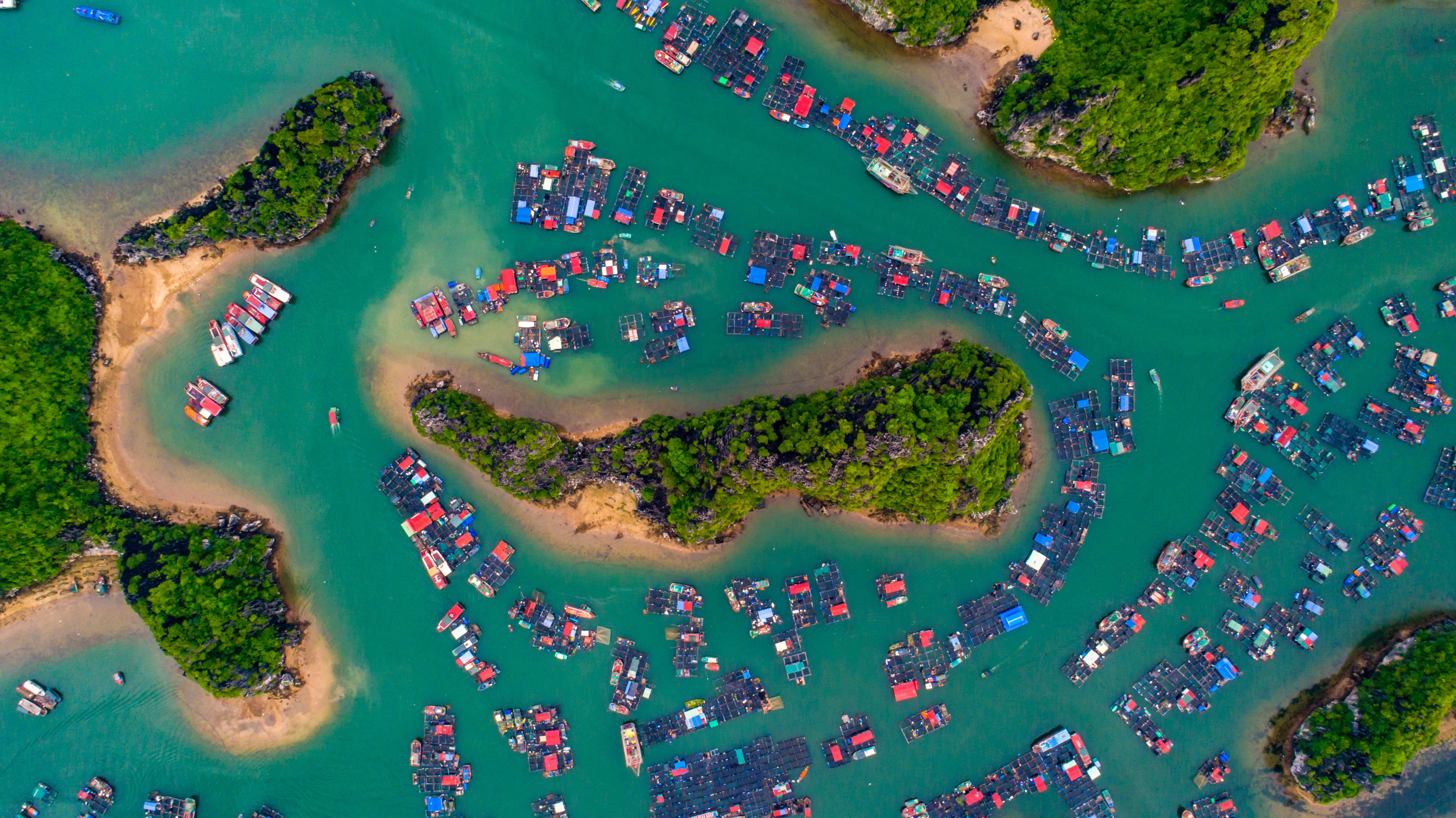
Half-day and full-day kayak tours launch directly from Cat Ba town or nearby beaches into Lan Ha Bay's clear water and limestone passages. The combination of dramatic karst scenery, genuinely swimmable water, and significantly less boat traffic than the main Ha Long Bay zone makes this one of the best kayaking experiences in northern Vietnam. Many tours include a stop at a floating fishing village and a beach swim break at one of the more secluded islets.
|
|
03
|
Hospital Cave (Hang Quân Y)
A genuinely extraordinary wartime relic — a fully equipped underground hospital carved into the limestone mountain during the Vietnam War, designed to withstand bombing up to 17 tonnes and including an operating theatre, swimming pool, and cinema room, all hidden within the rock. The cave was used to treat wounded soldiers and senior officials from 1963 until the war's end, with its location and purpose kept secret. The 17-room facility remains largely intact and is one of the most fascinating and under-visited historical sites in northern Vietnam. Located in the national park area, accessible by motorbike or as part of an organised tour.
|
|
04
|
Floating fishing villages
Cua Van and Viet Hai are floating and coastal fishing communities within the Cat Ba/Lan Ha area that maintain a traditional way of life largely unchanged for generations. Cua Van — a Ha Long Bay floating village now administratively connected to the Cat Ba tourism circuit — and Viet Hai, a small coastal village reached by boat and then a short walk or bicycle ride through the national park buffer zone, both offer genuine glimpses of community life rather than staged demonstrations. Viet Hai in particular, with its rice paddies set within limestone mountains and total absence of motor vehicles, is one of the more peaceful experiences available in the region.
|
|
05
|
Cat Ba town & seafood evenings
Cat Ba town, the island's small main settlement on a curved harbourfront, has developed a genuinely pleasant evening culture — waterfront restaurants serving fresh seafood (the harbour's fishing fleet supplies the town directly), a handful of decent bars, and a relaxed pace that contrasts with the cruise-ship intensity of Ha Long City across the water. Grilled squid, steamed crab, and tiger prawns from the harbour restaurants, eaten as the sun sets over the bay, is one of the simple pleasures that elevates a Cat Ba stay beyond the cruise-boat experience.
|
The beaches
Cat Co Beaches — Which One to Choose
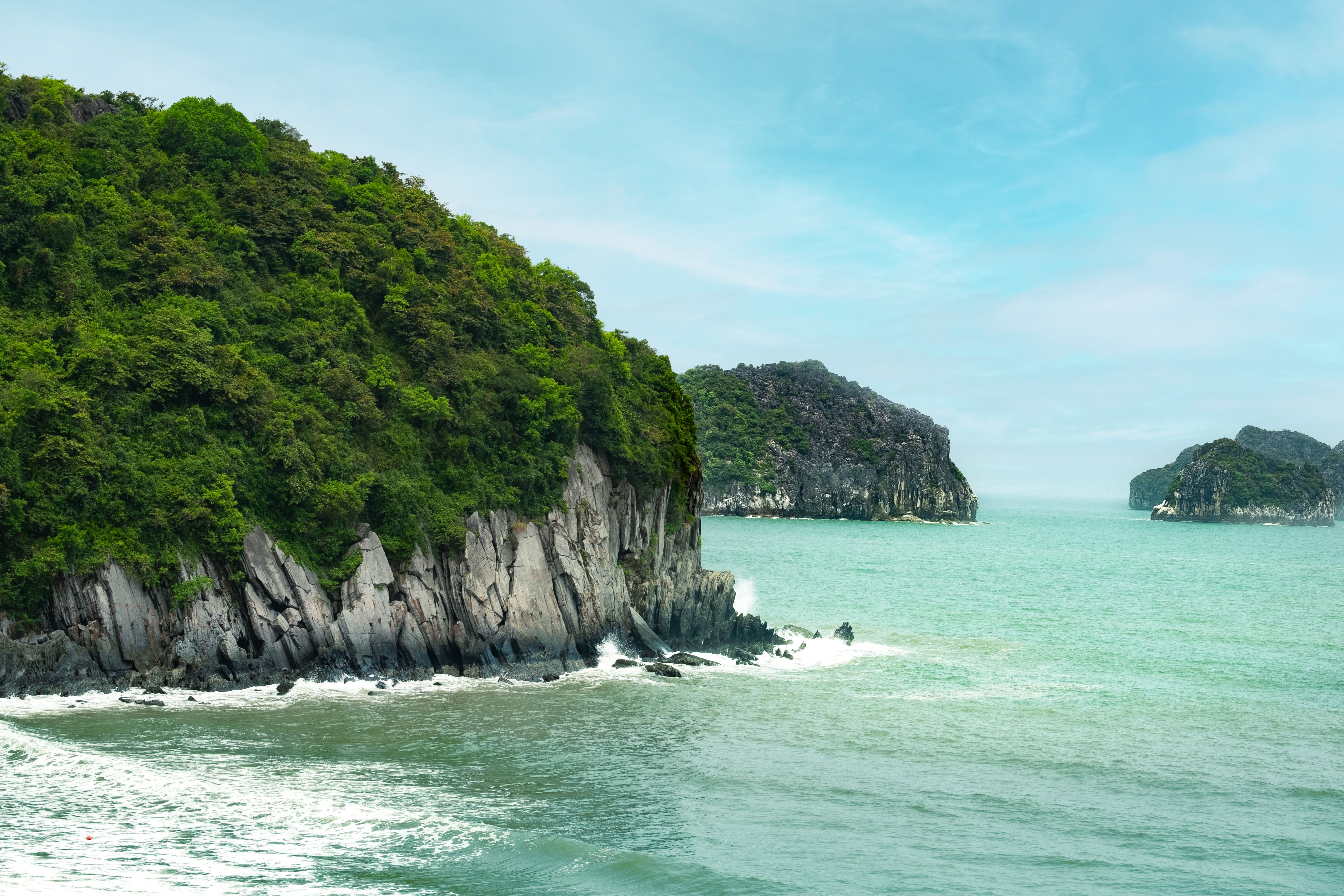
A short walk or shuttle ride from Cat Ba town, the three Cat Co beaches are the island's main swimming spots — small, sheltered coves with clean sand and water clear enough to see the bottom on calm days. They are not large beaches by international standards, but the karst backdrop and easy access from town make them genuinely worthwhile.
| Beach |
Character |
| Cat Co 1 |
The largest and most developed of the three, with resort accommodation directly on the beach. Family-friendly, with the most amenities (sun loungers, water sports rental, restaurants). The busiest of the three in peak season. |
| Cat Co 2 |
Connected to Cat Co 1 and 3 by a pleasant coastal walking path carved into the limestone cliff — the walk itself, with views over the bay, is worth doing even without swimming. Generally quieter than Cat Co 1. |
| Cat Co 3 |
The smallest and least developed — favoured by travellers who want a quieter swim away from the main crowds. Limited facilities; bring your own supplies. The most attractive of the three for a peaceful afternoon. |
Getting there
Getting to Cat Ba Island from Hanoi
Cat Ba is approximately 150km from Hanoi and is reached via Hai Phong — either by a combination of road and ferry/hydrofoil, or via the Tan Vu–Lach Huyen Bridge and Cat Ba causeway road, which has dramatically simplified access in recent years and eliminated the need for a separate boat crossing for road vehicles.
| Option |
Time |
Notes |
| Private car (causeway road) |
2.5–3 hrs |
The most direct option now that the Tan Vu–Lach Huyen Bridge connects Hai Phong's coast to Cat Ba via causeway, eliminating the old ferry crossing entirely for this route. Most comfortable and predictable. |
| Bus + ferry/hydrofoil |
3.5–4 hrs |
Budget-friendly combined ticket from Hanoi to Cat Ba, including the bus to Hai Phong or Tuan Chau and the boat crossing. Widely available from travel agents and online booking platforms. Slower but cheaper. |
| As part of a Lan Ha Bay cruise |
Varies |
Most visitors arrive via an overnight Ha Long Bay/Lan Ha Bay cruise that includes a stop or disembarkation at Cat Ba — the most seamless way to experience both the bay and the island without separate logistics. |
The smartest approach
For most international travellers, the cleanest itinerary is an overnight or two-night Lan Ha Bay cruise departing from Cat Ba (rather than Tuan Chau), which combines the cave and karst experience of the bay with one or two nights on the island itself for beach time, the national park, and the Hospital Cave. This avoids unnecessary backtracking and uses the boat journey as the transport between Hanoi and the island rather than a separate cost.
Practical info
Practical Information for Visitors
| Topic |
Details |
| How long to stay |
Combined with a cruise: 1–2 nights on the island plus the cruise nights is the standard and satisfying format. Island-focused trip: 3–4 days allows national park trekking, beach time, the Hospital Cave, and a Lan Ha Bay kayak day without rushing. |
| Getting around |
Motorbike rental is the standard way to explore the island (USD 6–10/day) — the road network is good and traffic light compared to mainland cities. Taxis and Grab operate in Cat Ba town for shorter trips. Bicycle hire is available for the beach circuit. |
| Where to stay |
Cat Ba town has the widest range of accommodation, from budget guesthouses to mid-range hotels with harbour views. Cat Co 1 beach has resort-style accommodation directly on the sand for those prioritising beach access. Overnight cruise cabins on Lan Ha Bay are the alternative for those combining the island with the bay. |
| Cat Ba langur viewing |
With fewer than 60 individuals remaining, the Cat Ba langur is extremely difficult to see in the wild and conservation organisations actively discourage casual searching to minimise disturbance. Most visitors will not see one. The Cat Ba Langur Conservation Project, based on the island, provides information on the species and its conservation status for those interested in learning more without seeking direct encounters. |
FAQ
Should I do Ha Long Bay or Lan Ha Bay (via Cat Ba)?
If this is your first visit and the UNESCO designation matters to you, Ha Long Bay's core zone has the most famous landmarks (Sung Sot Cave, Dau Go Cave) and the recognition factor. If you prioritise water clarity, fewer boats, swimming opportunities, and a quieter overall experience, Lan Ha Bay via Cat Ba consistently delivers a better experience for largely the same geological beauty. Many cruises now combine both in a single itinerary — ask your operator specifically whether the route includes Lan Ha Bay.
Can I visit Cat Ba as a day trip from Hanoi?
Technically possible but not recommended. The round trip alone consumes 5–6 hours, leaving very little time on the island itself. Cat Ba rewards at least an overnight stay — ideally combined with a Lan Ha Bay cruise — to properly experience the national park, beaches, and bay together rather than rushing through a single attraction.
Is Cat Ba suitable for travellers who want both adventure and relaxation?
Yes — this is precisely Cat Ba's strength. The island offers genuine national park trekking and Hospital Cave history for those wanting activity and substance, alongside calm beach afternoons and harbour-side seafood dinners for those wanting to simply relax. Few destinations in northern Vietnam offer this range within such a compact area, which is part of why Cat Ba has grown in reputation among travellers who have already done the standard Ha Long Bay cruise and want something with more depth.
Is the water on Cat Ba beaches actually clean?
The Cat Co beaches and most areas of Lan Ha Bay maintain reasonable water quality, generally noticeably better than the busier anchorage zones of Ha Long Bay's core area. Cleanliness can vary with rainfall and runoff after heavy rain, and like much of coastal Vietnam, marine litter is an ongoing environmental challenge that local conservation groups are actively working to address. Choosing operators who participate in clean-up initiatives and avoiding single-use plastics during your visit are small but meaningful contributions.
Planning a Vietnam Trip That Includes Cat Ba or Lan Ha Bay?
Whether you want the iconic Ha Long Bay, the quieter waters of Lan Ha Bay, or a combination of both with time on Cat Ba Island — we design private, fully guided itineraries built around what matters most to you.




0 Comment