Title: Da Nang Travel Guide: Everything European & Australian Travellers Need to Know
Description: The complete Da Nang travel guide — best beaches, when to visit, what to do, where to eat, Hoi An day trips, and honest advice for Europeans and Australians visiting central Vietnam.
Da Nang travel guide · Da Nang things to do Europeans Australians · best time visit Da Nang · Da Nang Hoi An itinerary · Da Nang beaches guide · central Vietnam travel
Complete Travel Guide
Da Nang · Central Vietnam · 2025
Da Nang Travel Guide:
Vietnam's Underrated Middle Child
Not as ancient as Hoi An, not as frenetic as Hanoi or Saigon — Da Nang sits between them in every sense. A proper city with excellent beaches, world-class food, day-trip access to two UNESCO World Heritage Sites, and none of the crowds that have begun to overwhelm its neighbours. Here is everything you need to know.
|
30km
Beach coastline
|
2
UNESCO sites nearby
|
30 min
To Hoi An
|
Direct
Flights from Hanoi/HCMC
|
In this guide
| 01Why Da Nang? |
05Day trips: Hoi An & My Son |
| 02Best time to visit |
06Where to eat |
| 03The beaches |
07Getting around |
| 04Top things to do |
08Practical info & FAQ |
Why go
Why Da Nang Deserves More Than a Transit Stop
Most travellers treat Da Nang as a gateway — the airport you fly into before heading south to Hoi An or north to Hue. This is a significant miscalculation. Da Nang is a genuinely excellent destination in its own right: a modern Vietnamese city with a long stretch of clean, uncrowded beach, a mountain backdrop containing one of the country's most sacred Cham temple complexes, and a food culture that rivals Hoi An's without the tourist prices.
The city is also ideally positioned as a base for central Vietnam. Hoi An is 30 minutes south by taxi. The My Son Cham ruins — a UNESCO World Heritage Site — are 45 minutes inland. The Hai Van Pass, one of the most celebrated coastal mountain roads in Asia, connects Da Nang to Hue in the north. You can cover more of central Vietnam from Da Nang in three days than from any other single base.
|
🏖️
Beach + city in one
My Khe Beach runs 30km directly alongside the city — you can be in a street food market and on white sand within 10 minutes.
|
🗺️
Central Vietnam base
Hoi An (30 min), My Son ruins (45 min), Hue (2.5 hrs), Hai Van Pass (45 min) — all day-trippable from one hotel.
|
|
🍜
Extraordinary local food
Mi Quang, Banh Mi Phuong, Bun Bo Hue — central Vietnam's cuisine is distinct from north and south, and Da Nang is its best-value expression.
|
💰
Better value than Hoi An
Hoi An's tourism premium is real and significant. Hotels, restaurants, and transport in Da Nang cost noticeably less for comparable quality.
|
When to go
Best Time to Visit Da Nang
Da Nang's weather is governed by two distinct seasons — a dry season from roughly February to August, and a wet season from September to January. The distinction between them is sharper here than elsewhere in Vietnam, and choosing the right window makes a significant difference to your experience.
| Period |
Weather |
What to expect |
Verdict |
| Feb–May |
25–32°C · Dry · Sunny |
The sweet spot. Warm, clear, and ideal for beach days. February and March are slightly cooler and less humid — the most comfortable temperatures of the year. April and May bring increasing heat but minimal rain. Hoi An and My Son day trips are at their best in this window. |
Best |
| Jun–Aug |
30–37°C · Dry · Hot |
Peak beach season — calm seas, strong sun, perfect swimming conditions. The heat is intense midday (37°C possible in July). Aligns with European and Australian winter/school holiday periods, making this the busiest and most expensive time. Crowds at Hoi An are at their annual peak. |
Good |
| Sep–Nov |
25–30°C · Heavy rain · Typhoon risk |
The wettest months — October in particular can bring extended rain and occasional typhoons. Hoi An floods are well-documented. The upside: prices drop significantly, crowds thin, and between rain events the light and colour are extraordinary. For flexible travellers who can work around the weather, October–November can be remarkable. |
Caution |
| Dec–Jan |
20–25°C · Some rain · Cooler |
Transitioning out of the wet season — some rain still possible but decreasing. Temperatures are comfortable rather than hot, making sightseeing and walking pleasant. Aligns with European and Australian Christmas holiday periods. Book accommodation well ahead for the Christmas–New Year window. |
Good |
For Europeans & Australians
The February–May window aligns well with European late-winter escapes and Australian autumn travel. June–August aligns with European summer holidays and Australian school winter holidays — peak season, book ahead. The Christmas–New Year period is increasingly popular with both markets; expect premium pricing at Hoi An in particular and book accommodation 2–3 months in advance.
The beaches
Da Nang's Beaches — Which One Is Right for You
Da Nang's coastline stretches 30km from the Son Tra Peninsula in the north to the Marble Mountains in the south. The beaches vary considerably in character — from the broad, developed My Khe to the quieter, more natural Non Nuoc at the southern end. Here is what each offers.

|
My Khe Beach Most popular
Da Nang's main beach — 10km of fine white sand running directly alongside the city. Well-maintained, with lifeguards in season, beach chair rentals, and a long strip of seafood restaurants immediately behind the sand. The American military used it as a rest and recreation beach during the Vietnam War, and it retains a certain broad, utilitarian appeal. Best for: convenient beach days from a city base, families, travellers who want amenities close at hand.
|
|
Non Nuoc Beach Quieter, more natural
The southern end of the Da Nang coastline, adjacent to the Marble Mountains. Less developed than My Khe, with fewer crowds and a more natural feel. The backdrop of the Marble Mountains rising from flat land behind the beach is visually striking. A number of high-quality resorts line this stretch — if you are staying at one, Non Nuoc is an excellent beach experience. Best for: travellers staying in the Marble Mountains area, those wanting a quieter alternative to My Khe.
|
|
Bai Bac & Son Tra beaches Hidden gems
The small coves on the Son Tra Peninsula, accessible by motorbike or car around the peninsula road, are among the most beautiful and least visited beaches in the Da Nang area. Bai Bac in particular is a crescent bay with calm, clear water and almost no development. The 30-minute drive from the city through Son Tra's mountain jungle is an experience in itself. Best for: travellers with a motorbike or private driver, those wanting a genuine escape from the main beach strip.
|
Beach safety note
Da Nang's beaches have strong currents and rip tides, particularly outside of the main swimming season (May–August when lifeguards are on duty). Red flags mean no swimming — take these seriously. The waves can be deceptively powerful. Between September and April, swimming conditions can be rough even on apparently calm days. Always check flag conditions before entering the water.
What to do
Top Things to Do in Da Nang
|
01
|
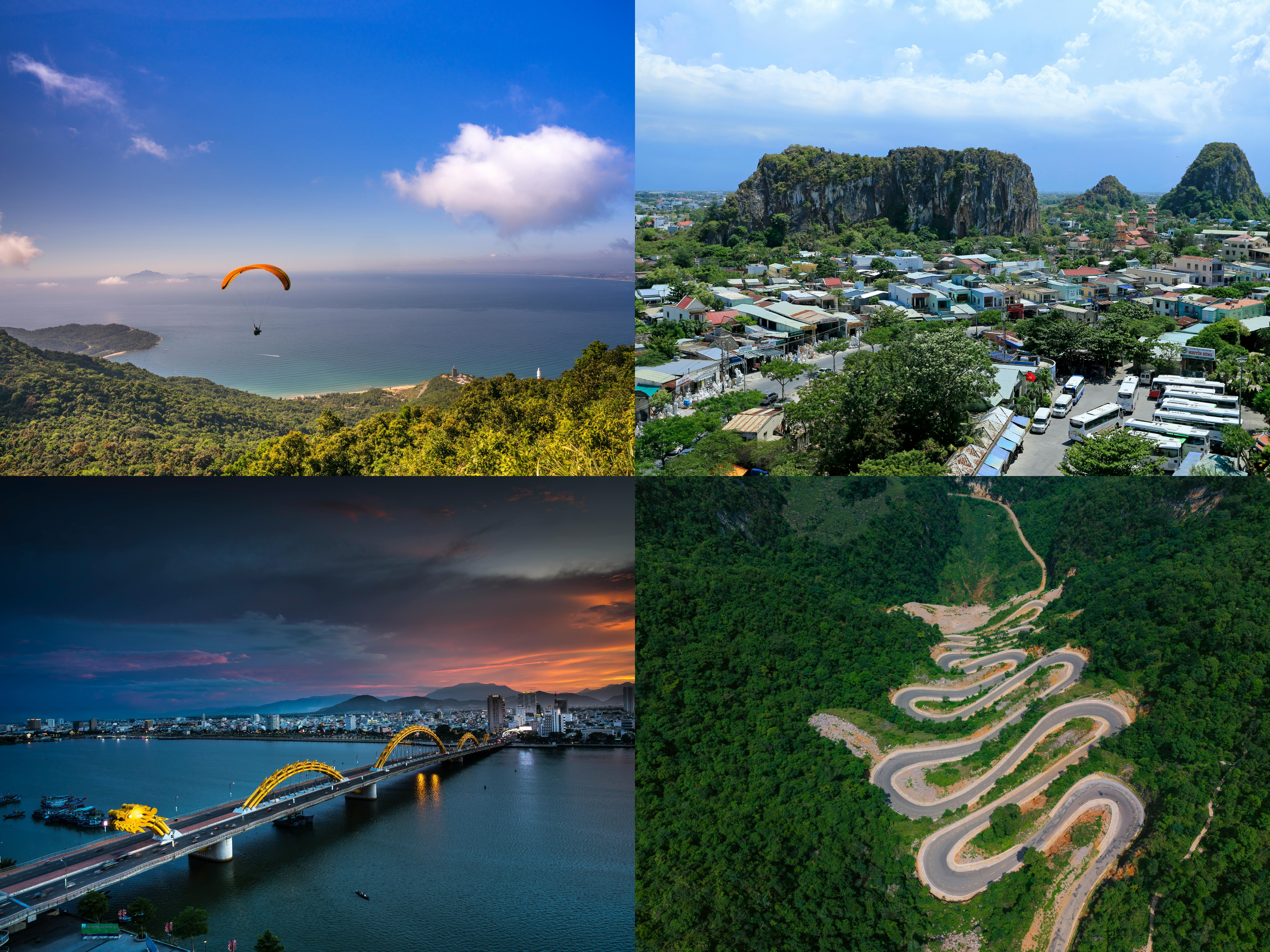
Marble Mountains (Ngũ Hành Sơn)
Five marble and limestone hills rising abruptly from the flat coastal plain — each named after one of the five elements (metal, wood, water, fire, earth). Thuy Son (Water Mountain) is the most accessible and contains a network of Buddhist shrines, Cham carvings, and natural caves that have been sacred sites for over 1,000 years. The climb to the top takes about 20 minutes; the views over the beach and city are excellent. A lift is available for those who prefer not to climb stairs. Allow 2–3 hours. Located at the southern end of the Da Nang beach strip, 10km from the city centre — easy by Grab.
|
|
02
|
Son Tra Peninsula & the Son Tra Nature Reserve
A protected mountain peninsula jutting into the sea north of the city — forested, dramatically beautiful, and home to the endangered red-shanked douc langur (one of the world's most colourful primates). The winding road around the peninsula passes through jungle canopy, with viewpoints looking back over the city and bay. The Linh Ung Pagoda at the summit houses a 67-metre-tall Lady Buddha statue, visible from all over Da Nang. Hire a motorbike or arrange a private car for the half-day circuit. The douc langurs are most easily spotted in the early morning — ask a local guide for the best spots.
|
|
03
|
Da Nang Museum of Cham Sculpture
The finest collection of Cham sculpture in the world — over 300 sandstone and terracotta works spanning the 7th to 15th centuries, from the civilisation that built the My Son temples and dominated central Vietnam for nearly a thousand years. The museum building itself is French colonial (1919) and the outdoor exhibition spaces are as impressive as the indoor galleries. Allow 1.5–2 hours. Entry fee is modest and it is never crowded. If you plan to visit My Son, come here first — the sculpture provides essential context for what you'll see at the ruins.
|
|
04
|
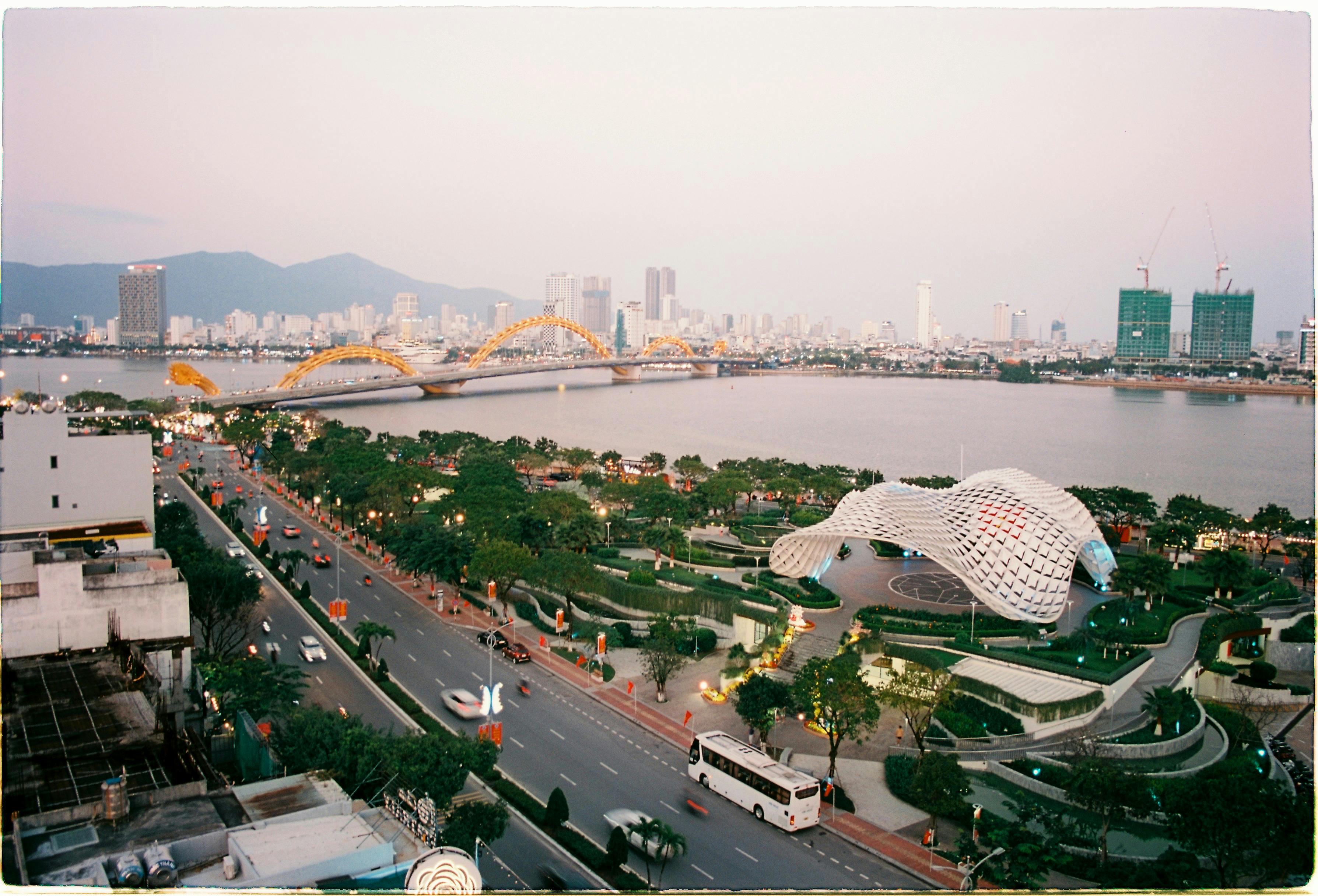
Han River Bridge & Dragon Bridge at night
Da Nang has become known for its remarkable bridges, and none more so than the Dragon Bridge — a 666-metre bridge shaped as a dragon stretching across the Han River, lit in changing colours after dark. On Saturday and Sunday nights at 21:00, the dragon breathes fire and water in a free public display that draws crowds of locals and visitors. The surrounding riverfront is pleasant to walk any evening, with Vietnamese families, street food vendors, and coffee shops along both banks.
|
|
05
|
Hai Van Pass — the most beautiful coastal road in Vietnam
The Hai Van Pass (Ocean Cloud Pass) crosses a mountain spur of the Truong Son Range that extends to the sea — dividing the climate zones of central and northern Vietnam so sharply that it can be sunny in Da Nang and raining in Hue on the same day. The road climbs through dense jungle to an old French and American military gatehouse at the summit, with views in both directions that rank among the most dramatic in the country. Jeremy Clarkson called it "a deserted ribbon of perfection" when Top Gear filmed here. Drive it by motorbike from Da Nang or arrange a private car that stops at the summit. Allow half a day.
|
Day trips
Essential Day Trips from Da Nang
Hoi An Ancient Town UNESCO · 30 min south
Distance: 30km · Travel time: 30 min by Grab or private car
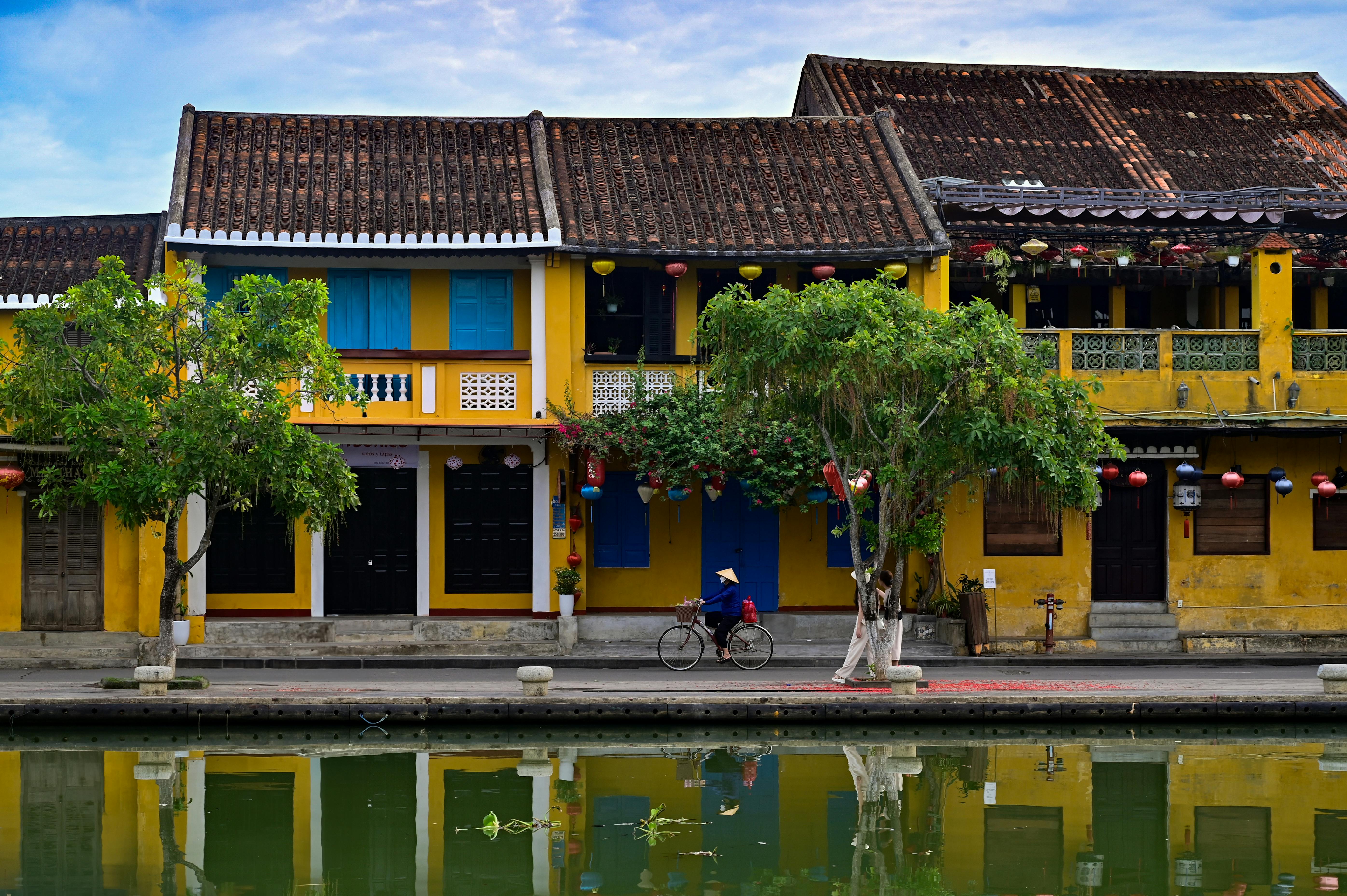
Hoi An is one of the best-preserved trading ports in Southeast Asia — a UNESCO-listed old town of yellow merchant houses, ancient Chinese assembly halls, Japanese covered bridges, and tailor shops that can produce a custom suit in 24 hours. It is also one of the most visited places in Vietnam, and for good reason: the food is extraordinary, the architecture is genuine, and the lantern-lit evenings on the Thu Bon River are genuinely beautiful.
When to go: Early morning (before 09:00) for the Ancient Town at its most atmospheric, before the tour groups arrive. Tuesday and Thursday mornings have a traditional market on the riverfront. Evening from 18:00 for the lantern-lit streets and river boats. What to eat: Cao Lau (pork and noodle dish unique to Hoi An, made with water from a specific well), White Rose Dumplings, and Banh Mi Phuong — widely considered the best banh mi in Vietnam.
My Son Cham Ruins UNESCO · 45 min inland
Distance: 70km · Travel time: 45 min by private car
The religious centre of the Cham civilisation from the 4th to 13th centuries — a complex of over 70 Hindu temples built in brick and stone in a jungle valley surrounded by mountains. Many temples were damaged during the Vietnam War (the site was used as a Viet Cong sanctuary and bombed by the US in 1969), but the surviving structures are haunting in their antiquity and the jungle setting is extraordinary. Visit the Da Nang Museum of Cham Sculpture first to understand what you are looking at.
When to go: Arrive before 08:30 to beat the tour groups and the midday heat — My Son is exposed and can reach 38°C by 11:00. The site is far more enjoyable in the early morning with soft light through the trees. How to get there: Private car from Da Nang (recommended for flexibility) or shared tour from Hoi An. Motorbike is possible but the road is long and exposed.
Hue Imperial City UNESCO · 2.5 hrs north
Distance: 100km · Travel time: 2.5 hrs by private car (via Hai Van Pass)
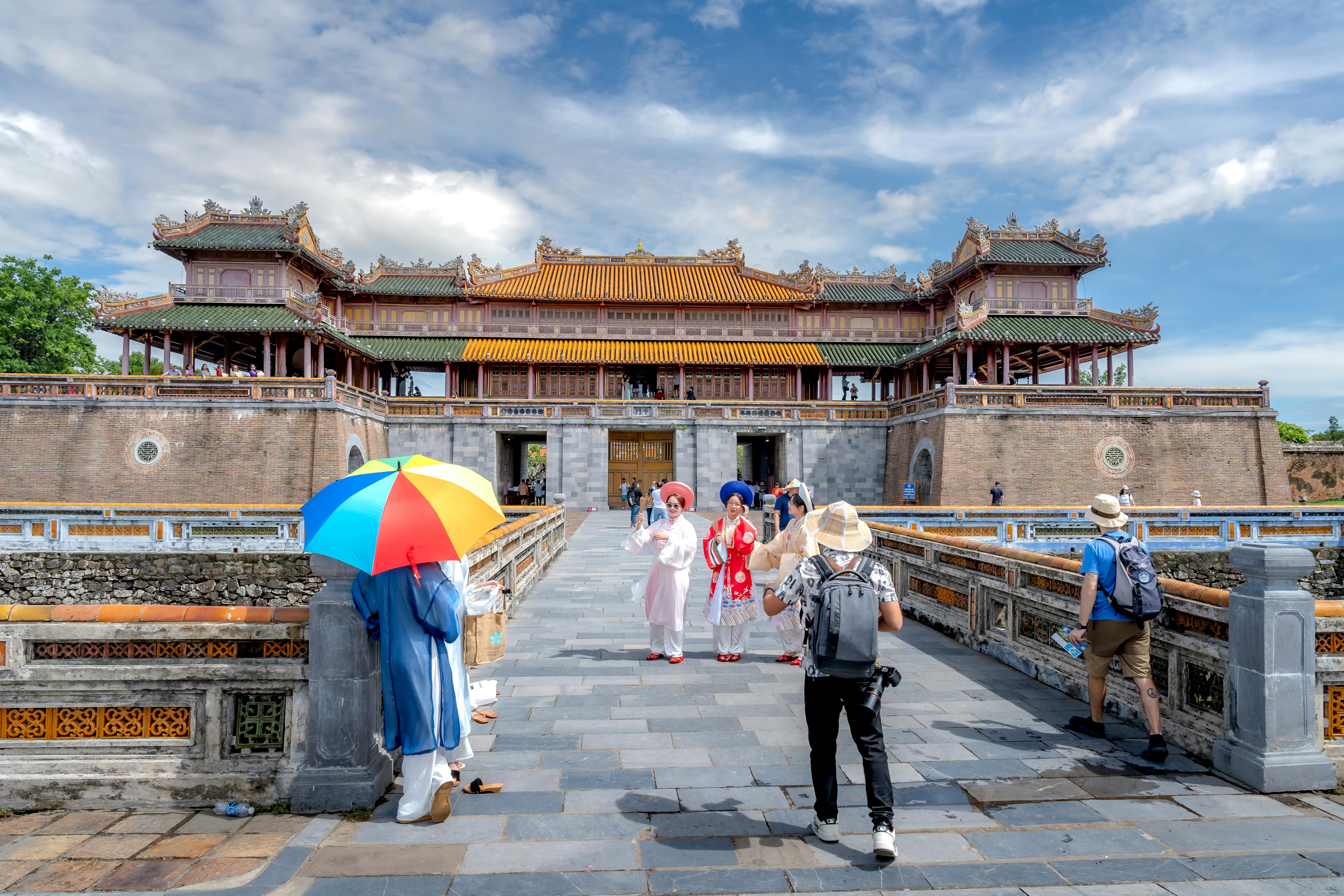
Vietnam's last imperial capital — the walled Citadel, the Imperial City within it, and the series of royal tombs scattered along the Perfume River are among the most significant historical sites in the country. Hue cuisine is also exceptional and distinct: the food here is more complex and ceremonial than anywhere else in Vietnam, a legacy of cooking for the royal court for two centuries.
Day trip vs overnight: Hue is doable as a long day trip from Da Nang (the Hai Van Pass route north is one of the best drives in Vietnam), but an overnight stay allows you to visit the royal tombs properly and experience Hue in the evening — a much calmer and more atmospheric city after the tour groups leave. Note: Hue and Da Nang can experience opposite weather on the same day due to the Hai Van Pass climate divide — check both forecasts before departing.
Where to eat
Da Nang Food Guide — What to Eat & Where
Central Vietnamese cuisine is distinct from both Hanoi and Saigon — it is the most complex regional food tradition in Vietnam, shaped by centuries of royal court cooking in nearby Hue and by the Cham and Chinese trading influences that passed through Da Nang for a thousand years. These are the dishes worth seeking out.
| Dish |
What it is & where to find it |
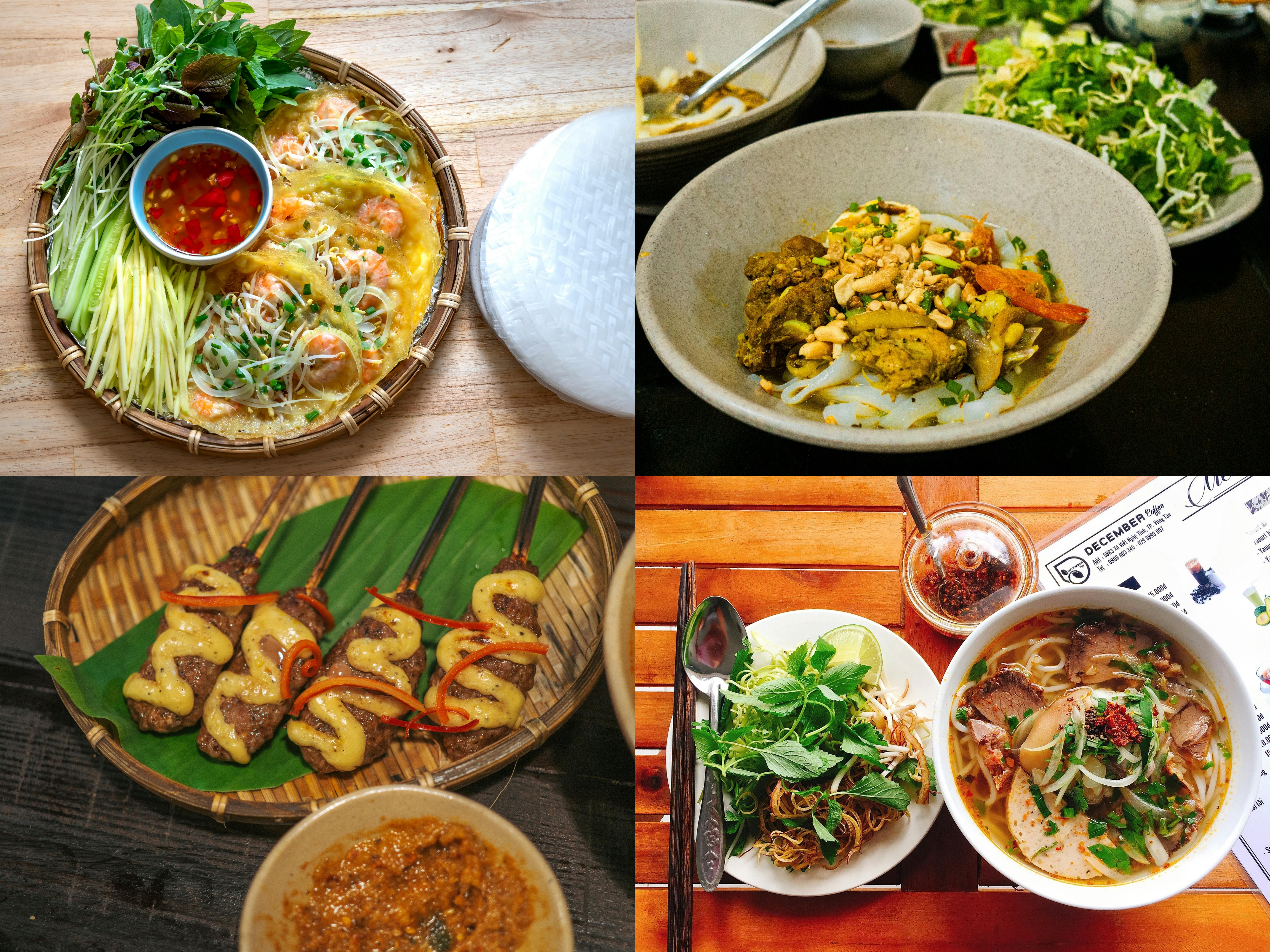
| Mì Quảng |
Wide turmeric-yellow noodles in a small amount of rich broth, topped with pork, shrimp, quail eggs, and peanuts — eaten with rice crackers and fresh herbs. Da Nang's signature dish. Try Mì Quảng 1A at 1 Hai Phong Street or any local com binh dan restaurant. |
| Bánh Xèo |
Sizzling crispy rice-flour crepe filled with pork, shrimp, bean sprouts, and green onion — the name means "sizzling cake." Eaten by wrapping a piece in lettuce or mustard leaf with fresh herbs and dipping in nuoc cham. The central Vietnamese version is smaller and crispier than the southern style. Find it at Bánh Xèo Bà Dưỡng on 23 Hoang Dieu Street. |
| Bún Bò Huế |
Hue-style spicy beef noodle soup — more complex and more aggressively flavoured than pho, with lemongrass, shrimp paste, and chilli as defining notes. Available everywhere in Da Nang for breakfast or lunch. Any street stall serving it will be excellent. |
| Nem Lụi |
Grilled pork skewers on lemongrass stalks, eaten by wrapping in rice paper with fresh vegetables and herbs. A central Vietnamese speciality that most northern and southern Vietnamese food guides overlook entirely. Found at specialist restaurants near the Han Market. |
| Seafood (local) |
Da Nang is a fishing city — the seafood is exceptional and inexpensive when eaten at local establishments rather than tourist restaurants on the beachfront. The Bé Mặn seafood area (3/2 Street, about 3km from the beach) is where Hanoians and locals eat seafood in Da Nang. Grilled scallops with spring onion and peanuts, steamed clams, and tiger prawns are the staples. |
Getting around
Getting Around Da Nang
| Transport |
Cost |
Best for |
| Grab (rideshare) |
40,000–80,000 VND city trips |
City transport, airport transfers, getting to Marble Mountains or Son Tra. Download before arriving. Fixed price, no negotiation. |
| Motorbike rental |
USD 7–15/day |
Son Tra Peninsula circuit, Hai Van Pass, independent exploration. Requires international driving licence. Traffic is lighter than Hanoi or HCMC. |
| Private car (day hire) |
USD 40–70/day |
My Son, Hue day trip, Hai Van Pass with stops. Most flexible option for families or groups. Can be arranged through your hotel or tour operator. |
| Taxi (metered) |
Similar to Grab |
Airport to hotel. Use Mai Linh (green) or Vinasun (white). Avoid taxis that approach you proactively. |
Getting to Hoi An from Da Nang
Grab from Da Nang city centre to Hoi An: approximately 250,000–350,000 VND (around AUD 15–20 / £8–12) and 30–40 minutes. Return Grab is slightly more expensive as Hoi An has fewer drivers. Alternatively, your hotel can arrange a fixed-price private car or shared shuttle. Do not use tuk-tuk or xe om (motorbike taxi) touts outside Hoi An Ancient Town — agree a price before getting on anything.
Practical info
Practical Information for European & Australian Travellers
| Topic |
Details |
| Flights |
Da Nang International Airport (DAD) has direct flights from most major Asian hubs. From Europe and Australia, connect via Hanoi, Ho Chi Minh City, Singapore, Bangkok, or Kuala Lumpur. Vietnam Airlines, VietJet, and Bamboo Airways fly frequently between Hanoi and Da Nang (1h15m, from USD 30). Many travellers fly into Hanoi, do the north, then fly to Da Nang for central Vietnam. |
| Visa |
E-visa (~USD 25, 90 days) for all EU and Australian passport holders. Most EU nationalities now qualify for 45-day visa-free entry. Apply at evisa.xuatnhapcanh.gov.vn at least 3 business days before departure. Check current rules — they have changed frequently since 2023. |
| Currency |
Vietnamese Dong (VND). ~1 AUD ≈ 16,000 VND · ~1 GBP ≈ 32,000 VND · ~1 EUR ≈ 27,000 VND. ATMs throughout the city. Cards accepted at hotels and most restaurants; cash preferred for street food and markets. Keep small denominations for street food. |
| Where to stay |
Beach area (My Khe): Best for beach access and the easiest base for most activities. Range from budget guesthouses to international 5-star resorts. City centre (Han River area): Better for food exploration, walking, and market visits. Quieter evenings. Non Nuoc / Marble Mountains: Best for the Marble Mountains and southern beaches; requires transport to reach the city. |
| How long to stay |
2 days: City, beaches, Marble Mountains + one day trip (Hoi An or My Son). 3–4 days: All of the above plus Hai Van Pass and Son Tra Peninsula. 5+ days: Add an overnight in Hue, or slow down and actually sit on the beach. |
FAQ
Should I stay in Da Nang or Hoi An?
Both, ideally. But if you must choose a single base: Da Nang for active travellers who want beaches, city food, day trip flexibility, and better value. Hoi An for travellers who want to immerse themselves in the ancient town atmosphere, don't mind tourist prices, and prioritise the UNESCO old town experience. Most visitors who spend a week in central Vietnam do 3–4 nights in one and 2–3 in the other. Hoi An's charm fades slightly after 2–3 days when you've walked the Ancient Town; Da Nang's depth is more sustaining over a longer stay.
Is Da Nang safe?
Very safe — consistently ranked among the safest cities in Southeast Asia for tourists. The city is clean, well-managed, and has a large domestic Vietnamese tourism industry, which means it functions like a real city rather than a tourist enclave. The main precautions are standard: secure bags in busy areas, use Grab rather than unknown taxis, and respect beach safety flags. Solo travellers, including solo women, consistently report feeling safe here.
Can I combine Da Nang with North Vietnam on the same trip?
Yes, and it is one of the most satisfying Vietnam itineraries available. Fly into Hanoi, spend 7–10 days in the north (Hanoi, Ninh Binh, Sapa, Ha Long Bay), then fly to Da Nang for 3–5 days in central Vietnam before flying home directly from Da Nang. Vietnam Airlines, VietJet, and Bamboo Airways fly Hanoi–Da Nang multiple times daily from approximately USD 30–60. The contrast between the north's cooler, more traditional character and central Vietnam's coastal warmth is one of the great pleasures of a longer Vietnam trip.
Planning a Vietnam Trip That Includes Da Nang?
Whether you're combining Da Nang with the north, adding Hoi An and Hue, or planning a longer central Vietnam itinerary — we design private, fully guided trips tailored to how you actually travel.




0 Comment