


Title: Moc Chau Travel Guide: Vietnam's Most Overlooked Highland — Everything You Need to Know
Description: The complete Moc Chau travel guide — tea plantations, plum blossom season, ethnic minority villages, best time to visit, and why this northwest Vietnam plateau deserves more than a weekend from Hanoi.
Moc Chau travel guide 2026 · Moc Chau things to do Europeans Australians · best time visit Moc Chau · Moc Chau tea plantation · northwest Vietnam highlands · Moc Chau plum blossom
| 01Why Moc Chau? | 05Things to do |
| 02Best time to visit | 06Where to eat & local food |
| 03Moc Chau vs Sapa | 07Getting there |
| 04The landscapes by season | 08Practical info & FAQ |
Why Moc Chau Is the Highland Destination Most Travellers Miss
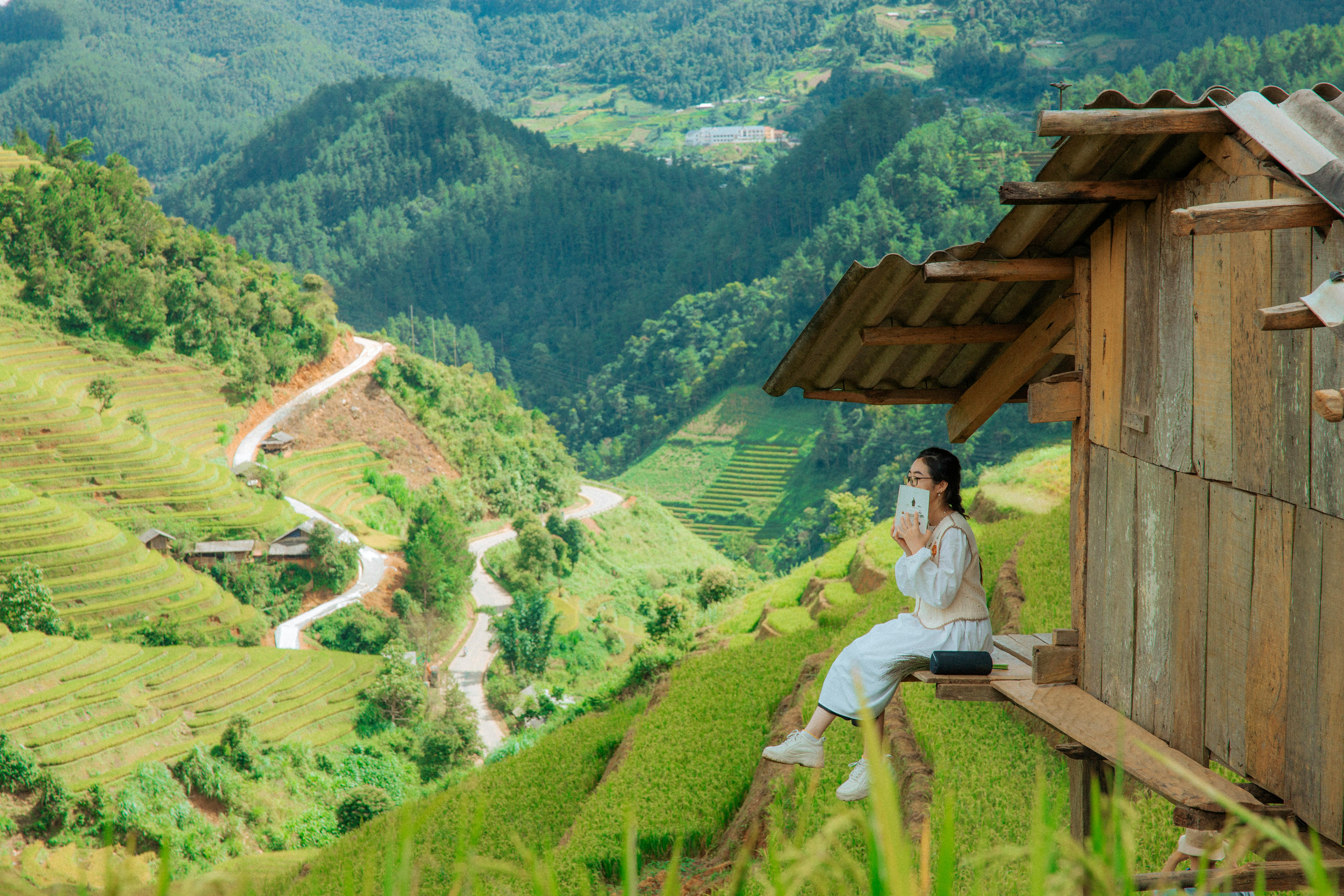
Most international visitors to northern Vietnam go to Sapa. Sapa is spectacular — and increasingly busy. Moc Chau, two hours further west into the Son La Province highlands, receives a fraction of the international tourist numbers while offering landscapes that are, in different ways, equally extraordinary. Rolling hills covered in emerald tea plantations. Plum and peach orchards that erupt in white and pink blossom for a few weeks each winter. H'mong, Thai, and Dao minority villages that have changed little in a generation.
Moc Chau is also accessible in a way that Sapa is not — the drive from Hanoi takes about 3.5 hours on the new expressway and mountain road, with no overnight train required. It functions as a genuine weekend escape for Hanoians and, for international travellers, as a detour from the standard northern circuit that rewards those who choose it with one of the most visually distinctive landscapes in Vietnam.

|
🍃
The tea plantations
Moc Chau is one of Vietnam's most important tea-growing regions. The plateau's altitude, cool temperatures, and morning mist create ideal conditions for Shan Tuyet — a native ancient tea variety. The hillsides are covered in perfectly manicured rows of low, dense bushes that turn iridescent green after rain.
|
🌸
The blossom seasons
Moc Chau has distinct blooming cycles that attract Vietnamese photographers from all over the country: plum blossom (late January–February), peach blossom (February–March), wild sunflowers (October–November), and mustard flowers (November–December). Each transforms the landscape entirely.
|
|
👥
Ethnic minority culture
Over 12 ethnic minority groups live in Moc Chau District, including the H'mong, Thai, Muong, and Dao communities. Their villages, markets, festivals, and traditional houses are far less touristed than those around Sapa — genuine visits rather than managed experiences.
|
🐄
Dairy farming & local food
Moc Chau is unusual in Vietnam for its dairy industry — the cool climate supports cattle farming, and the resulting fresh milk, yoghurt, and local cheeses are delicacies that visitors seek out specifically. The dairy products here are genuinely excellent by any standard.
|
Best Time to Visit Moc Chau — Season by Season
Unlike Sapa, which has two clearly defined wet and dry seasons, Moc Chau is worth visiting at almost any time of year — but for very different reasons depending on when you go. The plateau follows the blooming calendar of its orchards and fields, and each season produces a completely different landscape.
The plum blossom season (late January–February) aligns with European winter breaks and Australian summer holidays — and it is genuinely one of the most beautiful natural events in northern Vietnam. Book accommodation 2–3 months ahead for this window. October–November is the next best option and aligns with European autumn half-term and Australian spring breaks, with the sunflower and mustard flower seasons at their peak.
Moc Chau vs Sapa — Which Should You Choose?
The two are not substitutes for each other — they offer genuinely different landscapes and experiences. But for travellers choosing between them on a single trip, or deciding whether to add Moc Chau to an itinerary that already includes Sapa, here is the honest comparison.
First time in Vietnam? Do Sapa. The drama and the trekking are worth experiencing. Returning visitor, photographer, or traveller with more than 10 days in the north? Add Moc Chau — particularly in blossom season. The two complement each other well on a longer itinerary: Sapa for the mountain scale and altitude experience, Moc Chau for the pastoral beauty and the sense of a place that has not yet been packaged for international tourism.
What Moc Chau Looks Like — Season by Season

Top Things to Do in Moc Chau
|
🚴 Cycling through the tea plantations and orchards
The plateau's relatively gentle terrain makes Moc Chau one of the best cycling destinations in northern Vietnam. Bicycle rental is available in Moc Chau town from approximately 80,000–120,000 VND per day. The standard circuit covers the Moc Chau Tea Farm, the plum and peach orchards around Chieng Di village, and the viewpoint hills above the valley — approximately 20–25km over a half day at a relaxed pace. A guide is recommended for navigating between villages and accessing viewpoints that are not signposted.
|
|
🏡 Visiting H'mong and Thai minority villages
The villages around Moc Chau — particularly the H'mong villages of Na Ka, Ang, and Ta Phinh, and the Thai villages along the valley below the plateau — offer genuine community visits that are less managed than those around Sapa. With a local guide, visits typically include a walk through the village, time with a local family, observation of traditional weaving or embroidery, and sometimes a shared meal. The Moc Chau Sunday market (held at the town centre) is one of the most authentic highland markets in the region — H'mong, Thai, and Muong communities come to trade, socialise, and buy provisions, with less tourist infrastructure than Bac Ha or Sa Pa markets.
|
|
🍵 Tea plantation walk & tasting
The Moc Chau Tea Farm offers guided walks through the plantation with a tasting session covering the plateau's different tea varieties. The ancient Shan Tuyet trees (some hundreds of years old) produce a tea with a distinctly different character from standard Moc Chau tea — floral, slightly sweet, with a clean mineral finish that reflects the altitude. The farm's tea shop sells directly at producer prices. Allow 2 hours for the full experience.
|
|
🐄 Moc Chau dairy experience
The Moc Chau Milk Company operates dairy farms across the plateau that are open to visitors — you can watch the milking process, learn about the cold-climate cattle breeds that thrive here, and sample the fresh dairy products. The Moc Chau fresh milk yoghurt, drunk warm from a small cup at a roadside stall, is one of those specific food experiences that people travel specifically to have again. The dairy milk tea served in local cafés is also excellent. Several strawberry farms and honey producers in the area offer similar experience-based visits.
|
|
🌅 Pha Luong Peak & viewpoints
Pha Luong (2,251m) on the border with Laos is the dramatic mountain backdrop visible from much of the plateau. The trek to the summit takes 2–3 days and is suited to experienced hikers with a guide. More accessible are the multiple viewpoint hills around Moc Chau town that can be reached by motorbike or on foot — the hill above Ang village (Doi Ang) offers panoramic views of the tea plantations and orchards that are among the most photographed in the region. Sunrise and late afternoon light are ideal.
|

Moc Chau Food — What to Eat & Where
Moc Chau's food culture is a combination of Thai and H'mong highland cooking, Vietnamese national dishes prepared with local highland ingredients, and the unique dairy products that define the plateau's identity. The food here is genuinely distinctive — not just mountain food in the generic sense, but a specific cuisine shaped by altitude, culture, and the ingredients the plateau produces.

Getting to Moc Chau from Hanoi
Moc Chau is 200km from Hanoi — approximately 3.5 hours by private car or 4–5 hours by bus, via Highway 6 through Hoa Binh Province. The drive itself is part of the experience: the road climbs steadily through increasingly dramatic mountain terrain, passing the Hoa Binh hydroelectric reservoir and the Thung Khe Pass (which offers some of the most celebrated mountain views on the route) before arriving on the Moc Chau plateau.
Ask your private car driver to stop at the Thung Khe Pass (also called White Rock Pass) — the viewpoint overlooks a deep mountain valley and is one of the most striking vistas on the entire Hanoi–Son La road. The Hoa Binh reservoir, visible from the road as you pass through, is also worth a stop if time allows. If you are driving yourself, the road is marked clearly but steep in sections — allow extra time.
Practical Information
Yes, with the right planning. Moc Chau is less developed for international tourism than Sapa, which means it is quieter and more authentic — but also means fewer English-speaking guides and less tourist infrastructure. A private tour with an English-speaking guide from Hanoi is the most reliable way to access the best of Moc Chau for a first-time visitor. Independent travel is entirely possible for experienced travellers comfortable navigating without a guide.
Yes — it requires a longer northern Vietnam itinerary (10+ days) but the combination is excellent. A common route: Hanoi → Moc Chau (2 nights) → return Hanoi → overnight train → Sapa (2 nights) → return Hanoi. Alternatively, some travellers do Moc Chau first as a gentler introduction to the highlands before the more dramatic Sapa landscape. The two are different enough in character that seeing both enriches the understanding of each.
The blossom timing varies by 1–2 weeks depending on the year's temperatures. The most reliable approach is to check with your accommodation or tour operator in the week before your visit — local guesthouses track bloom conditions carefully because it directly affects their business. Vietnamese travel forums and social media (particularly Facebook groups for Moc Chau tourism) are updated in real time during the blossom seasons. Your guide can also advise on which areas are at peak bloom on any given day.
It depends entirely on when you visit. During plum blossom peak (late January–February) and major Vietnamese holidays (Tet, national holidays), Moc Chau is extremely popular with Vietnamese domestic tourists — the roads around the most famous blossom viewpoints can be genuinely crowded. The experience for international visitors who rise early and move with a private guide is significantly better than for those arriving at popular spots at midday. Outside the peak blossom season and holidays, Moc Chau is quiet — one of the most genuinely uncrowded highland destinations in northern Vietnam.
Planning a Vietnam Trip That Includes Moc Chau?
Whether you want the blossom season, a cycling route through the tea plantations, or a slow journey combining Moc Chau with Sapa and Ninh Binh — we design private, guided itineraries tailored to how you travel.
| Plan My Vietnam Trip → | View All Tours → |

0 Comment