Title: Hanoi in 2 Days: The Honest Itinerary — What to Do, What to Skip (Travel Guide)
Description: Two days in Hanoi done properly — an hour-by-hour itinerary for European and Australian travellers that covers what actually matters, skips the tourist traps, and leaves room to breathe.
Hanoi 2 days itinerary · Hanoi 48 hours guide · what to do Hanoi Europeans Australians · Hanoi Old Quarter itinerary · Hanoi what to skip · best things to do Hanoi 2025
Honest Itinerary Guide
Hanoi · 48 Hours · 2025
Hanoi in 2 Days:
What to Do, What to Skip
Most 2-day Hanoi itineraries try to squeeze in everything. This one doesn't. It covers what actually matters — the street food, the hidden alleys, the coffee culture, the one temple worth your time, the lake at dusk — and it tells you clearly what to skip so you have room to simply be in the city.
|
48 hrs
Two full days
|
9M+
Population
|
1,000 yrs
As Vietnam's capital
|
36
Old Quarter streets
|
Before you start
How to Approach Hanoi in Two Days
Hanoi is not a city that rewards rushing. It is a city that rewards attention — the kind of slow, observant walking that notices the French colonial archway behind a motorbike repair shop, or the woman who has been selling bánh mì from the same corner since 1987. Two days is enough to feel the texture of Hanoi if you use them well. It is not enough if you try to see everything.
This itinerary is built around three principles: walk more than you ride, eat where locals eat, and leave gaps in the schedule. The gaps are not wasted time — they are when Hanoi actually happens to you.
Practical notes before Day 1
| 🏨 Stay in or within walking distance of the Old Quarter (Hoàn Kiếm District) — everything in this itinerary is walkable from there |
| 👟 Wear comfortable shoes — Hanoi's pavements are uneven and you will walk 8–12km per day |
| 💵 Carry cash (VND) — most street food vendors and local cafés are cash only. ATMs available throughout the Old Quarter |
| 🌡️ Dress in layers — Hanoi's temperature varies significantly by season. Oct–Mar: bring a light jacket for evenings. Apr–Sep: light, breathable clothing |
Day 1
The Old Quarter, the Lake & the Street Food
Morning
| 06:30–07:30 |
Hoan Kiem Lake at dawn Don't miss
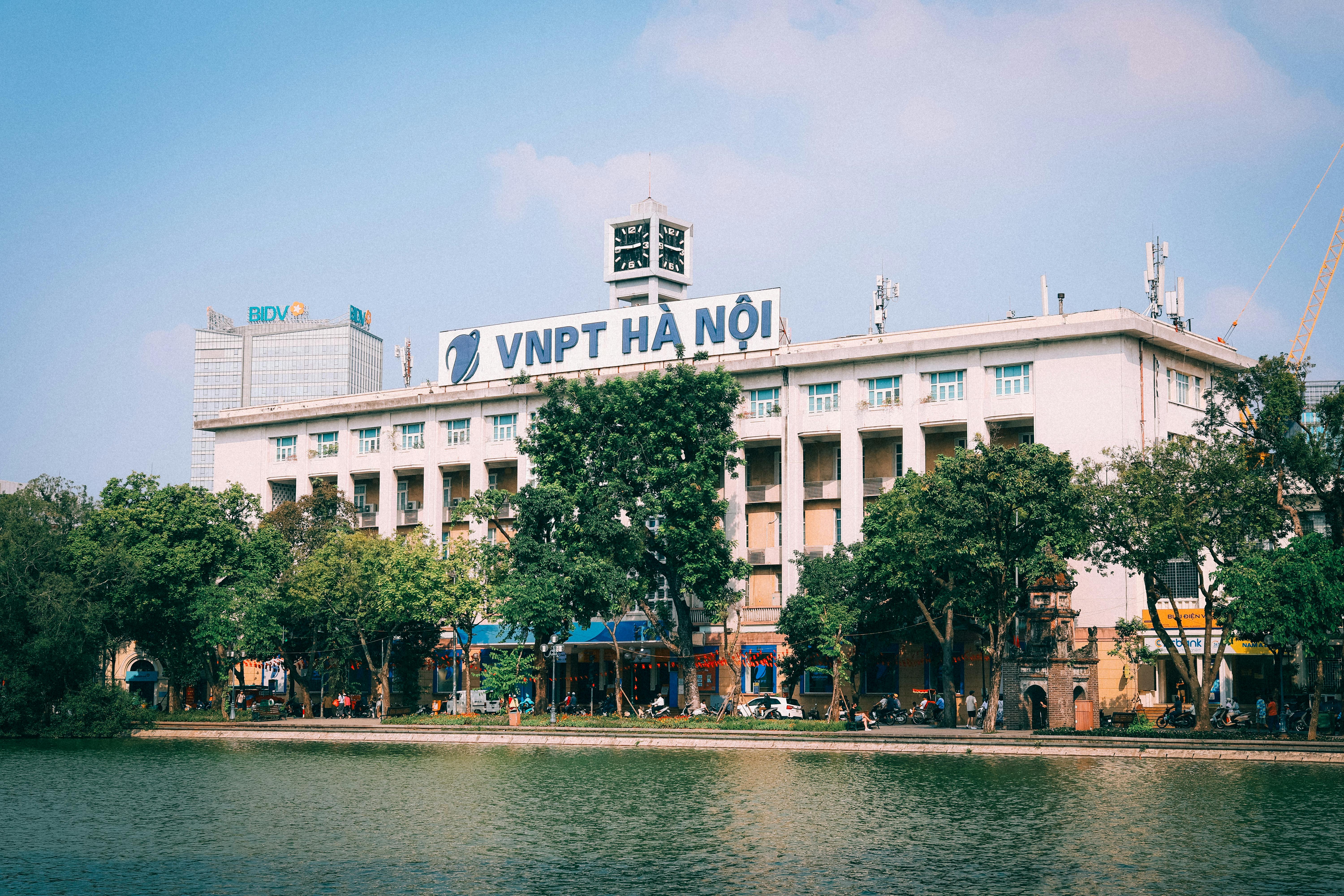
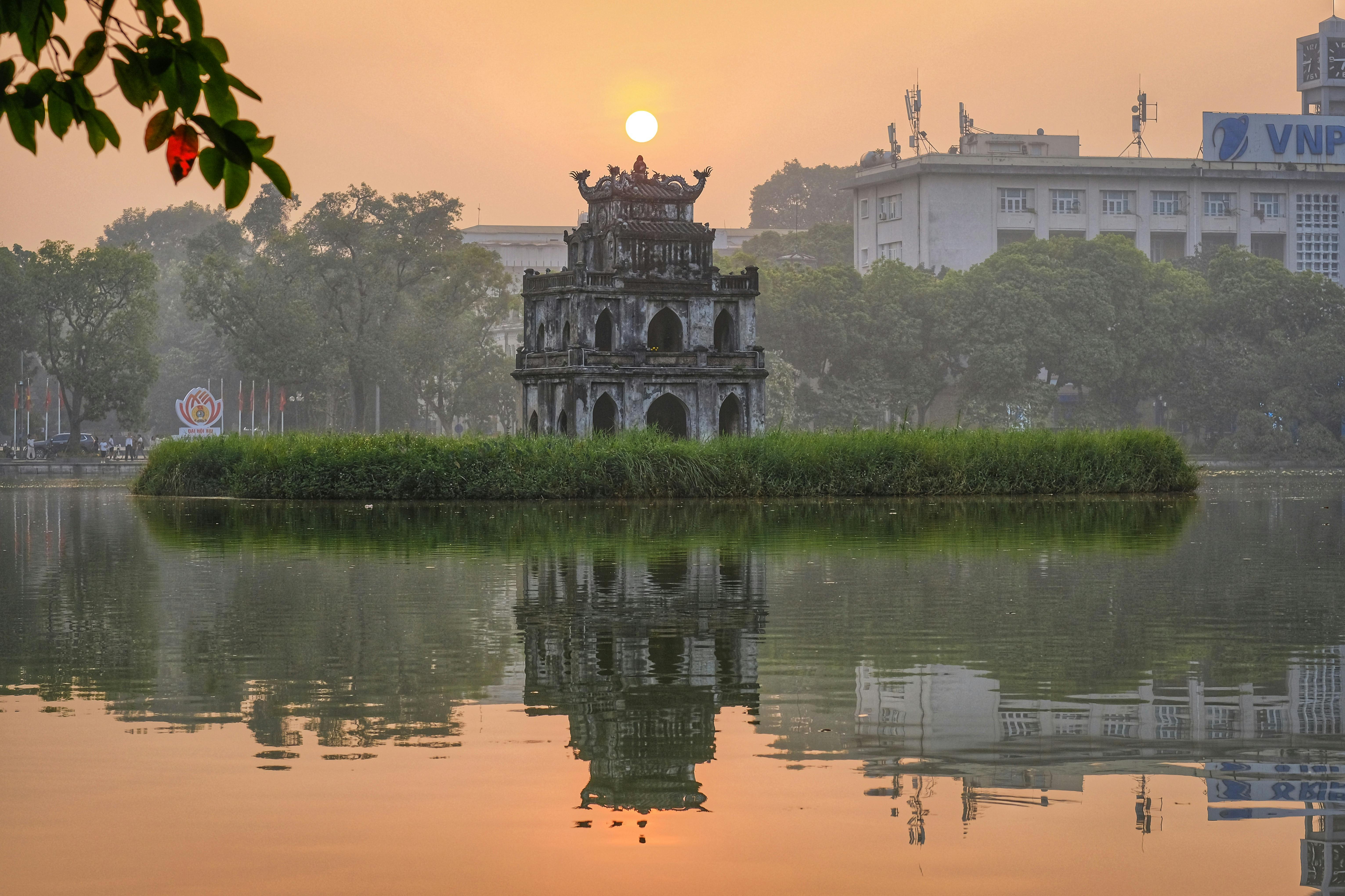
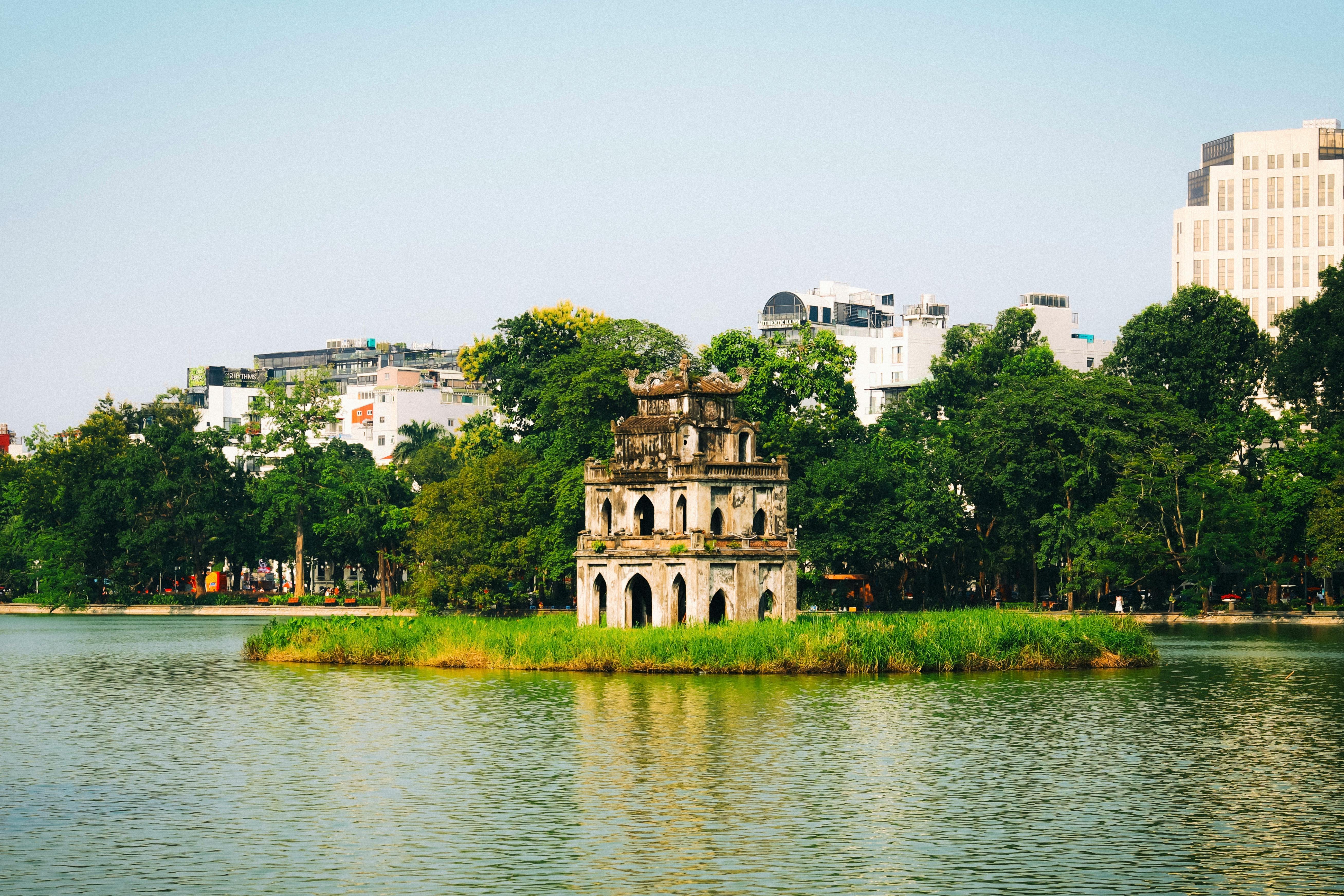
Set your alarm. Hoan Kiem Lake at dawn is one of the great urban experiences in Southeast Asia — Hanoians of every age come here to exercise, practise tai chi, play badminton, and walk before the heat of the day builds. The lake is still, the light is low, and the 19th-century Turtle Tower on its small island is reflected perfectly in the water. This is not a tourist experience — it is the city's daily ritual, and you are welcome to join it. Arrive by 06:30 and stay for an hour.
|
| 07:30–08:30 |
Breakfast — Pho on the street
Your first bowl of pho should be from a street stall, not a restaurant. Look for Pho Gia Truyen on Bat Dan Street (opens at 06:00, queues out the door by 07:30 — join the queue, it moves fast) or Pho Thin on Dinh Tien Hoang Street. Sit on a plastic stool at a plastic table and eat the way Hanoians eat breakfast: quickly, with plenty of fresh herbs, a squeeze of lime, and a chilli on the side. The broth has been simmering since 3am.
|
| 09:00–11:00 |
Old Quarter walking — the 36 guild streets
The Old Quarter's 36 streets were historically each dedicated to a specific trade — silk, paper, silver, bamboo, tin. Some trades still survive on their original streets; others have been replaced by modern commerce. The most rewarding approach is not to follow a map but to pick a direction and walk, turning whenever something catches your eye. Key streets: Hang Gai (silk and embroidery), Hang Ma (paper goods and decorations), Hang Bac (silver), and the narrow alleys off Hang Be where the food market spills onto the pavement every morning.
|
⏭ What to skip — Morning
The Ho Chi Minh Mausoleum — requires queuing, a dress code, and visiting hours that change frequently. The mausoleum is closed on Mondays and Fridays and for extended periods annually for maintenance. Unless you have a specific historical interest, the time is better spent in the Old Quarter. The nearby Ho Chi Minh Museum is more informative and has no queue. Guided bus tours of the Old Quarter — you see the streets from a window. Walk them instead.
Midday
| 11:00–12:30 |
Temple of Literature (Văn Miếu) The one temple worth your time
Vietnam's first national university, founded in 1070 to honour Confucius. Five tranquil courtyards, ancient stone stelae bearing the names of scholars who passed the royal exams from the 15th to 18th centuries, and some of the finest preserved classical Vietnamese architecture in the country. The atmosphere — scholarly, quiet, slightly melancholy — is unlike anything else in Hanoi. Allow 1.5 hours. The second courtyard's Well of Heavenly Clarity is particularly beautiful in the morning light.
|
| 12:30–13:30 |
Lunch — Bun Cha
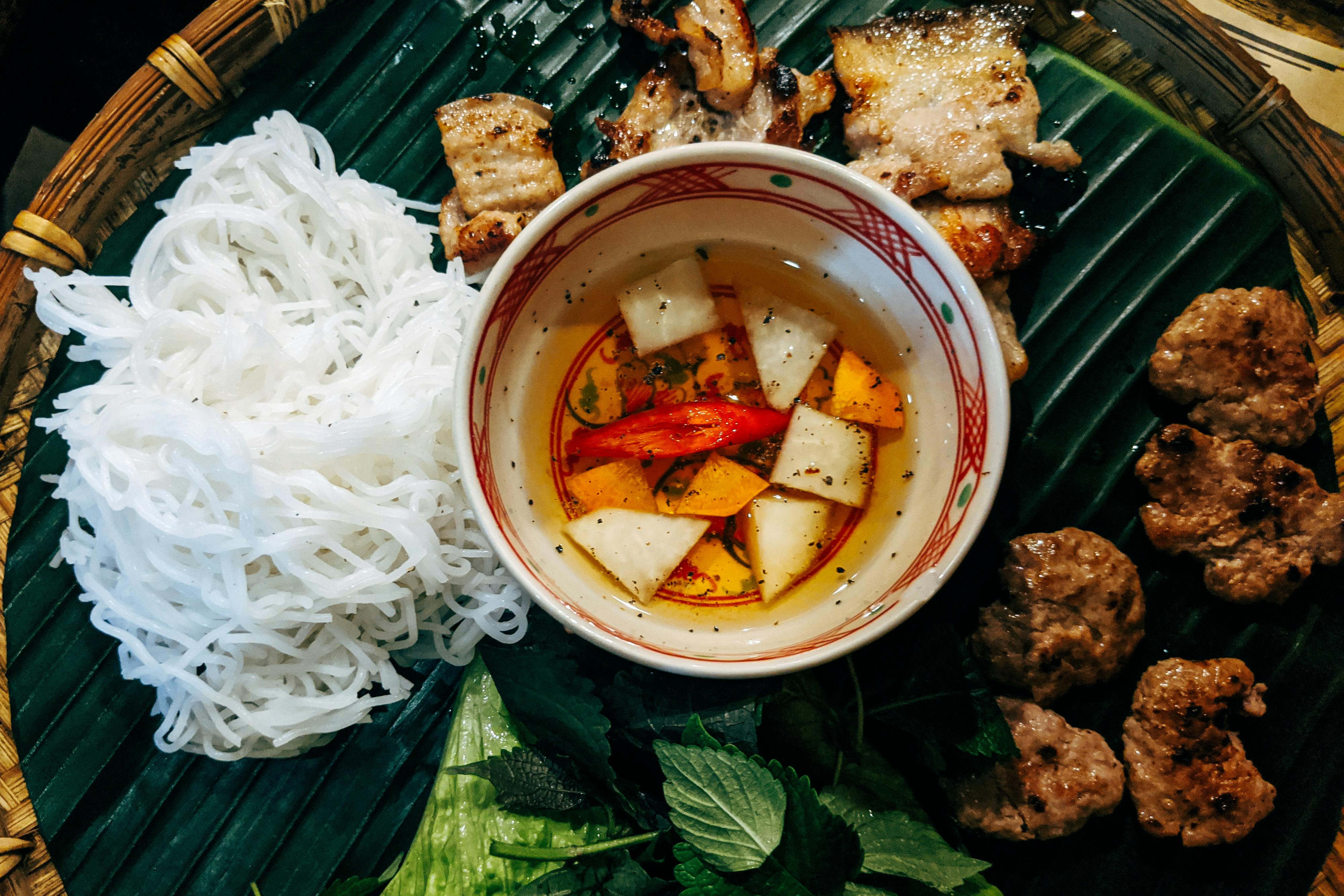
Hanoi's most beloved lunch dish: grilled pork patties and pork belly served in a sweet-savoury dipping broth, eaten with rice vermicelli noodles and a mountain of fresh herbs. Bun Cha Huong Lien on Le Van Huu Street became internationally famous when Anthony Bourdain and Barack Obama ate here in 2016 — it is genuinely excellent, not just famous. Queue at the entrance and you will be seated within 10 minutes. Order bun cha and a nem ran (fried spring roll) on the side. Total cost: approximately 70,000–90,000 VND per person.
|
Afternoon
| 14:00–15:30 |
Vietnamese Women's Museum or Fine Arts Museum
Two of Hanoi's genuinely excellent museums — air-conditioned, well-curated, and not overrun with group tours. The Vietnamese Women's Museum on Ly Thuong Kiet Street covers the history of Vietnamese women from ancient matriarchal societies through the war years and into contemporary life. It is moving, intelligent, and completely unlike the war museums of Ho Chi Minh City. The Vietnam Fine Arts Museum on Nguyen Thai Hoc Street covers Vietnamese art from Dong Son bronzes to contemporary painting — the lacquerware collection is exceptional. Choose one; both take 1–1.5 hours.
|
| 15:30–16:30 |
Egg Coffee at Giang Café Don't skip this
Cà phê trứng — egg coffee — is a Hanoi invention from the 1940s, created by a bartender at the Sofitel Metropole who substituted whipped egg for scarce milk during wartime. The result: a thick, sweet, custardy foam on top of strong Vietnamese robusta. Giang Café on Nguyen Huu Huan Street is the original — a narrow staircase leading to a tiny room where this drink has been made the same way for 80 years. Sit, drink slowly, and do nothing else for 45 minutes. This is non-negotiable.
|
| 17:00–18:30 |
Hoan Kiem Lake at dusk + Ngoc Son Temple
Return to Hoan Kiem Lake as the afternoon light softens. Cross the red Huc Bridge to Ngoc Son Temple on the lake's small island — the interior is atmospheric and uncrowded at this hour. Afterwards, walk the lake perimeter as the city begins its evening: families on the banks, children feeding the fish, the old men who play chess here every day regardless of weather. On Friday and Saturday evenings, the streets around the lake are closed to traffic for the Old Quarter pedestrian weekend — one of the most pleasant urban spaces in Vietnam.
|
Evening
| 19:00–21:00 |
Dinner — Cha Ca La Vong or Bun Bo Nam Bo
Cha Ca La Vong on Cha Ca Street: turmeric-marinated fish (snakehead or catfish) fried tableside in a sizzling pan of dill and spring onion, eaten with vermicelli noodles, roasted peanuts, and shrimp paste. This dish is so associated with this street that the street was renamed after it. The restaurant has been here since 1871. Alternatively, Bun Bo Nam Bo on Hang Dieu Street: dry beef noodle salad with fresh herbs and fried shallots — lighter, more complex, and one of the most underrated dishes in Hanoi. Both are under AUD 10 / £6 per person.
|
| 21:00 onwards |
Ta Hien Street — bia hoi corner
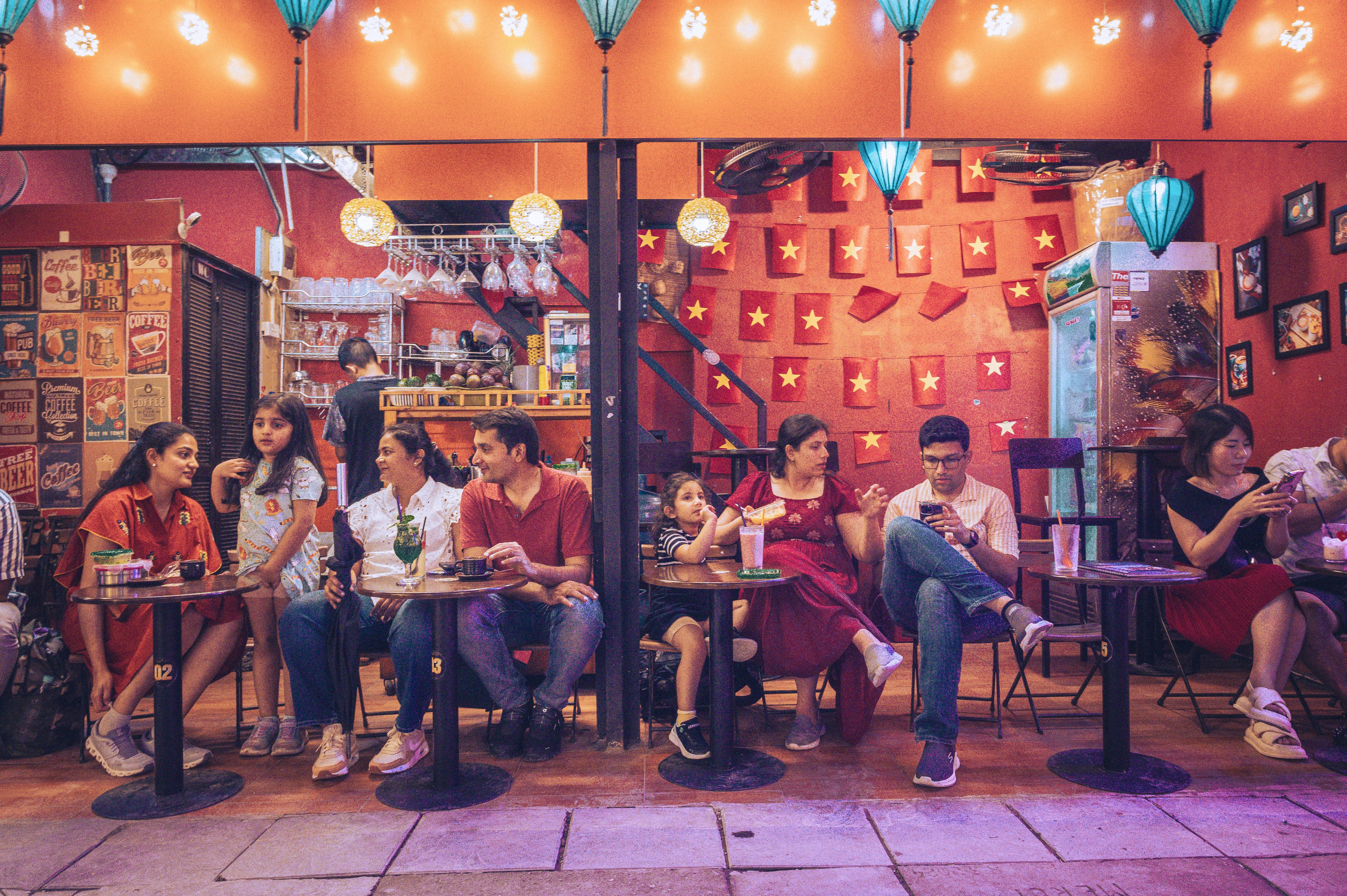
The intersection of Ta Hien and Luong Ngoc Quyen Streets is Hanoi's most famous bia hoi (fresh draught beer) corner. Plastic stools, cold beer poured from a keg, and street food vendors circulating with skewers and dried squid. The beer costs about 10,000 VND per glass (less than AUD 0.60 / 40p). Sit as long as you like. This is not a tourist bar — it is where Hanoians end their Tuesday evenings.
|
⏭ What to skip — Day 1 afternoon/evening
The Water Puppet Show — genuinely interesting as a cultural form but the tourist performances at Thang Long Water Puppet Theatre are short (about 50 minutes), loud, and heavily attended by large groups. If you want to see it, book in advance — but it is not essential on a 2-day visit. Rooftop bars in the Old Quarter — expensive, touristy, and the views of a medium-density Vietnamese city are not their strongest selling point. The bia hoi corner at street level is infinitely more interesting.
Day 2
The West Lake, Train Street & Hanoi's Hidden Side
Morning
| 07:30–08:30 |
Breakfast — Banh Mi & local café
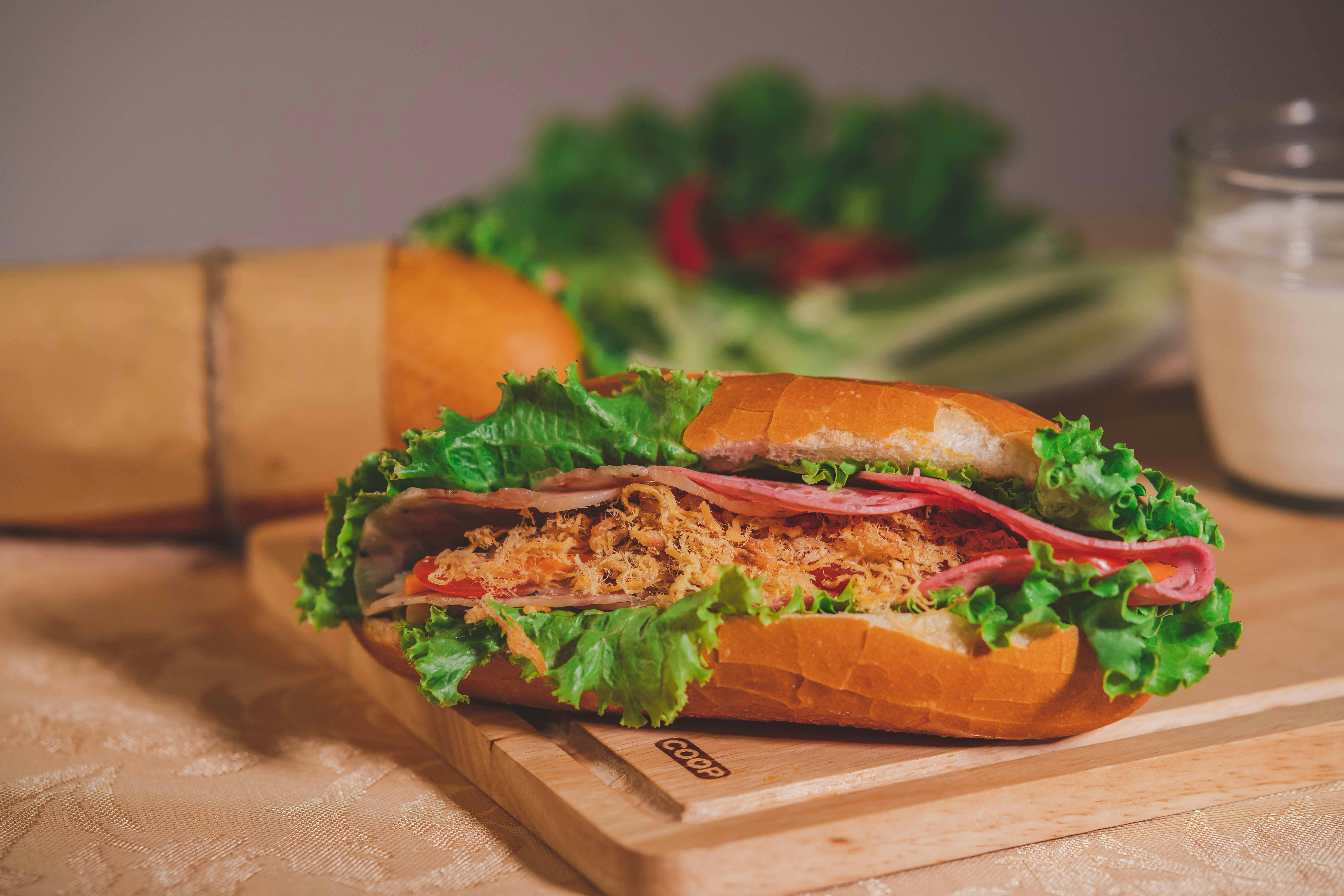
A Vietnamese bánh mì (baguette stuffed with pâté, pickled vegetables, coriander, and chilli) from a street cart costs approximately 25,000–35,000 VND and is one of the great breakfasts in Asia. Banh Mi 25 on Hang Ca Street is consistently reliable. Follow with a cà phê sữa đá (iced coffee with condensed milk) from any pavement café. Sit outside, watch the morning commute, and do not be in a hurry.
|
| 09:00–10:30 |
Tran Quoc Pagoda & West Lake circuit
Hanoi's oldest Buddhist pagoda (6th century AD) sits on a small peninsula extending into West Lake — the city's largest lake and the area where Hanoians cycle, eat lakeside, and escape the Old Quarter's density. The pagoda itself is architecturally striking from the outside and tranquil inside in the mornings. The cycle path around the lake's southern shore (hire a bicycle for about 50,000 VND/hour from any of the rental shops on Thanh Nien Road) is one of the most pleasant rides in the city. The lake is 17km in circumference — do the southern half, which takes about 45 minutes at a gentle pace.
|
| 10:30–12:00 |
The Hanoi Ceramic Road & hidden streets of the Old Quarter
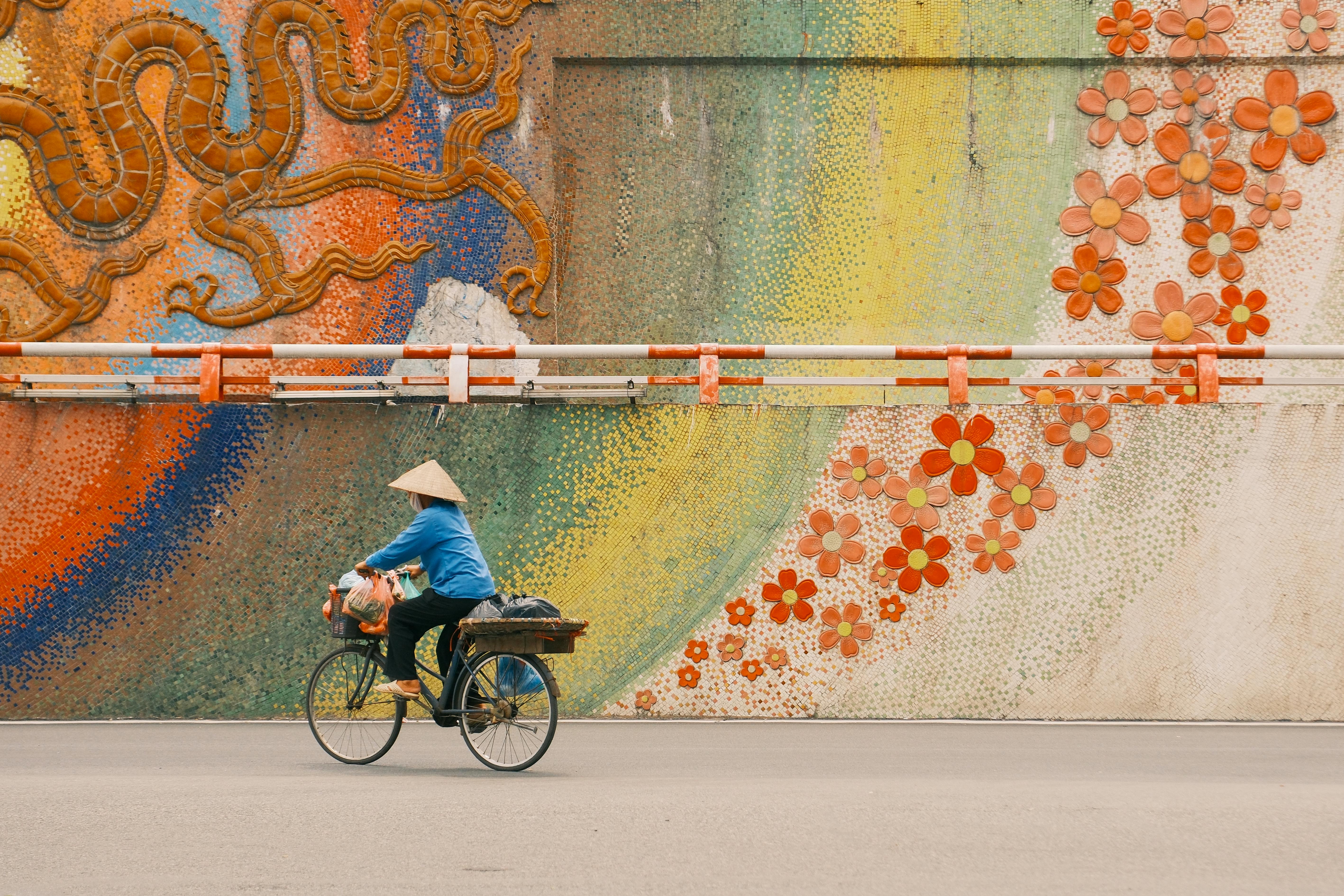
Return from West Lake along Thanh Nien Road, lined with the 4km Hanoi Ceramic Mosaic Mural — the world's longest ceramic mosaic, created for Hanoi's 1,000th anniversary in 2010. Then into the Old Quarter's less-visited northern section: the streets around Hang Luoc, Hang Chieu, and Dong Xuan market, where the commercial life is more local and less tourist-oriented. Dong Xuan covered market is a working wholesale market — chaotic, authentic, and unlike the souvenir shops of Hang Gai.
|
⏭ What to skip — Day 2 morning
Bai Dinh or Perfume Pagoda day trips — both are 2+ hour drives from Hanoi and are best suited to travellers with a specific interest in Buddhist pilgrimage sites. For most visitors, the time is better spent in the city. The Army Museum — genuinely interesting but leans heavily on the Vietnamese military perspective. If you want context on the war, the Vietnamese Women's Museum (Day 1) provides it with more nuance and humanity.
Midday
| 12:00–13:30 |
Lunch — Banh Cuon or Xoi Xeo
Bánh cuốn (steamed rice rolls filled with minced pork and wood ear mushroom, served with nuoc cham and crispy shallots) is one of Hanoi's best midday dishes. Bánh Cuốn Thanh Van at 12 Hang Ga Street has been serving this since the 1950s — arrive before 12:30 to get a table. Alternatively, xôi xéo — sticky rice topped with mung bean paste and fried shallots — from Xoi Yen on Nguyen Huu Huan Street is a rich, comforting, and distinctly Hanoian midday meal. Both under 60,000 VND.
|
| 13:30–14:30 |
Rest — the Hanoi midday break
Hanoi observes a midday rest period, particularly in the warmer months. Shops close, restaurants thin out, and the streets quiet noticeably between 12:30 and 14:00. This is not downtime — it is the city's rhythm, and working with it rather than against it is one of the signs of a traveller who understands a place. Return to the hotel for an hour, or find a café and read. The afternoon will be better for it.
|
Afternoon
| 14:30–16:00 |
Hanoi Train Street Time carefully
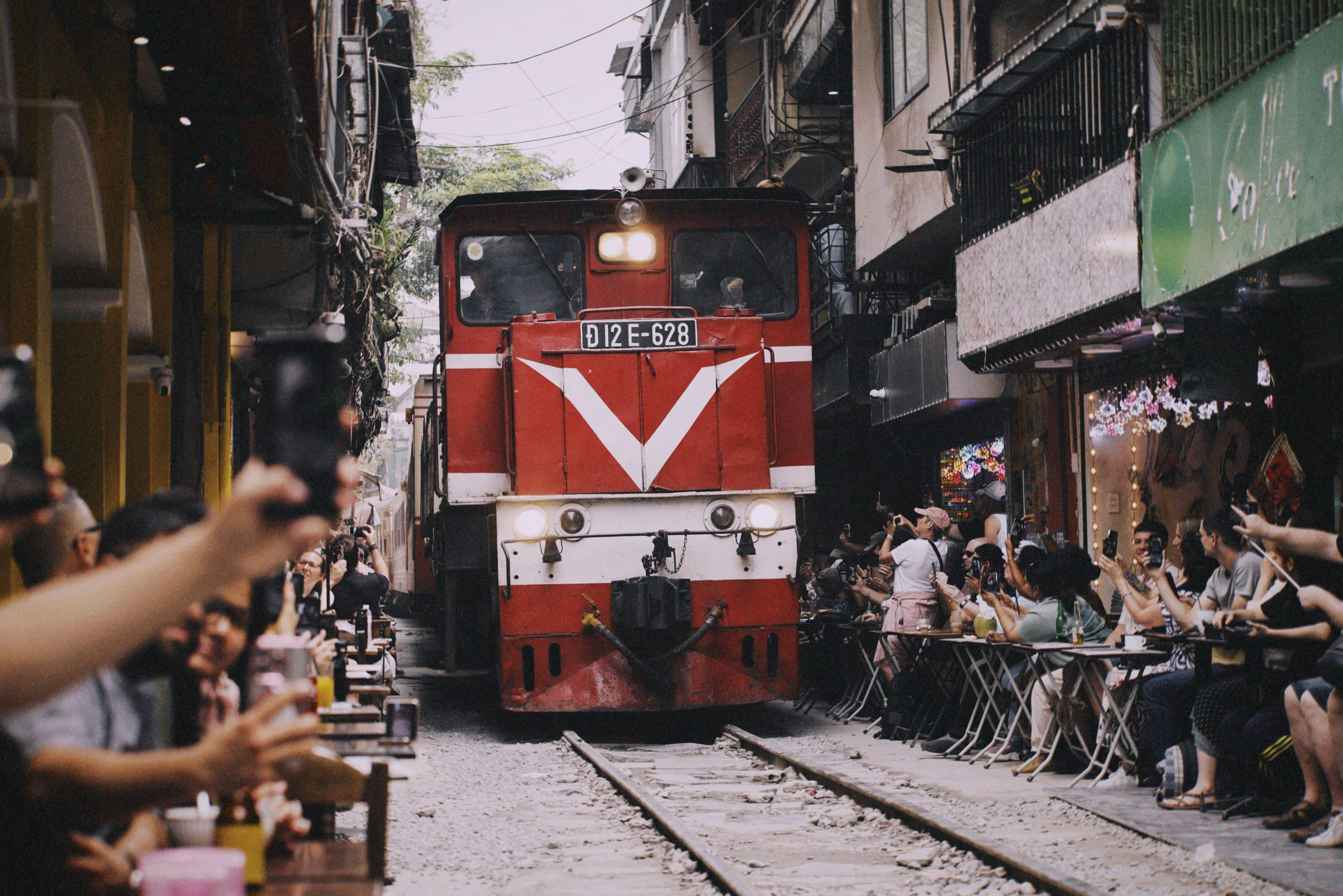
A narrow residential alley between Le Duan and Kham Thien Streets where the Hanoi–Ho Chi Minh City railway runs at arm's reach between the houses. Residents have lived alongside this track for generations — when the train passes, they simply step back. The train runs twice daily in each direction; your guide or hotel can confirm current times (approximately 15:20 and 19:30 southbound). Arrive 30 minutes early. The alley itself — café chairs, potted plants, residents going about their day — is worth seeing regardless of the train.
|
| 16:00–17:30 |
Coffee Workshop or final Old Quarter wander
If you haven't done a coffee workshop on Day 1, this afternoon is the ideal time. A hands-on session learning to prepare traditional phin-filter coffee and egg coffee takes about 90 minutes and gives you a deep understanding of Vietnamese coffee culture that will outlast the trip. Alternatively, use this time for a final unstructured walk through the Old Quarter — buy directly from artisans on Hang Gai, find the small temple on Hang Trong that most tourists walk past, or simply sit in a doorway and watch.
|
| 17:30–19:00 |
Sunset at Hoan Kiem Lake — final hour
Return to Hoan Kiem Lake one final time as the sun drops. The light on the water at this hour is different from the morning — warmer, more golden. Buy a corn on the cob from the street vendor on the south shore, find a bench, and watch the city transition from afternoon to evening. This is the unhurried version of Hanoi that most people who rush through it never see.
|
Evening
| 19:00–21:00 |
Dinner — Bun Rieu or Nem Cuon
Bún riêu is a tomato-based crab and pork noodle soup that most tourists overlook entirely because it doesn't appear on the tourist trail. It is one of the most complex, satisfying bowls of noodles in Vietnamese cuisine. Find it on Hang Bong or at any local com binh dan (budget rice restaurant) in the back streets off the main Old Quarter circuit. Alternatively, a dinner of nem cuon (fresh spring rolls) with grilled pork and green mango from Nem Cuon Phuong at 65 Dinh Tien Hoang — light, fresh, and perfect for a warm evening.
|
| 21:00 onwards |
Night Market (Fri–Sun) or final café
On Friday, Saturday, and Sunday evenings, the streets around Hang Dao are closed to traffic for the Old Quarter Night Market — textiles, handicrafts, street food, and the entire neighbourhood on foot. Worth an hour if you haven't seen it. Any other evening: find a small café on Nhan Hau Lane or Ca Mau Lane (the tiny alleys off the main Old Quarter streets) and stay until you're ready to leave. Hanoi's best late-night moments happen in places that don't have signs.
|
The honest list
What to Skip in Hanoi — And Why
This is the section that most Hanoi guides are afraid to write. Every attraction has its advocates, and no one wants to tell a traveller their planned visit is not worth the time. But honest guidance saves people from spending half a day on something that leaves them underwhelmed — and two days in Hanoi requires ruthless prioritisation.
| What to skip |
Why — and what to do instead |
| Ho Chi Minh Mausoleum |
Closed Mon & Fri, strict dress code, long queues, limited visiting windows. The nearby Ho Chi Minh Museum covers his life with more context and no queue. The Presidential Palace gardens are lovely and require no queuing. |
| Hoa Lo Prison ("Hanoi Hilton") |
Historically significant but the exhibits present a one-sided narrative that most independent visitors find unsatisfying. Better for those with a specific interest in the Vietnam War or POW history. |
| Cyclo tours of the Old Quarter |
You see the streets from a vehicle at tourist pace with a scripted commentary. Walk instead — you'll notice more, stop when you want, and the streets are too narrow and interesting to experience from a moving seat. |
| Old Quarter rooftop bars |
High prices, tourist crowd, unremarkable views. The bia hoi corner at Ta Hien and Luong Ngoc Quyen is a far more authentic and interesting evening for a fraction of the cost. |
| Day trips to Bat Trang or Ha Long (1 day) |
Bat Trang pottery village is interesting but not essential on a 2-day visit. A 1-day Ha Long Bay trip is not worth the 5–6 hours of round-trip driving for 4 hours on the water. |
| St Joseph's Cathedral interior |
The exterior (Neo-Gothic, 1886) is photogenic and worth a look. The interior is unremarkable. The surrounding streets — Nha Tho (Church Street) and Hang Trong — are pleasant for a coffee and a browse of the design shops. |
Quick reference
Hanoi Food Cheat Sheet — Where to Eat What
| Dish |
Where |
Cost (approx) |
| Pho bo (beef noodle soup) |
Pho Gia Truyen, 49 Bat Dan St |
60,000–80,000 VND |
| Banh mi |
Banh Mi 25, 25 Hang Ca St |
25,000–35,000 VND |
| Bun cha |
Bun Cha Huong Lien, 24 Le Van Huu St |
70,000–90,000 VND |
| Egg coffee |
Giang Café, 39 Nguyen Huu Huan St |
35,000–50,000 VND |
| Cha ca (turmeric fish) |
Cha Ca La Vong, 14 Cha Ca St |
160,000–200,000 VND |
| Bia hoi (fresh draught beer) |
Corner of Ta Hien & Luong Ngoc Quyen |
10,000 VND per glass |
Common questions
Frequently Asked Questions
Is Hanoi safe to walk around at night?
Very safe by international standards. The Old Quarter is busy and well-lit until midnight or later. The main precaution is the same as any city: keep your phone in your pocket rather than in your hand, and use a bag that closes securely. Petty theft from open bags can occur in crowded areas. Violent crime against tourists is extremely rare. Solo travellers, including solo women, consistently report feeling safe walking Hanoi at night.
How do I cross the road in Hanoi?
This is genuinely the question most first-time visitors to Hanoi ask, and the answer is simple once you understand the system: walk slowly and steadily into traffic. Do not stop, do not run, do not wait for a gap. The motorbikes will flow around you like water around a rock — they have been doing this their entire lives and are very good at it. The mistake is stopping suddenly or moving unpredictably. Pick a gap, step off the kerb, and walk at a measured pace. You will be fine within two crossings.
Should I use Grab (rideshare) or taxis?
Grab (the Asian equivalent of Uber) is the simplest option — download the app before you arrive, prices are fixed and shown before you book, and there is no language barrier or meter dispute. For short distances within the Old Quarter, walking is almost always faster than any vehicle in traffic. Mai Linh taxis (green) and Vinasun taxis (white) are reliable metered alternatives if you prefer not to use an app. Avoid any taxi that approaches you proactively — always hail from the pavement or book via app.
Is two days enough for Hanoi?
Two days is enough to feel Hanoi properly if you follow the principle of depth over breadth. It is not enough if you try to see every temple, museum, and attraction on the tourist circuit. The travellers who enjoy Hanoi most on two days are those who walk slowly, eat at street level, and allow the city to happen around them rather than moving through it like a checklist. Three days allows you to relax further — to sit somewhere for two hours rather than one, to take a morning off, to revisit the lake at a different time of day.
Planning More Than Just Hanoi?
Hanoi is the start of a much bigger story. From here: Ninh Binh's quiet countryside, Sapa's mountain villages, Ha Long Bay's overnight cruise. We can design the full itinerary around your travel style and dates.




0 Comment