Title: Internet & SIM Card in Vietnam: eSIM, Physical SIM & Wi-Fi — The Complete Guide
Description: Everything you need to know about staying connected in Vietnam — where to buy a SIM card, which carrier is best, whether eSIM works, and what coverage to expect in remote areas like Sapa and Ha Long Bay.
Vietnam SIM card · Vietnam eSIM guide · internet Vietnam travellers · best SIM card Vietnam Viettel Mobifone · Vietnam SIM airport · Wi-Fi Vietnam coverage
Essential Travel Guide
Vietnam
Internet & SIM Card in Vietnam:
The Complete Guide
Staying connected in Vietnam is easier and cheaper than almost anywhere in the world — but the options (physical SIM, eSIM, pocket Wi-Fi) and the coverage differences between cities and remote mountain regions can be confusing. Here's exactly what to do.
|
USD 3–8
Typical SIM cost
|
5 min
Airport setup time
|
4G/5G
Coverage in most cities
|
Yes
eSIM supported
|
The three options
How to Get Connected — Your Three Options
There are three practical ways to have internet access in Vietnam: a physical SIM card, an eSIM, or a portable Wi-Fi device. For almost all travellers, a SIM card (physical or eSIM) is the best solution — cheap, reliable, and gives you a local number for booking confirmations and Grab.
|
📱
Physical SIM card
Bought at the airport or a phone shop. Cheapest option, best coverage, requires swapping your home SIM out.
|
💳
eSIM
Digital SIM installed via QR code before you even leave home. No swapping needed — keep your home number active too. Slightly pricier than physical SIM.
|
📶
Pocket Wi-Fi
A rentable hotspot device that connects multiple devices. Useful for groups or families sharing one device, but an extra thing to carry and charge.
|
Recommended for most travellers
eSIM — The Easiest Option, and Yes, It Works
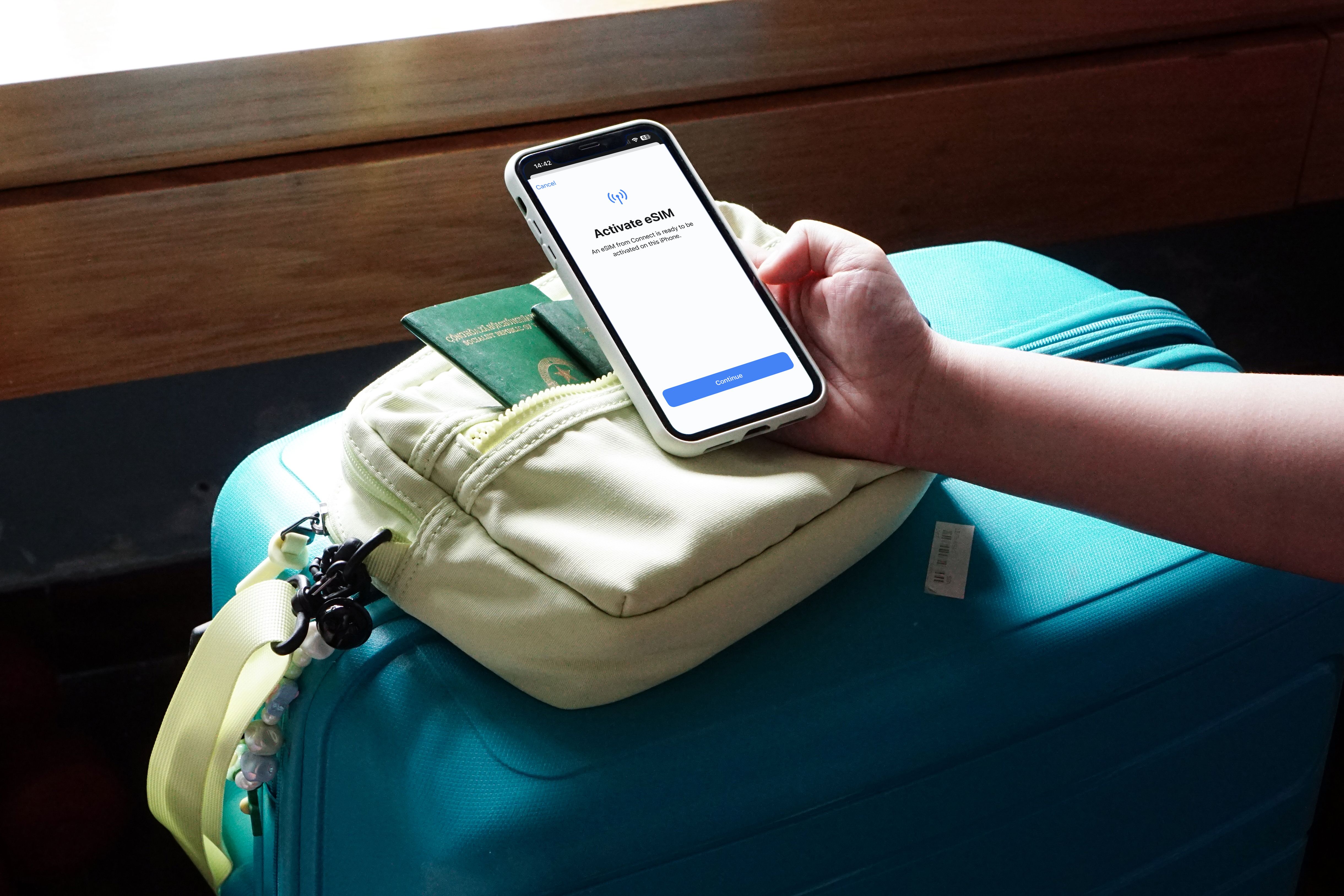
eSIM technology has matured significantly and is now the most convenient way for most international travellers to get connected in Vietnam. An eSIM is a digital SIM profile installed directly onto your phone — no physical card, no swapping, and critically, your home number stays active for calls and texts while your Vietnam eSIM handles data.
You can purchase and install a Vietnam eSIM before you even leave home — activate it the moment you land, or even test it works before departure. This eliminates the airport SIM-buying process entirely, which is a genuine advantage after a long-haul flight.
| Check first |
Details |
| Phone compatibility |
Most phones from iPhone XS onward and recent Android flagships (Samsung Galaxy S20+, Google Pixel 3+) support eSIM. Check Settings → General → About → look for "Digital SIM" or search "[your phone model] eSIM compatible" to confirm before buying. |
| Carrier lock status |
A phone locked to your home carrier may not accept an eSIM from another provider. Check with your carrier or in phone settings if unsure — this is the same restriction that would apply to a physical foreign SIM. |
| Reputable providers |
Airalo, Holafly, and Nomad are widely used eSIM marketplaces offering Vietnam data plans from approximately USD 4.50 for 1GB/7 days up to USD 19 for 20GB/30 days. Install the QR code before travel; activate on arrival. |
The honest trade-off
eSIM data plans are typically 30–50% more expensive than buying a physical SIM directly from a Vietnamese carrier, and eSIM providers resell capacity on local networks rather than being the network itself — so coverage in very remote areas (deep in Sapa's mountains, for example) can occasionally be marginally less reliable than a native Viettel SIM. For city-based and standard itinerary travel, the difference is negligible. For serious trekking in remote areas, a physical Viettel SIM is the more robust choice.
Best value & coverage
Physical SIM Card — Where to Buy & Which Carrier
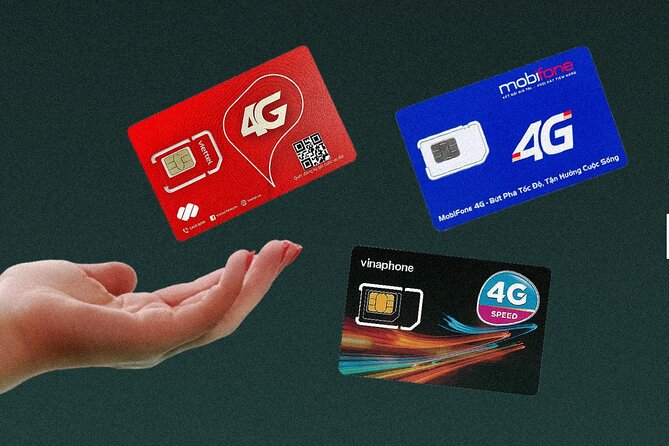
Vietnam has three major mobile carriers, and the differences between them matter more than they might in other countries — particularly if your itinerary includes mountain regions like Sapa, Ha Giang, or Cao Bang.
| Carrier |
Coverage |
Best for |
| Viettel |
Best overall — the only carrier with reliable signal in remote mountain areas including the Sapa trekking trails, Ha Giang loop, and Cao Bang highlands. |
Recommended default — especially for any itinerary including Sapa, Ha Giang, or northern mountain regions. |
| Mobifone |
Excellent in cities and along the coast (Da Nang, Hoi An, Nha Trang), slightly less reliable in deep mountain areas than Viettel. |
City-focused and coastal itineraries. |
| Vinaphone |
Good general coverage, competitive pricing, solid in most tourist areas but not the mountain specialist Viettel is. |
A reliable budget alternative for standard itineraries. |
Where to buy a physical SIM
|
Airport arrivals hall (easiest)
Both Noi Bai (Hanoi) and Tan Son Nhat (HCMC) airports have official carrier counters in the arrivals area, clearly signed and staffed by people who will set the SIM up for you on the spot. Prices are slightly higher than city shops (approximately 20–30% premium) but the convenience after a long flight is worth it for most travellers. Bring your passport — registration is required by law.
|
|
City phone shops (cheapest)
Official Viettel, Mobifone, and Vinaphone stores are common throughout Hanoi and HCMC's central districts. Prices are noticeably lower than the airport. A 4G SIM with 30GB+ data for 30 days typically costs 150,000–250,000 VND (approximately USD 6–10). Passport required for registration.
|
Where signal matters most
Coverage by Destination — What to Actually Expect
| Destination |
Coverage reality |
| Hanoi / HCMC / Da Nang |
Excellent 4G/5G everywhere, including on public transport and in most buildings. No concerns at all — treat it like any major city. |
| Ha Long Bay (on the boat) |
Reasonable signal for most of the bay on Viettel and Mobifone, weakening as you move deeper among the limestone islands. Most cruise boats also provide their own Wi-Fi, though bandwidth is limited and best treated as a backup rather than a primary connection. Don't expect to video call reliably from the outer islands. |
| Sapa town |
Good 4G in the town itself on all carriers. Coverage becomes patchy on the trekking trails into the valleys and villages — Viettel has the best signal of the three but even this is not guaranteed in the deepest valleys. Homestays typically have Wi-Fi, though speeds are modest. |
| Ninh Binh |
Solid coverage throughout, including on the boat trips through Van Long and Trang An. No significant concerns. |
| Ha Giang loop / Cao Bang |
The most challenging coverage in Vietnam's tourist circuit. Viettel is essential here — Mobifone and Vinaphone have significant dead zones on the mountain passes. Even with Viettel, expect periods of no signal on remote sections. Download offline maps before departure. |
| Mekong Delta / Phu Quoc |
Good coverage in main towns and Phu Quoc's developed areas, weaker on smaller Mekong canals and remote delta islands. Generally reliable for a beach-focused Phu Quoc stay. |

Backup option
Wi-Fi Availability — What to Expect
Free Wi-Fi is widely available in Vietnam — arguably more consistently than in many Western countries. Nearly every hotel, hostel, café, and restaurant offers it, and quality has improved dramatically in the past several years. That said, a local SIM remains the better primary connection since it means you're never dependent on finding a network.

| Location |
Wi-Fi reality |
| Hotels (city) |
Fast, reliable, free in nearly all cases from budget to luxury. |
| Cafés & restaurants |
Almost universally available, particularly in cities — Vietnamese café culture assumes laptop use. Ask staff for the password; it's usually printed on a card at the table. |
| Ha Long Bay cruise boats |
Available on most boats but limited bandwidth — fine for messaging, not reliable for video calls or large uploads. |
| Homestays (Sapa, Ninh Binh) |
Usually available but modest speed — adequate for messaging and basic browsing, not for streaming or video calls. |
Practical tips
Practical Tips Before You Go
🗺️ |
Download offline maps before you travel
Google Maps allows you to download offline map areas for major regions — essential for the Ha Giang loop and Cao Bang, where signal is unreliable. Download the map area before you leave Hanoi or wherever you have solid connectivity.
|
📲 |
A local number helps with Grab and bookings
The Grab app (essential for transport and food delivery in Vietnam) works best with a local number for order updates and driver contact. A physical Vietnamese SIM gives you this automatically; eSIMs from resellers generally do not include a usable local number for SMS/calls, only data — worth checking before you rely on it for Grab.
|
🔐 |
VPN is not required but some find it useful
Vietnam does not block major international websites or apps that most travellers use (Google, WhatsApp, Instagram, Facebook are all freely accessible). A VPN is not necessary for standard travel use, though some travellers use one for accessing home-region streaming services or added privacy on public Wi-Fi.
|
🧳 |
On a private tour, your guide has you covered
If you're travelling with Azotar Travel on a private tour or small group tour, your guide typically carries a local hotspot as backup and can help you navigate SIM purchase on arrival if needed — one less thing to arrange when you land.
|
Common questions
Frequently Asked Questions
Should I buy an eSIM before I arrive or a physical SIM at the airport?
For most travellers on a standard city-and-coast itinerary, an eSIM purchased in advance is the more convenient option — activate the moment you land, no queue, no passport paperwork. For travellers with remote mountain itineraries (Sapa trekking, Ha Giang loop, Cao Bang), a physical Viettel SIM is the more reliable choice due to superior rural coverage.
How much data do I actually need for a 2-week trip?
For typical use (maps, messaging, social media, some photo uploads, occasional video calls): 15–20GB comfortably covers a 2-week trip. Heavy streaming or hotspotting a laptop will need more — consider a 30GB+ plan. Most Vietnamese carrier SIM plans in this range cost under USD 15 for the full period.
Can I use my regular phone plan with international roaming instead?
Technically yes, but this is almost always the most expensive option by a significant margin — roaming charges for data in Vietnam through most European, Australian, and North American carriers run considerably higher per GB than a local SIM or eSIM. Worth checking your specific carrier's Vietnam roaming rate before travel, but for most people a local SIM or eSIM saves substantially over a 1–2 week trip.
Do I need my passport to buy a SIM card?
Yes — Vietnamese law requires passport registration for any physical SIM card purchase, whether at the airport or a city shop. This is standard practice and takes only a couple of minutes at official carrier counters. eSIMs purchased online through international resellers typically don't require this since the resold data doesn't route through the same local registration requirement.
Travel Prepared, Stay Connected
Azotar Travel specialises in private tours and small group tours across Vietnam. From airport pickup to the most remote mountain routes, we handle the logistics so you can focus on the experience.




0 Comment