Title: Vietnam Street Food Guide: What to Eat, Where to Find It & How to Order
Description: The honest Vietnam street food guide — the 20 dishes you must try, where to find the best versions, how to order without speaking Vietnamese, and everything no one tells you before you arrive.
Vietnam street food guide · best street food Vietnam Europeans Australians · what to eat Vietnam · Hanoi street food guide · Vietnamese food for beginners · pho bun cha banh mi guide
The Honest Food Guide
Vietnam
Vietnam Street Food Guide:
What to Eat, Where to Find It
Vietnam has one of the great street food cultures on Earth. The best meals are not in restaurants — they are on plastic stools at street corners, in markets before 08:00, at carts that have been in the same spot for forty years. This guide covers what to order, what to avoid, and everything no one tells you before you arrive.
|
20+
Dishes covered
|
3
Regions compared
|
AUD 2–5
Average meal cost
|
0
Menus in English needed
|
Before you eat
How Vietnamese Street Food Actually Works
Vietnamese street food is not a simplified version of restaurant food. It is a completely separate culinary tradition — one in which each vendor typically specialises in a single dish, perfected over decades, made with ingredients sourced that morning from the market around the corner. The pho vendor on the corner of Bat Dan Street in Hanoi has been making pho since the 1960s. She starts at 3am. She sells out by 9am. She makes nothing else. That focus produces a quality that no restaurant attempting a menu of fifty dishes can replicate.
Understanding this principle changes how you eat in Vietnam. The question is not "which restaurant serves the most dishes?" but "which vendor has been making this single thing the longest?" Follow the locals, eat where the plastic stools are full, and always arrive early — the best street food in Vietnam is a morning activity, not an evening one.
The golden rules
| 🕖 Go early. The best street food is breakfast food. Most legendary vendors sell out before 10am. |
| 👥 Follow the crowd. A stall with ten locals and no tourists is almost always better than the reverse. |
| 💵 Carry small cash. Most vendors cannot break large notes. 10,000–50,000 VND notes are ideal. |
| 🪑 Sit where they put you. The plastic stool on the pavement is not a downgrade — it is the authentic format. |
| 🌿 Eat the herbs. The pile of fresh herbs on the side of every bowl is not a garnish — it is an integral part of the dish. |
North Vietnam · Hanoi
What to Eat in Hanoi & North Vietnam
Northern Vietnamese cooking is more restrained than the south — less sweet, less chilli, fewer herbs, but more precise. The flavours are clean and deep rather than complex and layered. Pho in Hanoi is a different dish from pho in Saigon — same name, completely different experience. This is the regional cooking that underpins the entire tradition.
|
🍜
Breakfast
|
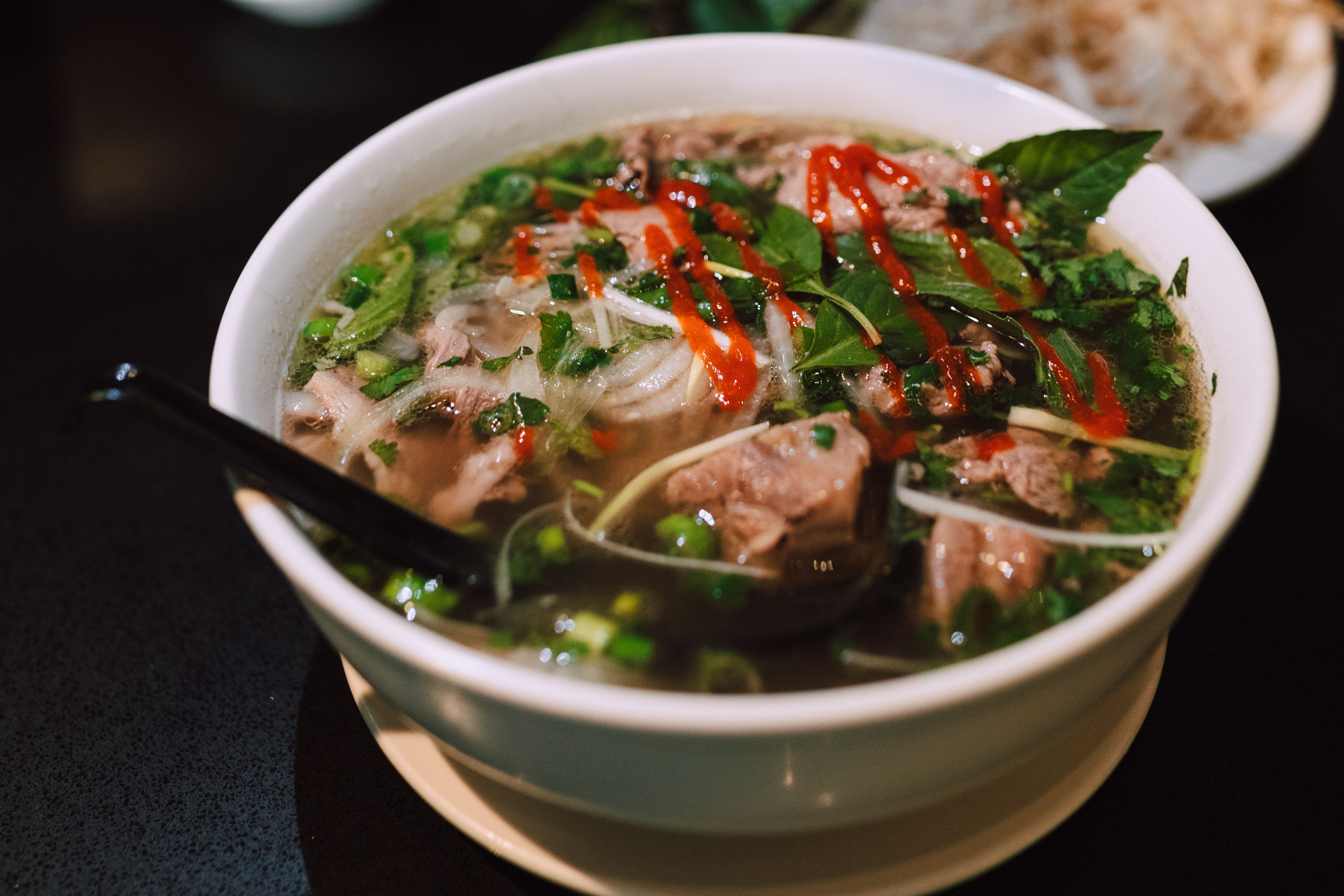
Phở Bò — Beef Noodle Soup
The national dish · Hanoi style · 50,000–80,000 VND
A clear beef bone broth simmered for 6–8 hours with star anise, cinnamon, cloves, and charred ginger — poured over flat rice noodles with slices of rare or well-done beef and a mountain of fresh bean sprouts, lime, basil, and chilli on the side. Hanoi pho is purer and less embellished than its southern version: no hoisin sauce, no sriracha, no bean sprouts in the bowl. The broth does all the work.
Where: Pho Gia Truyen, 49 Bat Dan St, Hanoi (opens 06:00, sells out by 09:30) · Pho Thin, 13 Lo Duc St, Hanoi
|
|
🥩
Lunch
|
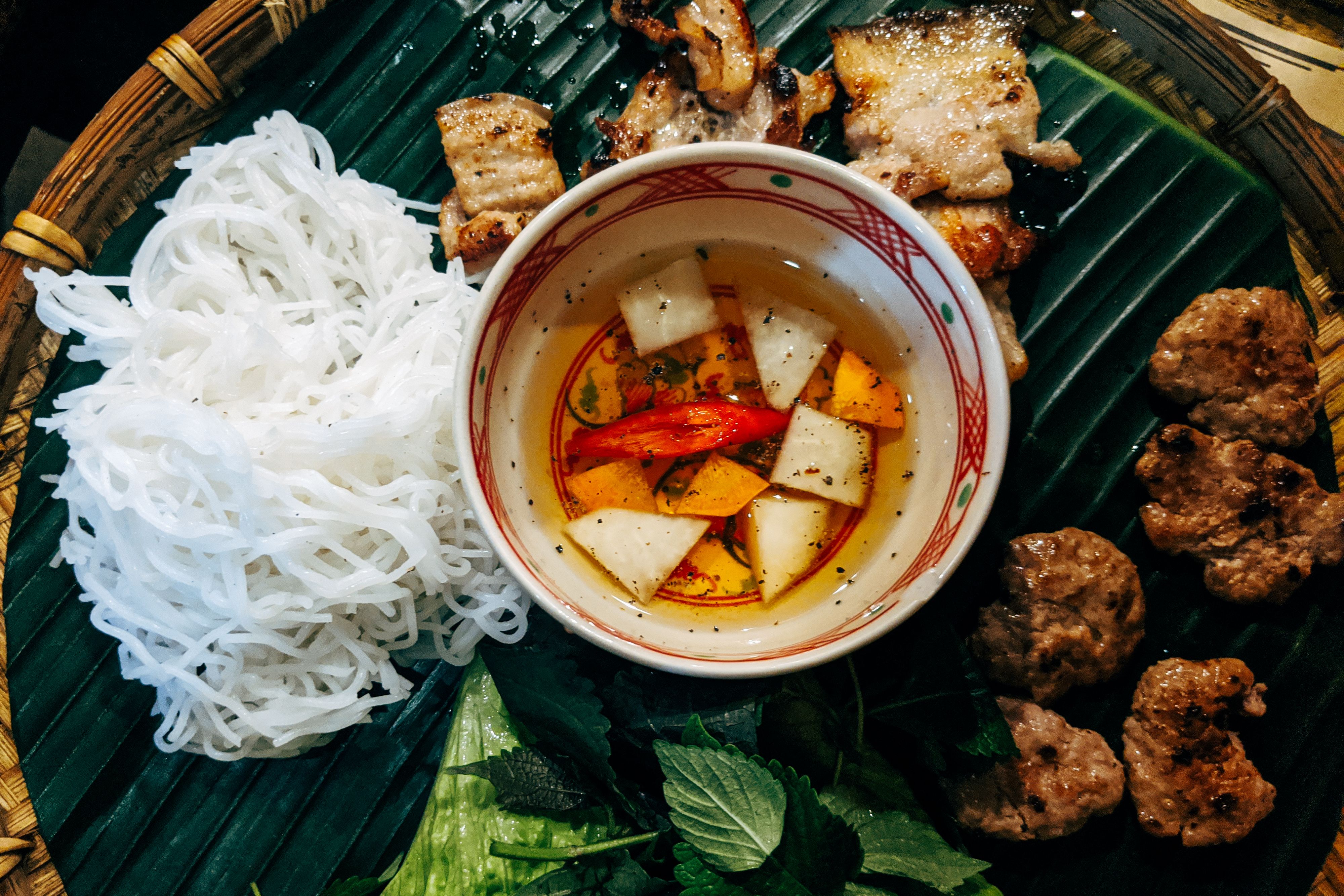
Bún Chả — Grilled Pork Noodles
Hanoi's most beloved lunch · 60,000–90,000 VND
Grilled pork patties and pork belly charred over charcoal, served in a sweet-savoury dipping broth alongside rice vermicelli noodles and a plate of fresh herbs. The ritual is specific: dip the noodles in the broth with the pork, eat a herb or two, repeat. Anthony Bourdain ate this with Barack Obama on Bui Thi Xuan Street in 2016; the restaurant still serves it in the same way. A Hanoi lunch that rivals the city's best restaurants.
Where: Bun Cha Huong Lien, 24 Le Van Huu St, Hanoi · Bun Cha Ta, 21 Nguyen Huu Huan St, Hanoi
|
|
🐟
Dinner
|
Chả Cá Lã Vọng — Turmeric Fish
Hanoi's most iconic dinner · 180,000–250,000 VND
Turmeric-marinated fish (snakehead or catfish) fried tableside in a sizzling pan with dill and spring onion, eaten with rice vermicelli noodles, roasted peanuts, and shrimp paste. The dish is so associated with Cha Ca Street (Hang Son Street) that the street was renamed after it. The restaurant Cha Ca La Vong has been serving this single dish since 1871 — one of the oldest continuously operating restaurants in Vietnam. The tableside presentation is theatrical and the result is extraordinary.
Where: Cha Ca La Vong, 14 Cha Ca St, Hanoi · Cha Ca Thang Long, 19-31 Duong Thanh St, Hanoi
|
|
☕
Anytime
|
Cà Phê Trứng — Egg Coffee
Hanoi invention · 35,000–55,000 VND
Hanoi's most famous drink and its most surprising: a thick, sweet foam of whipped egg yolk and condensed milk sits atop a shot of strong Vietnamese robusta coffee. Invented in the 1940s by Nguyen Giang, a bartender at the Sofitel Metropole, as a substitute for scarce milk during wartime. The original recipe remains unchanged. Served warm in a small cup, half-submerged in a bowl of hot water to maintain temperature. Rich, sweet, deeply strange, and immediately addictive.
Where: Giang Café, 39 Nguyen Huu Huan St, Hanoi (the original) · Ca Phe Pho Co, 11 Hang Gai St, Hanoi (rooftop view of Hoan Kiem Lake)
|
|
🧆
Breakfast
|
Bánh Cuốn — Steamed Rice Rolls
Northern speciality · 40,000–60,000 VND
Thin sheets of steamed rice flour filled with minced pork and wood ear mushroom, topped with crispy shallots and served with a clear dipping sauce and sliced pork sausage. A Hanoi breakfast that predates pho by centuries. The skill is in the rolling — the rice sheet must be wafer-thin and the filling precisely placed. Watch the cook work before you eat and you'll appreciate what's in the bowl considerably more.
Where: Banh Cuon Thanh Van, 12 Hang Ga St, Hanoi (since the 1950s)
|
|
🍺
Evening
|
Bia Hơi — Fresh Draught Beer
A Hanoi evening tradition · 5,000–10,000 VND per glass
Bia hoi is fresh-brewed beer with no preservatives — brewed daily, delivered by barrel in the afternoon, and sold until it runs out, usually late evening. The alcohol content is low (around 3%), the price is extraordinary (less than AUD 0.60 per glass), and the experience — on a plastic stool at the intersection of Ta Hien and Luong Ngoc Quyen Streets — is one of the great urban pleasures of northern Vietnam. Order dried squid or grilled corn from the vendors passing by and stay for two hours.
Where: Corner of Ta Hien & Luong Ngoc Quyen, Hanoi Old Quarter
|
Central Vietnam · Hue & Hoi An
What to Eat in Central Vietnam
Central Vietnamese cooking is widely considered the most complex and most ceremonially developed in the country — a legacy of two centuries of royal court cooking in Hue. The flavours are more intense than the north, more spiced, often more aggressively seasoned. Hoi An has developed its own distinct local dishes, different again from Hue. The central region is where Vietnamese food surprises most European and Australian visitors who arrive expecting something familiar.
|
🍲
Breakfast/Lunch
|
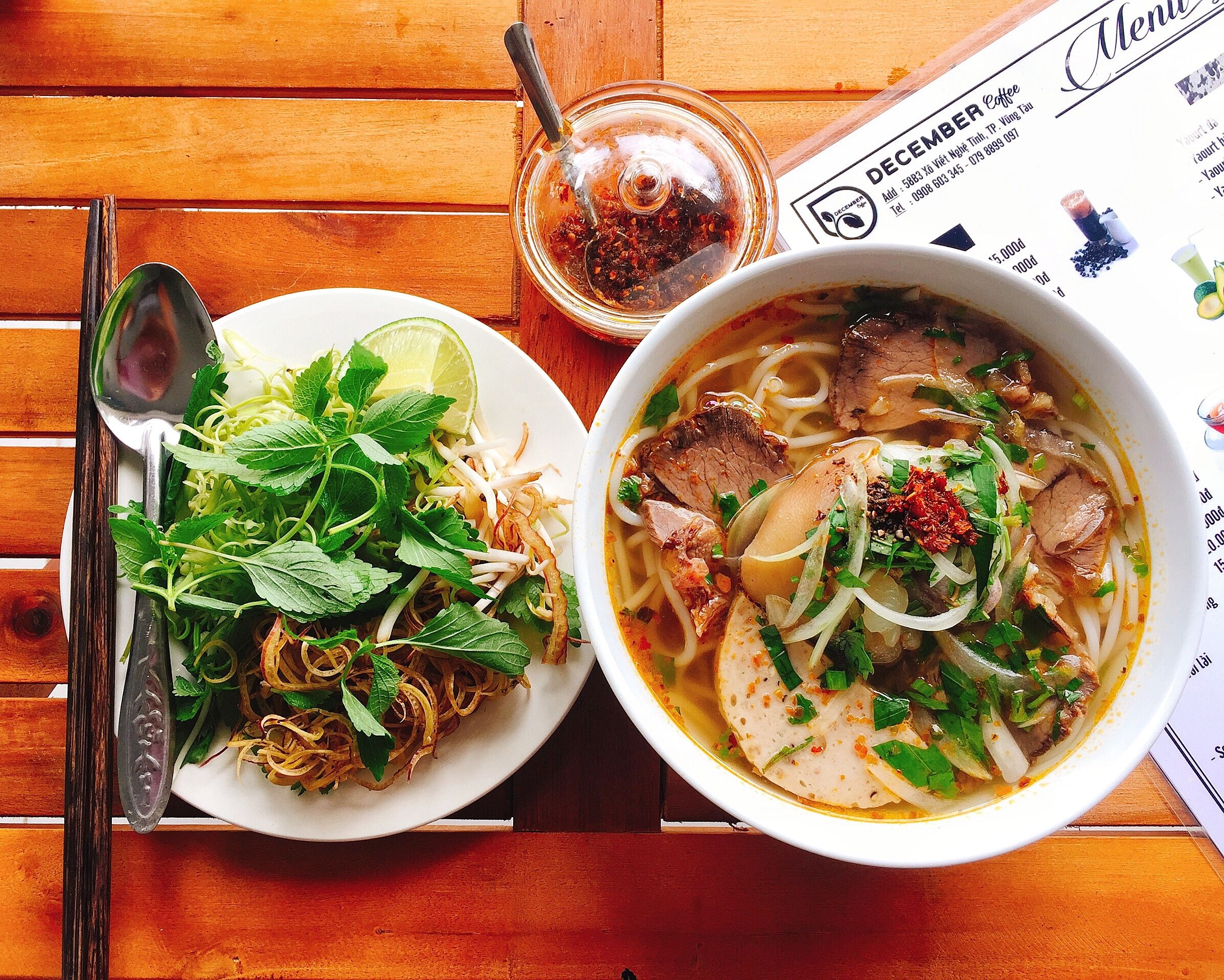
Bún Bò Huế — Hue Spicy Beef Noodle Soup
Hue's signature noodle · 50,000–80,000 VND
Thicker, spicier, and considerably more complex than pho. The broth is built on lemongrass, shrimp paste, and chilli in combination with pork and beef bone — a bass-note richness underneath a layer of heat. Served with round rice noodles (thicker than pho), sliced beef shank, pork knuckle, and cubes of congealed pork blood (optional). The flavour profile will surprise anyone who thinks they know Vietnamese soup from pho alone. Available throughout Vietnam but at its best in Hue itself.
Where: Bun Bo Hue O Quy Nhon, 47 Nguyen Cong Tru St, Hue · Any local market stall in Hue — avoid restaurant versions which often dilute the shrimp paste
|
|
🍝
Lunch · Hoi An only
|
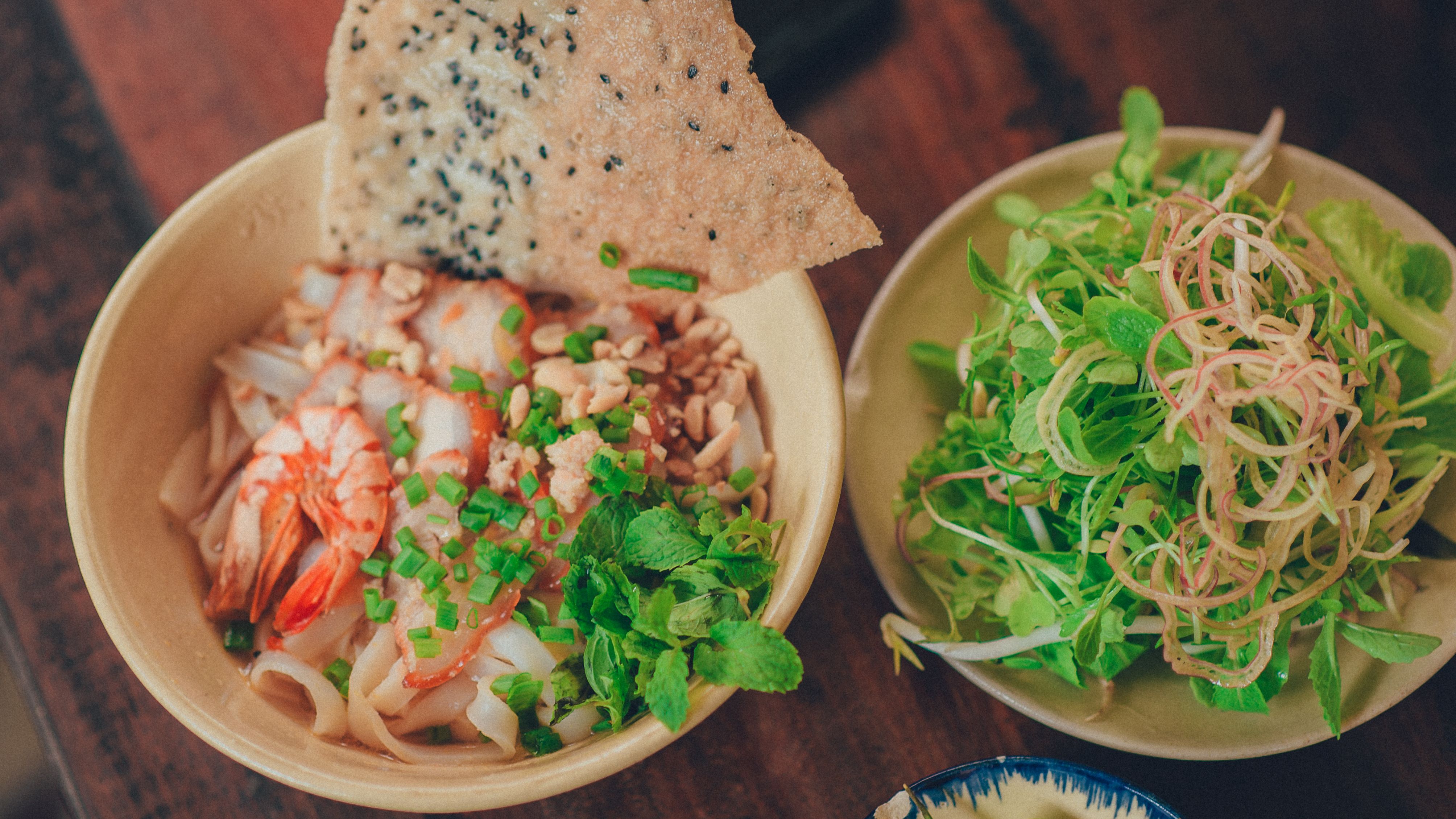
Cao Lầu — Hoi An's Signature Noodle
Only authentic in Hoi An · 50,000–70,000 VND
A dish so attached to its place of origin that it cannot be properly replicated elsewhere — the noodles are made with water from a specific well in Hoi An's old town, giving them a texture and slightly alkaline flavour that no substitute replicates. Thick, chewy noodles served with a small amount of broth, sliced pork, crispy rice crackers, and fresh herbs. Japanese, Chinese, and Vietnamese culinary influences are visible simultaneously in a single bowl. The evidence, in food form, of 500 years of Hoi An as a trading port where everything mixed.
Where: Cao Lau Thanh, 26 Thai Phien St, Hoi An · Cao Lau Trung Bac, 87 Tran Phu St, Hoi An (inside the old town)
|
|
🥟
Snack · Hoi An
|
White Rose Dumplings (Bánh Vạc)
Hoi An delicacy · 40,000–60,000 VND
Translucent steamed rice paper dumplings, pinched into the shape of white rose flowers, filled with shrimp or pork and topped with crispy shallots and a dipping sauce. The recipe is a closely guarded family secret — only one family in Hoi An has ever made and supplied these to the town's restaurants. A delicate, precise creation whose quality is immediately apparent compared to any imitation. Order at least two portions.
Where: White Rose Restaurant, 533 Hai Ba Trung St, Hoi An (the only place where the original family still sells)
|
|
🥞
Lunch/Dinner
|
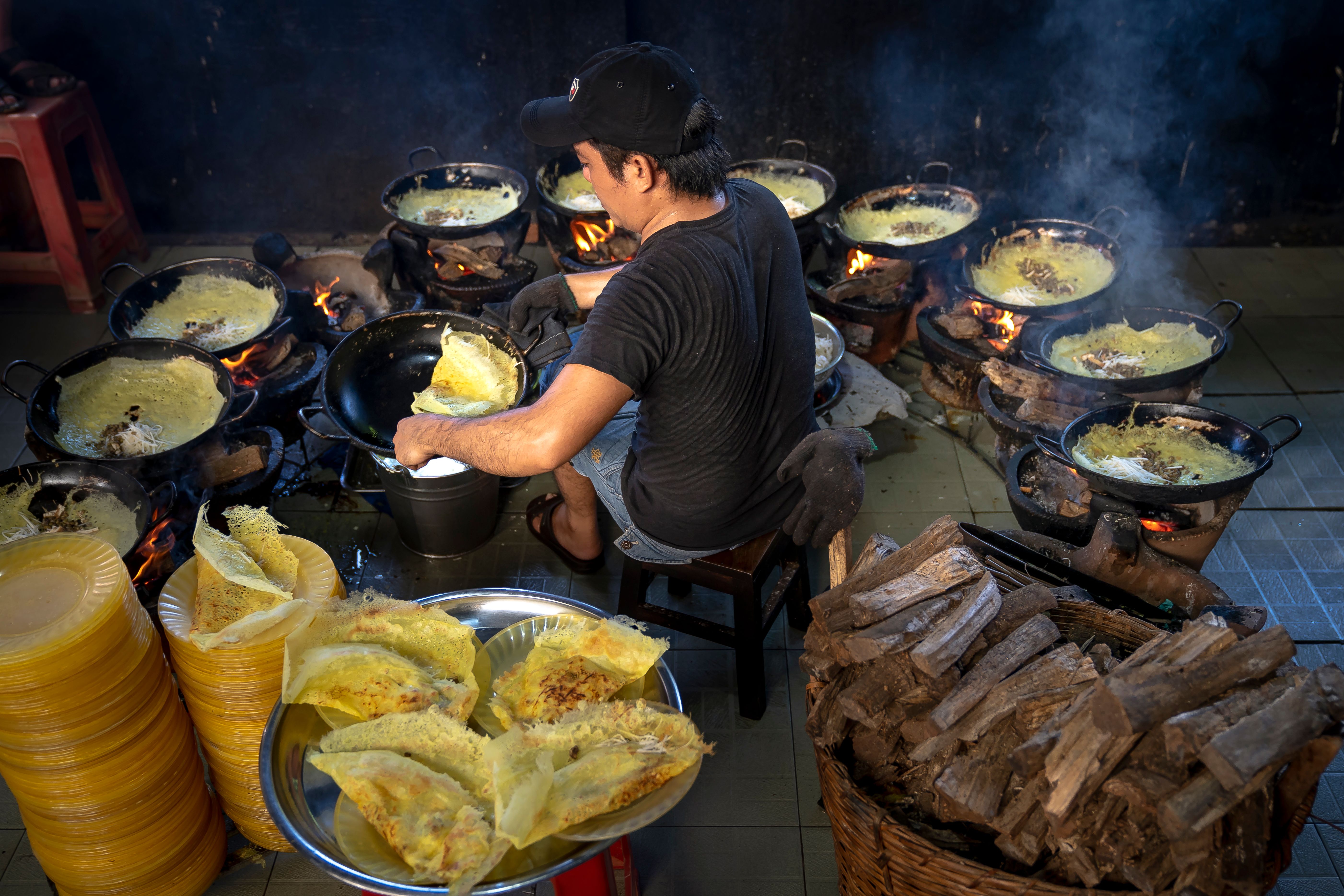
Bánh Xèo — Sizzling Crispy Crepe
Central & South Vietnam · 50,000–80,000 VND
A turmeric-yellow rice flour crepe, sizzled loudly in a hot wok with pork, shrimp, and bean sprouts until the edges are lacework-crisp. Served whole and eaten by tearing off pieces, wrapping each in lettuce or mustard leaf with mint and perilla, and dipping in nuoc cham. The contrast of textures — crispy crepe, tender filling, crunchy vegetables, fresh herbs — in a single mouthful is one of the most satisfying eating experiences Vietnam offers. The central Vietnamese version is smaller and crispier than the southern style.
Where: Banh Xeo Ba Duong, 23 Hoang Dieu St, Hoi An · Any local street stall serving it in Da Nang or Hoi An
|
South Vietnam · Ho Chi Minh City & Mekong
What to Eat in Southern Vietnam
Southern Vietnamese cooking is sweeter, more abundant in fresh herbs, and more influenced by Khmer, Chinese, and French colonial food traditions than the north. The portions are larger, the flavours more accessible to newcomers, and the street food scene more diverse and chaotic. Ho Chi Minh City has one of the highest densities of street food options per square kilometre in the world — the challenge is not finding somewhere to eat but deciding when to stop.
|
🥖
Breakfast/Snack
|
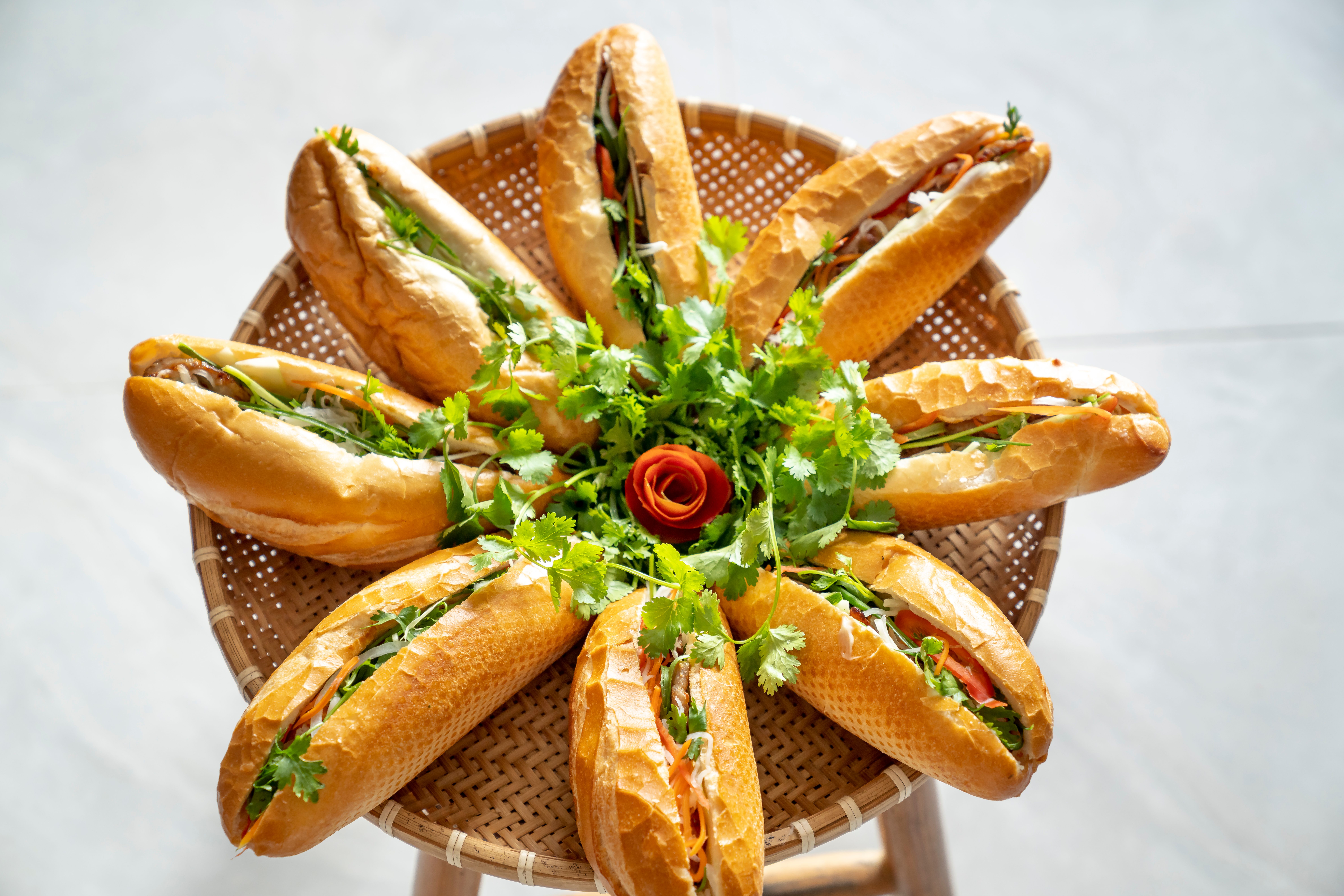
Bánh Mì — Vietnamese Baguette
Everywhere in Vietnam · 20,000–40,000 VND
The great Franco-Vietnamese fusion: a short, light baguette (the Vietnamese version uses rice flour, giving it a crispier crust and airier interior than the French original) stuffed with pâté, Vietnamese mayonnaise, pickled daikon and carrot, coriander, cucumber, and a choice of protein — BBQ pork, pork roll, eggs, or sardines. The entire thing costs less than the carton of juice you might buy at an airport. The best banh mi in Vietnam is at Banh Mi Phuong in Hoi An, but any good street vendor in the south delivers a version that embarrasses most sandwiches you have eaten in your life.
Where: Banh Mi Phuong, 2B Phan Chau Trinh St, Hoi An · Banh Mi Huynh Hoa, 26 Le Thi Rieng St, HCMC (famous for the most loaded version in the south)
|
|
🧆
Lunch
|
Gỏi Cuốn — Fresh Spring Rolls
South Vietnam classic · 30,000–50,000 VND for 2
Not to be confused with fried spring rolls — goi cuon are fresh, assembled to order, and not cooked at all after assembly. Rice paper wrapped around vermicelli noodles, shrimp, pork, lettuce, mint, and perilla, served with a peanut and hoisin dipping sauce. The balance of textures — slippery noodle, crunchy vegetable, chewy rice paper, the anise note of the perilla — is extraordinarily refined for something assembled in thirty seconds by a street vendor. The ideal light lunch on a hot southern day.
Where: Any market in HCMC or the Mekong Delta · Ben Thanh Market street food stalls, HCMC
|
|
🍚
Lunch/Dinner
|
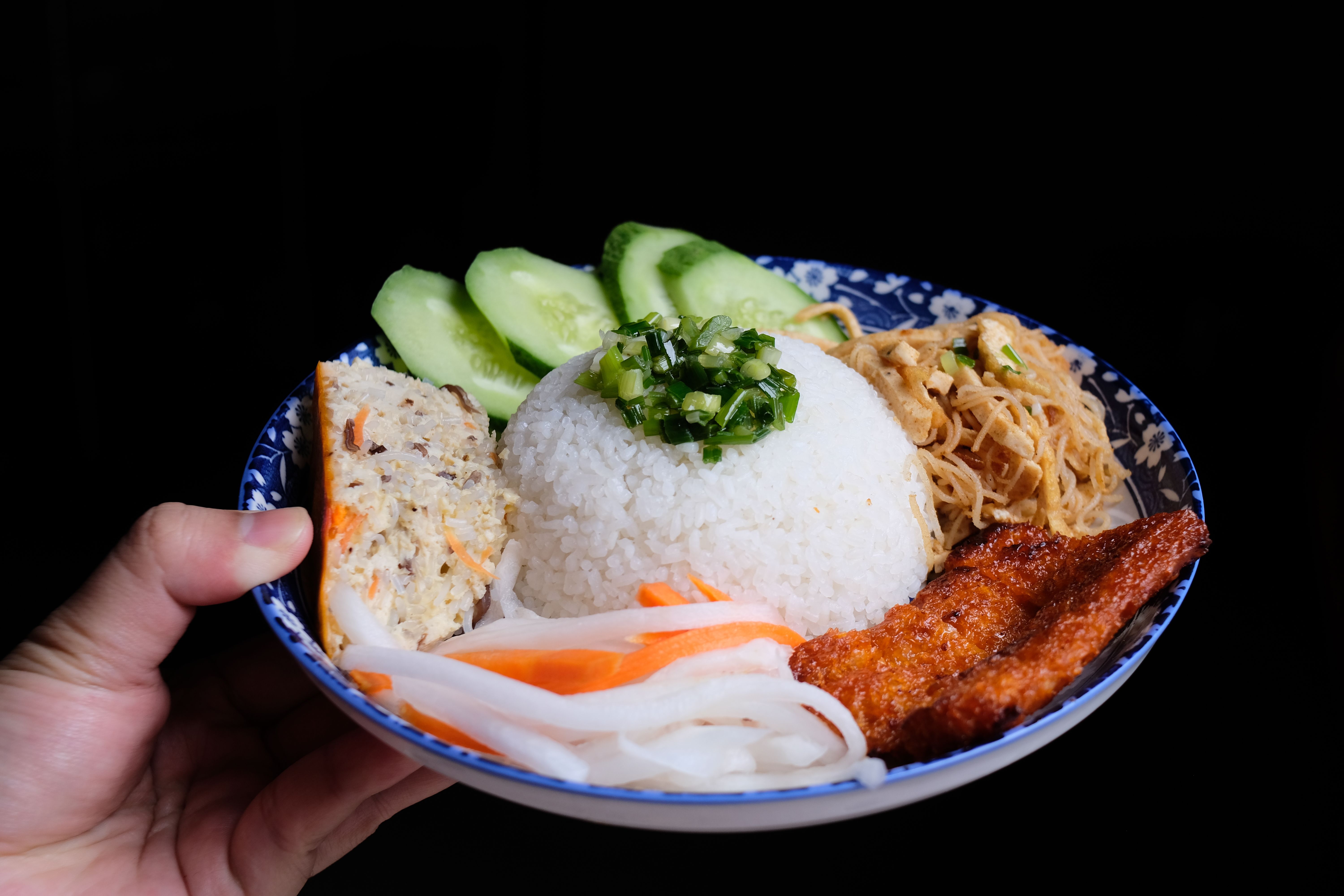
Cơm Tấm — Broken Rice
Southern Vietnam's everyday meal · 50,000–80,000 VND
Broken rice — the fragmented grains once discarded as inferior — became the staple of southern Vietnamese street food because it was cheap and because its irregular surface absorbs sauce better than whole-grain rice. Served with grilled pork chop, shredded pork skin, a steamed egg meatloaf, pickled vegetables, spring onion oil, and fish sauce. The whole plate costs less than a coffee at an airport. Com tam is the southern equivalent of a full English breakfast — the meal the south wakes up to and, in HCMC, eats at any hour of the day.
Where: Com Tam Ba Ghien, 84 Dang Van Bi St, HCMC · Any com tam stall in any market in southern Vietnam
|
Found everywhere
Dishes You'll Find Across All Regions
| Dish |
Cost |
What it is |
| Nem Cuốn / Gỏi Cuốn |
30–50K VND |
Fresh spring rolls — rice paper, shrimp/pork, noodles, herbs. Dipped in peanut sauce. Light, fresh, universally excellent. |
| Nem Rán / Chả Giò |
30–50K VND |
Fried spring rolls — pork, glass noodles, wood ear mushroom. The northern version (nem ran) uses rice paper; the southern (cha gio) uses wheat. Both excellent. |
| Cháo — Rice Porridge |
30–50K VND |
Silky rice porridge with pork, chicken, or seafood. Vietnam's great comfort food. Best in the early morning from a street cart. Topped with ginger, fried shallots, and fresh herbs. |
| Xôi — Sticky Rice |
20–40K VND |
Sticky rice with multiple toppings — mung bean paste, fried shallots, pork floss, sesame. A filling street breakfast. Xoi xeo in Hanoi (with mung bean and shallots) is the definitive version. |
| Nước Mía — Sugarcane Juice |
10–20K VND |
Fresh sugarcane pressed to order with kumquat juice and ice. Vietnam's greatest hot-weather drink. Available from mobile carts throughout the country. Never refuse one. |
Practical guide
How to Order Street Food Without Speaking Vietnamese
| Situation |
What to do |
| No English menu |
Point at what someone else is eating. This works 100% of the time and requires no language. If in doubt, hold up one or two fingers for the quantity. A nod confirms the order. |
| Asking for the bill |
Make a writing gesture in the air or say "tính tiền" (teen tyen). In most street food settings, the vendor will tell you the price directly and you pay immediately — there is rarely a formal bill. |
| Dietary restrictions |
Vegetarian: "Tôi ăn chay" (toy an chay). No pork: "Không thịt heo" (khong thit heo). No shellfish: "Không hải sản có vỏ" (khong hai san co vo). Show the phrase on your phone if pronunciation is uncertain — Vietnamese is tonal and mispronunciation changes meaning. |
| Spice level |
"Không cay" (khong ky) means no chilli. Most northern Vietnamese street food is not inherently spicy — chilli is served on the side. Central and southern dishes are more likely to arrive with heat built in. Always ask if unsure. |
| Paying too much |
Prices at proper local street food stalls are fixed and fair — overcharging of tourists occurs primarily at tourist-zone stalls and restaurants near major landmarks. The further you walk from the main sights, the more honest the pricing. A bowl of pho that costs 120,000 VND near the Hanoi Old Quarter tourist strip costs 60,000 VND three streets away. |
The honest section
Street Food Safety — The Honest Guide
Most travel guides about street food safety in Vietnam are either overly cautious (don't eat anything that hasn't been boiled for twenty minutes) or dismissively confident (eat everything, it's fine). The honest position is somewhere more specific.
|
✓ Generally safe
| Anything cooked to order in front of you — noodle soups, stir fries, grilled meats |
| Busy stalls with high turnover — food doesn't sit long enough to deteriorate |
| Fresh spring rolls assembled immediately — the ingredients are fresh, nothing is reheated |
| Bottled water, fruit juices freshly pressed in front of you, sugarcane juice |
|
⚠️ Approach with care
| Pre-prepared cold food displayed at room temperature for unknown time — particularly in hot weather |
| Ice in drinks — most urban ice is fine (commercially produced) but exercise caution at rural stalls |
| Raw vegetables in tourist-area restaurants where washing standards may vary |
| Shellfish from unfamiliar sources during very hot months |
|
The honest summary
Millions of Vietnamese people eat street food three times a day throughout their lives without ill effect. Most travellers who experience stomach problems in Vietnam attribute them to overindulgence rather than food safety. Eat at busy stalls, eat food cooked in front of you, and drink bottled water — and your biggest problem will be deciding which extraordinary thing to eat next.
Quick reference
Vietnam Street Food at a Glance
| Dish |
Region |
Meal |
Avg. cost |
| Phở bò |
North |
Breakfast |
60–80K VND |
| Bún chả |
North |
Lunch |
60–90K VND |
| Chả cá lã vọng |
North |
Dinner |
180–250K VND |
| Bún bò Huế |
Central |
Breakfast/Lunch |
50–80K VND |
| Cao lầu |
Hoi An only |
Lunch |
50–70K VND |
| Bánh mì |
South & Central |
Breakfast/Snack |
20–40K VND |
| Cơm tấm |
South |
Any time |
50–80K VND |
| Cà phê trứng |
Hanoi |
Any time |
35–55K VND |
Want to Cook These Dishes Yourself?
Our private tours in Ninh Binh and Sapa include cooking classes in real local homes — not demonstration kitchens. You shop for ingredients at the market, cook with your host family, and eat what you make together. The best way to understand Vietnamese food is to cook it.




0 Comment