

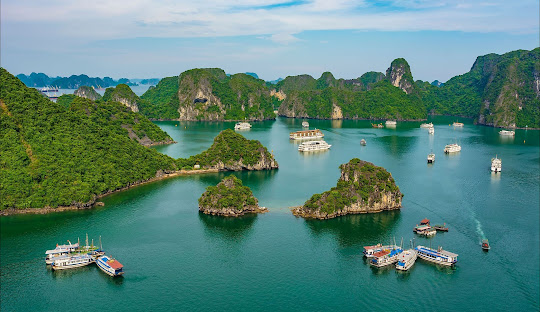

1,969 limestone islands. Emerald water. Floating villages. Here’s everything you need to know before you book – from the best cruise categories to visa requirements for EU passport holders, and UNESCO wonder secrets.
Why Ha Long Bay Belongs on Every European Bucket List
Few places on Earth live up to their photographs. Ha Long Bay is one of the rare exceptions. Stretching across 1,553 km² of the Gulf of Tonkin in northern Vietnam, it holds nearly 2,000 karst islands – ancient limestone pillars carved by 500 million years of erosion, draped in jungle, and mirrored in water so still it looks like glass.
Twice recognised by UNESCO as a World Natural Heritage Site (1994 and 2000), Ha Long Bay draws over 3 million visitors annually — but thanks to its sheer scale, the right cruise can still make you feel completely alone among the islands.
For European travellers, Ha Long Bay offers something increasingly rare: genuine wilderness awe, at a fraction of what Norway or Iceland costs, combined with the world-class cuisine, hospitality, and rich culture that defines Vietnam.
Best Time to Visit Ha Long Bay
Ha Long Bay has a seasonal rhythm that strongly influences your experience. Understanding this is one of the most important steps in planning your trip.
October – April: the dry season (recommended)
This is peak season for good reason. October to April brings cooler temperatures (15–25°C), clear skies, and the kind of misty mornings that made the bay famous. November and December in particular are beloved by photographers — cool, crisp air, visibility for miles, and the possibility of morning fog settling between the limestone towers. For European travellers flying from Paris, London, Amsterdam, or Frankfurt, this window aligns perfectly with northern Europe’s coldest months.
May – September: summer & typhoon season
Temperatures climb to 30–33°C with high humidity. July and August bring the highest typhoon risk, and some cruises reduce operations. That said, the water temperature is warmest for swimming, prices drop noticeably, and the bay turns a vivid tropical green. If you travel in June or early September and check weather forecasts carefully, you can have a spectacular – and far cheaper – trip.
Christmas–New Year (Dec 25 – Jan 5) is increasingly popular with Europeans on long-haul winter breaks. Book 3–4 months in advance for this window – cruise cabins sell out, especially on premium vessels. March is the sweet spot for last-minute deals with near-perfect weather.
Visa Requirements for European Visitors
Vietnam simplified its e-visa system in 2023, making entry straightforward for all EU passport holders and most other European nationals.
✓ E-visa (recommended): Available online at evisa.xuatnhapcanh.gov.vn. Single-entry valid 90 days. Cost: USD 25. Processing: 3 business days. Covers all EU countries, UK, Norway, Switzerland, and most of Europe.
✓ Visa on arrival: Possible but requires a pre-arranged approval letter. More complex — the e-visa is easier for European travellers.
✓ Visa-free (15 countries): Some European nationalities (Germany, France, Italy, Spain, UK, and others) may qualify for 45-day visa-free entry as of August 2023. Always verify current rules before travel.
✓ Passport validity: Must be valid for at least 6 months beyond your intended stay. This catches many travellers off guard — check before you book flights.
How to Get to Ha Long Bay from Europe
Flights to Hanoi (Noi Bai International Airport)
Ha Long Bay is accessed via Hanoi (HAN), not Ho Chi Minh City. Most European carriers (Vietnam Airlines, Qatar Airways, Emirates, Lufthansa, Air France, Turkish Airlines) offer routes from major EU hubs with one connection. Flight time is typically 12–14 hours including layover.
Hanoi to Ha Long Bay
The journey from Hanoi to Ha Long City takes approximately 2.5–3.5 hours depending on your chosen transport:
| Option | Duration | Cost (per person) | Best for |
|---|---|---|---|
| Limousine bus (premium) | 2–2.5 hrs | USD 15–25 | Budget-friendly |
| Private car transfer | 2–2.5 hrs | USD 60–90 | Groups & families |
| Seaplane (Ha Long Seaplane) | 45 min | USD 120–180 | Scenic splurge |
| Expressway + cruise shuttle | 2 hrs | Included in cruise | Most common |
Most cruises include Hanoi hotel pickup and transfer as part of the package — confirm this when booking, as it simplifies logistics enormously.
Ha Long Bay Travel Costs for European Visitors
Vietnam is one of Southeast Asia’s best-value destinations, and Ha Long Bay is no exception. Here’s a realistic breakdown for a 3-day/2-night cruise-based trip:
| Category | Budget (€) | Mid-range (€) | Luxury (€) |
|---|---|---|---|
| Return flights from Europe | 450–650 | 650–1,000 | 1,200+ |
| 2-night cruise (per person) | 100–180 | 200–400 | 500–1,200 |
| Hanoi hotel (2 nights) | 20–40/night | 50–90/night | 120–300/night |
| Visa (e-visa) | ~€23 (flat rate) | ||
| Meals (onshore) | 5–10/day | 15–25/day | 30–60/day |
| Total 7-day trip | ~€700–900 | ~€1,200–1,800 | €3,000+ |
Choosing the Right Ha Long Bay Cruise
The cruise is the centrepiece of any Ha Long Bay trip. With over 500 licensed vessels operating in the bay, selection can feel overwhelming. Here’s a framework European travellers consistently find useful:
| Tier | Price (2N/3D) | Highlights | Right for you if… |
|---|---|---|---|
| 3-star | USD 100 – 130 | Basic en-suite cabins, set menus, core activities | Backpackers, solo travellers, tight budgets |
| 4-star | USD 150 – 250 | Larger cabins, sundeck, kayaking, cooking class, better food | Couples, first-timers wanting comfort without luxury price |
| 5-star | USD 200 – 350 | Balcony cabins, spa, fine dining, smaller groups, private areas | Couples on honeymoon, travellers who prioritise quality |
| 6-star | USD 300 – 550 | Exclusive itineraries, suite-style rooms, private kayak guides, Bai Tu Long Bay access | Special occasions, travellers who’ve done Southeast Asia before |
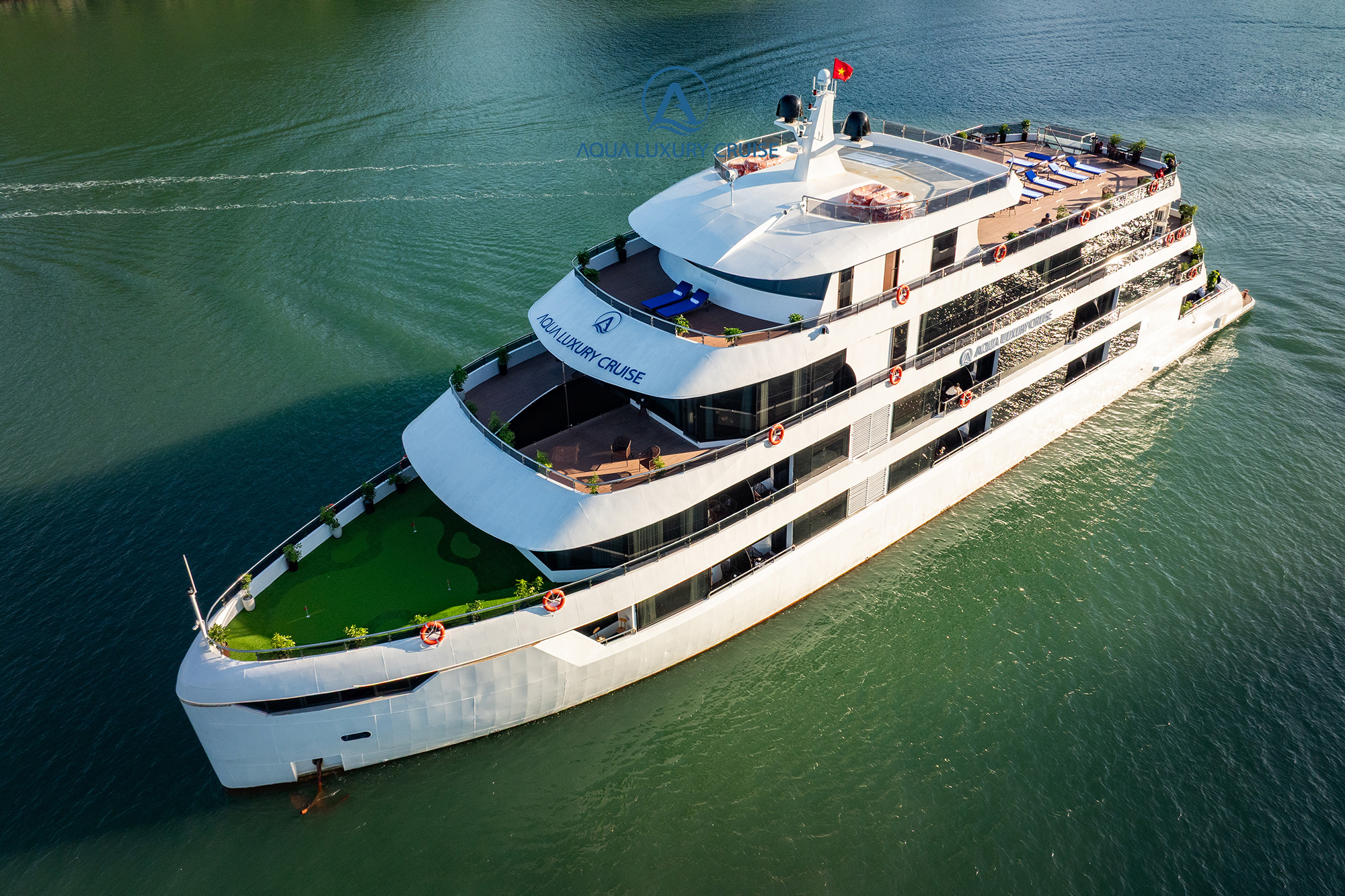
Most Europeans flying long-haul for the first time find the 4-star mid-range sweet spot delivers the best experience per euro. Vessels like Paradise Cruises, Indochina Sails, and Pelican Cruises consistently receive excellent ratings from European guests for service, food quality, and itinerary depth.
What to Expect on a Ha Long Bay Cruise
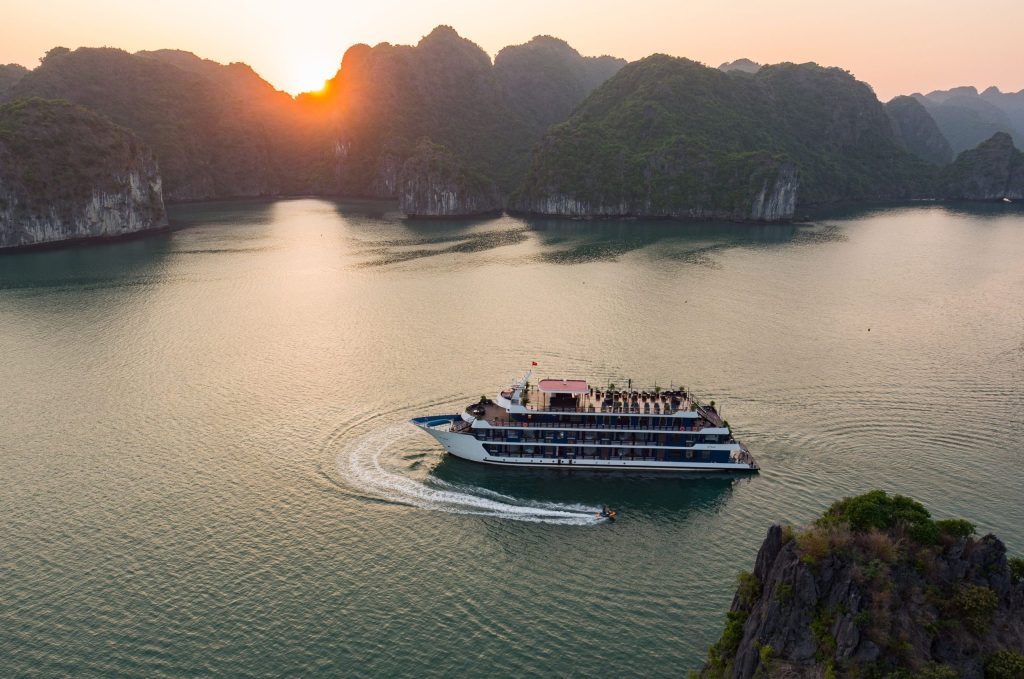
Day 1 — arrival & first sunset
Most cruises depart Ha Long Marina at noon. Lunch is served as you sail into the bay — your first views of the karst formations arrive mid-meal. The afternoon typically includes a visit to a large cave (Sung Sot/Surprising Cave is a popular choice) and kayaking through narrow passages between island cliffs. Sundowner cocktails on the top deck. Dinner is a multi-course Vietnamese seafood banquet.
Day 2 — the heart of the bay
Wake up anchored among the islands. Tai chi on the sundeck at sunrise is optional but memorable. The day typically includes more kayaking, a visit to a floating fishing village (Cua Van or Vung Vieng), a cooking class, swimming, and squid fishing after dark. Seawater that glows with bioluminescence on calm nights is one of the bay’s best-kept secrets.
Day 3 — morning light & departure
Early risers catch the best light — a misty sunrise over the water is worth setting an alarm for. Brunch is served as the boat returns to port. Most guests are back in Hanoi by late afternoon, with time for a final evening in the Old Quarter.
Practical Tips for a Perfect Visit
✓ Book 6–8 weeks ahead for Oct–Feb travel. Good mid-range and luxury cabins fill fast, especially on smaller boutique vessels with 10–16 cabins.
✓ Pack reef-safe sunscreen. Many operators now require it — regular SPF damages coral. It’s also available in Hanoi at pharmacies.
✓ Motion sickness is rare — the bay is very sheltered — but bring tablets if you’re sensitive, just in case of rough seas in summer months.
✓ Cash in Vietnamese Dong (VND) is still preferred for tips and market purchases. ATMs are in Ha Long City. Cards accepted on most cruises.
✓ Tipping etiquette: A modest tip (50,000–100,000 VND per day, roughly €2–4) is warmly appreciated by cruise crew and not expected but customary for good service.
✓ Travel insurance is essential. Medical evacuation from the bay is expensive without cover. European Health Insurance Cards (EHIC) do not apply outside the EU.
✓ Seasickness bags and dramamine are provided on all vessels, but cabin placement matters — mid-ship, lower deck cabins rock the least.
✓ Wi-Fi on board is spotty by design on many premium vessels — consider it a digital detox and enjoy the scenery.

0 Comment